
What Is Indian Fusion Thanksgiving — and Why It’s Worth Trying
Indian fusion Thanksgiving is one of the most exciting food trends reshaping the American holiday table. It blends the familiar comfort of classic Thanksgiving dishes — turkey, mashed potatoes, cranberry sauce, pumpkin pie — with bold Indian spices, techniques, and flavors like garam masala, cardamom, tandoori marinade, and tamarind chutney.
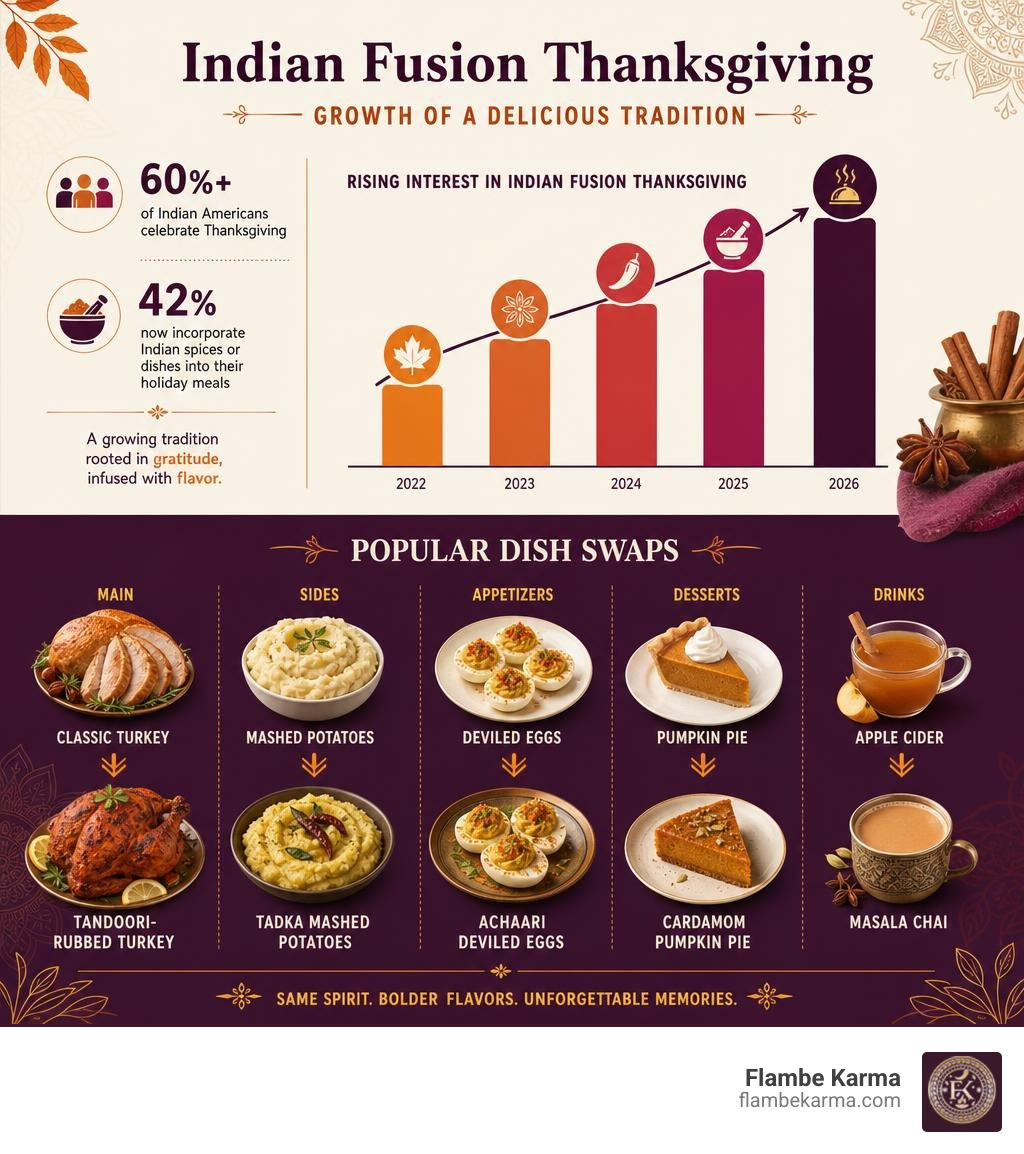
Quick answer — here’s what an Indian fusion Thanksgiving looks like:
- Main: Tandoori-rubbed turkey or whole roasted cauliflower (Gobi Musallam)
- Sides: Tadka mashed potatoes, spiced ginger cranberry chutney, garam masala roasted carrots
- Appetizers: Puff pastry samosa pinwheels, achaari deviled eggs, mango chutney brie bites
- Desserts: Cardamom pumpkin pie, pumpkin halwa, masala chai cheesecake
- Drinks: Masala chai, spiced apple cider, pomegranate rose spritz
More than 60% of Indian Americans celebrate Thanksgiving, and 42% now incorporate Indian spices or dishes into their holiday meals. The result? A table that honors gratitude and togetherness — but tastes anything but ordinary.
Whether you’re cooking for a crowd or just tired of the same one-note holiday spread, Indian fusion Thanksgiving gives you a way to make the meal yours — full of warmth, color, and flavor that guests will actually remember.
Indian fusion thanksgiving terms to learn:
The Rise of the Indian Fusion Thanksgiving

The landscape of American holidays is shifting, and our dinner tables are reflecting this beautiful evolution. As the fastest-growing ethnic group in the United States—surpassing 4.5 million residents in recent years—Indian-Americans have brought a rich culinary heritage that naturally weaves into classic Western celebrations.
Thanksgiving, in its essence, is a secular holiday centered around abundance, gratitude, and a massive feast. Because it lacks specific religious or political ties, it has become the ultimate canvas for cultural expression. For first-generation immigrants and multi-generational households alike, blending Indian flavors with American traditions isn’t just about making the food taste better (though a pinch of garam masala certainly helps!); it is about claiming a sense of belonging.
By introducing aromatic spices to the holiday, families create a unique culinary identity. It’s a way of saying, “We are here, we are thankful, and we bring something extraordinary to the table.” To understand how these menus come together, you can explore how modern culinary minds approach this in A Global Twist on Tradition with the Best Indian Fusion Menus.
Why the Indian Diaspora Embraces Thanksgiving
For many South Asian families, the concept of a massive, slow-cooked family meal is second nature. Gathering around a table to express gratitude aligns perfectly with traditional Indian cultural values of hospitality (Atithi Devo Bhava) and family togetherness.
Unlike other major U.S. holidays like Christmas, which can carry religious connotations, Thanksgiving offers a neutral, inclusive space. It serves as a meaningful pause in the year—a cultural reset where families can celebrate their dual identities. The beauty of this holiday is captured perfectly in the personal essay Turkey With a Delhi Accent: We Didn’t Merely Adopt Thanksgiving. We Rewrote it in Saffron – American Kahani, which details how immigrant families didn’t simply adopt the holiday, but actively rewrote its culinary language to reflect their own journeys.
The Evolution of the Desi Thanksgiving Table
Over the years, the “Desi Thanksgiving” has evolved from a segregated buffet to a fully integrated culinary experience. In the early days of immigration, it was common to see a strict division on the table: a dry, traditional American turkey on one side, and a backup lamb curry or biryani on the other to ensure everyone actually enjoyed the meal.
Today, second- and third-generation home cooks are leading a creative revolution. Instead of keeping the cuisines separate, they are merging them. We now see dishes like tandoori-spiced turkey breasts, stuffing made from spiced bread upma, and pumpkin pies infused with sweet chai masala. Potlucks have become collaborative culinary playgrounds where aunties, uncles, and kids cross-pollinate their plates. This culinary evolution mirrors the broader movement of modern dining, which you can read about in Taste the Twist: Discovering the Best Indian Fusion Restaurants.
Transforming Holiday Classics with Desi Spices

Traditional Thanksgiving food is the ultimate comfort food, but let’s be honest: it can occasionally lean a bit one-note. When everything on the plate is soft, sweet, and beige, your palate can get tired quickly.
Indian culinary techniques introduce a “third dimension” to these classics. By using spices not just for heat, but for aroma, acidity, and complexity, we can elevate standard holiday ingredients into something truly spectacular. To see how these flavor profiles are redefining modern dinners, check out Taste the Future: Innovative Fusion Dinner Ideas That Will Blow Your Mind.
Tandoori Turkey and Masala Mains
The centerpiece of the table deserves a major upgrade. Instead of a standard herb-butter rub that barely penetrates the thick turkey breast, an indian fusion thanksgiving main relies on deep marination.
- Tandoori Turkey: By brining the bird in a mixture of salt, warm spices, and water, and then coating it in a thick yogurt marinade infused with ginger-garlic paste, Kashmiri chili, garam masala, and lemon juice, you achieve two things: incredible moisture and a gorgeous, charred red crust. The lactic acid in the yogurt gently tenderizes the turkey meat, preventing the classic dry-turkey syndrome.
- Turkey Galauti Kebab: For a unique twist on ground turkey, you can adapt the classic Lucknowi Galauti Kebab. Traditionally made with minced lamb, using lean U.S. turkey mixed with raw papaya paste (a natural tenderizer), fried onion paste, and a bouquet of aromatic spices yields a melt-in-your-mouth appetizer or main. You can find a detailed breakdown of this technique in Make Thanksgiving U.S. Turkey with an Indian Masala Twist!.
Spiced Sides: From Tadka Potatoes to Cranberry Chutney
The side dishes are where the fusion concept truly shines. By applying simple Indian tempering techniques (tadka) to classic American sides, you can completely transform your meal:
- Tadka Mashed Potatoes: Swap out the heavy cream and plain butter for mashed potatoes folded with a warm tadka of ghee, mustard seeds, cumin, curry leaves, and a pinch of turmeric. The result is a vibrant, golden dish bursting with textured aromatics.
- Spiced Ginger Cranberry Sauce: Ditch the canned jelly. Cook fresh cranberries down with orange juice, fresh ginger, cardamom, cinnamon, star anise, and a touch of green chili. This sweet, tangy, and spicy chutney cuts through the richness of the meal beautifully.
- Bread Upma Stuffing: Instead of standard herb stuffing, use seasoned bread upma—sautéed with onions, green chilies, mustard seeds, and turmeric—as a brilliantly spiced stuffing alternative that your guests will be talking about for weeks.
For more inspiration on pairing starches and cheeses with bold spices, take a look at Paneer Tacos and Masala Mac: The Best Fusion Indian Food Recipes.
Vegetarian and Vegan Showstoppers
Because a large percentage of South Asian households follow a vegetarian diet, a Desi Thanksgiving is naturally incredibly accommodating to plant-based diners. You won’t find anyone relegated to eating just a sad side salad here.
- Gobi Musallam: This stunning dish features a whole head of cauliflower blanched and roasted, then smothered in a rich, creamy makhani (butter chicken style) or spiced cashew gravy. It looks just as grand as a roasted turkey at the center of the table.
- Roasted Cauliflower Tikka: Marinated in spiced yogurt and roasted at high heat, this dish delivers smoky, tandoori-style goodness that satisfies vegetarians and meat-eaters alike.
- Sweet Potato Poriyal: A South Indian classic where sweet potatoes are sautéed with mustard seeds, urad dal, curry leaves, and fresh grated coconut, offering a light, fresh contrast to heavy casseroles.
To explore how these vegetarian centerpieces have taken over modern holiday spreads, read Desi Twist to Thanksgiving Staples: Gobi Musallam, Bread Upma Stuffing, and Curried Caramelized Brussels Sprouts – American Kahani and discover personal family adaptations in Making it Our Own: An Indian American Thanksgiving With Tandoori Turkey and Sweet Potato Poriyal – American Kahani.
Planning Your Feast: Sample Menus and Pairings
Curation is key to a successful fusion dinner. You want to strike a balance between rich, comforting textures and bright, spiced elements so your guests don’t experience palate fatigue. To understand how to balance these complex menus, read Beyond Butter Chicken: Exploring Delicious Indian Fusion Dishes.
| Traditional Thanksgiving Dish | Indian Fusion Counterpart | Key Aromatics & Spices Used |
|---|---|---|
| Roast Turkey | Tandoori Roasted Turkey | Yogurt, Kashmiri Chili, Garam Masala, Ginger |
| Cranberry Sauce | Spiced Ginger Cranberry Chutney | Ginger, Cardamom, Star Anise, Green Chili |
| Mashed Potatoes | Tadka Mashed Potatoes | Ghee, Mustard Seeds, Curry Leaves, Turmeric |
| Bread Stuffing | Spiced Bread Upma Stuffing | Green Chilies, Turmeric, Mustard Seeds, Cilantro |
| Roasted Carrots | Garam Masala Roasted Carrots | Garam Masala, Honey, Cumin |
| Pumpkin Pie | Cardamom Pumpkin Pie Samosas | Cardamom, Nutmeg, Chai Masala |
Crafting Your Indian Fusion Thanksgiving Menu
To help you plan, here is a curated sample menu designed to delight both traditionalists and adventurous foodies:
Appetizers
- Puff Pastry Samosa Pinwheels: Flaky puff pastry rolled with a spiced potato and pea filling.
- Achaari Deviled Eggs: Classic deviled eggs kicked up with spicy Indian pickle (achaar) oil and mustard seeds.
Main Course
- Tandoori Turkey Breast (or Gobi Musallam for a vegetarian centerpiece).
- Served alongside a rich, velvety saffron gravy.
Side Dishes
- Tadka Mashed Potatoes.
- Spiced Ginger Cranberry Chutney.
- Chaat-Style Brussels Sprouts: Crispy roasted Brussels sprouts tossed with lemon juice and tangy chaat masala.
Desserts & Drinks
- Masala Chai Cheesecake: A creamy cheesecake spiced with ginger, cardamom, and black tea.
- Pomegranate Rose Spritz: A refreshing mocktail or cocktail to cleanse the palate.
For a massive compilation of 25 tried-and-tested ideas, browse 25 Indian-Inspired Thanksgiving Recipes – Masala and Chai.
Hosting and Prepping for Your Desi Feast
Hosting a Thanksgiving dinner can be stressful, but incorporating Indian cooking techniques actually gives you a secret weapon: many Desi dishes are designed to be made in advance. In fact, curries, chutneys, and marinades actually taste better after sitting in the fridge for a day or two as the flavors marry and deepen. To see how professional kitchens organize their fusion execution, check out The 5 Best Fusion Cuisine Spots Compared.
Essential Prep Tips for an Indian Fusion Thanksgiving
To keep your sanity intact on the big day, we highly recommend following this simple preparation timeline:
- One Week Ahead: Make your spiced ginger cranberry chutney. Because of the high sugar and acid content, it stores beautifully in an airtight container in the fridge.
- Three Days Ahead: Chop all your vegetables (carrots, Brussels sprouts, onions) and store them in labeled bags. Prepare any sweet syrups for your cocktails or desserts.
- Two Days Ahead: Assemble your casseroles or fusion lasagnas. Cover them tightly and keep them unbaked in the refrigerator.
- One Day Ahead: Begin the marination process for your proteins. Whether you are making tandoori chicken, turkey, or cauliflower, a full 24-hour soak in spiced yogurt is the secret to maximum flavor. You can read more about hosting timelines and community potluck coordination in the guide on Foodism Networking.
Frequently Asked Questions
What is the difference between traditional Thanksgiving and an Indian fusion Thanksgiving?
While traditional Thanksgiving relies on herbs like sage, thyme, and rosemary paired with rich, buttery, and sweet flavors, an Indian fusion Thanksgiving introduces spices like cumin, ginger, cardamom, and garam masala. It swaps out standard cooking methods for Indian techniques like marination, tandoori roasting, and tempering (tadka) to create a more vibrant, aromatic, and multidimensional meal.
How do you make a vegetarian centerpiece for an Indian-inspired Thanksgiving?
The most popular and dramatic vegetarian centerpiece is Gobi Musallam—a whole head of cauliflower that is blanched, marinated in tandoori spices, and roasted until golden brown. It is then served over a rich makhani (butter sauce) or cashew gravy, mimicking the grand presentation of a roasted turkey.
Can I prepare Indian fusion Thanksgiving dishes in advance?
Absolutely! In fact, it is highly recommended. Cranberry chutneys can be made a week in advance. Casseroles, gravies, and spiced mashed potatoes can be assembled the day before, which actually allows the complex spices to develop deeper flavors overnight.
Conclusion
At Flambe Karma, we believe that food is a living, breathing celebration of culture, storytelling, and connection. Our passion is bringing people together over culinary innovation, turning familiar dishes into unforgettable dining experiences. Whether you are looking to spice up your own home kitchen this holiday season or want to experience the absolute best of modern Indian cuisine without lifting a finger, we are here to welcome you.
If you are hosting a festive gathering or simply craving a spectacular meal in Illinois, come visit us! We serve up artistic ambiance, impeccable service, and our famous specialty Flambe Skewers in both Buffalo Grove and Glen Ellyn.
Ready to taste the future of fusion dining? Spice Up Your Search: Indian Fusion Restaurants in Your Neighborhood or book your next memorable gathering directly at Flambe Karma Buffalo Grove. Let’s make this holiday season full, fearless, and beautifully spiced!