Author: Patrycja Szkutnik

  • How to Celebrate in Style at the Best Fancy Anniversary Restaurants

    How to Celebrate in Style at the Best Fancy Anniversary Restaurants

    Why the Right Restaurant Makes or Breaks Your Anniversary

    The best fancy anniversary restaurants turn a single evening into a memory you talk about for years.

    But with so many options — from rooftop dining rooms to candlelit Michelin-starred hideaways — knowing where to start is the hard part.

    Here’s a quick look at what makes a restaurant truly worthy of your anniversary:

    What to Look ForWhy It Matters
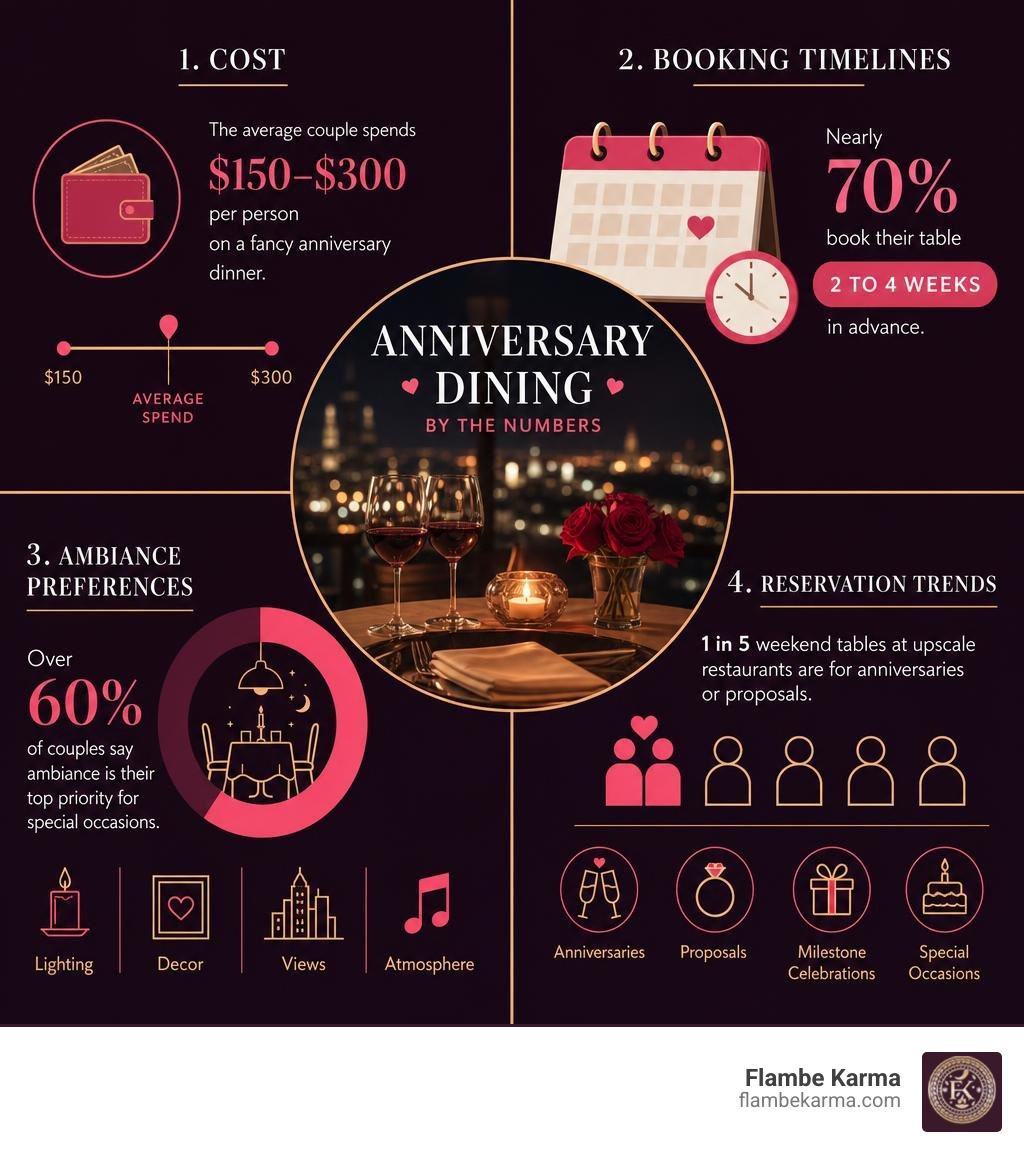
    Romantic ambiance (lighting, decor, views)Over 60% of couples say ambiance is their top priority for special occasions
    Attentive, personalized serviceSmall touches — a handwritten note, a custom dessert — create lasting impressions
    Curated wine list and tasting menusGuided pairings elevate the entire meal
    Private or intimate seating options1 in 5 weekend tables at upscale restaurants are celebrating anniversaries or proposals
    Special occasion packagesMany top restaurants offer bespoke experiences for milestone dinners

    Top cities with standout anniversary dining include:

    1. Paris — Michelin-starred candlelit dinners near iconic landmarks
    2. Los Angeles — Scenic rooftop and garden restaurants with celebrity appeal
    3. Atlanta — Revolving restaurants, fine Southern cuisine, and sleek steakhouses
    4. Boston — Intimate wine bars, French bistros, and proposal-friendly tables
    5. Austin — Farm-to-table spots with live-fire cooking and moody atmospheres
    6. Charleston — Historic venue dining with refined Lowcountry cuisine

    The average couple spends $150–$300 per person on a fancy anniversary dinner — and nearly 70% book their table two to four weeks ahead.

    Whether you’re after sweeping skyline views, a chef’s tasting menu, or a tucked-away room for two, this guide covers the best options across the US and beyond.

    anniversary dining statistics infographic: cost, booking timelines, ambiance preferences, and reservation trends infographic

    Fancy anniversary restaurants definitions:

    Key Elements of the Best Fancy Anniversary Restaurants

    When you are celebrating another year of love, you aren’t just paying for food; you are investing in an experience. The magic of the top fancy anniversary restaurants lies in a delicate formula of sensory details.

    First and foremost is the ambiance. Dimmed lighting, soft background acoustics, and thoughtfully spaced tables are essential. Nobody wants to whisper sweet nothings only to have them overheard by the table six inches to their left. Outstanding romantic spots design their spaces with intimacy in mind, using architectural features, lush greenery, or cozy booth seating to create private sanctuaries for couples.

    Exceptional service is the second pillar. The waitstaff at premier venues understand the rhythm of a date night. They know when to offer a wine recommendation and when to step back to let you enjoy a quiet moment. They pay attention to the details—folding your napkin when you step away, keeping water glasses seamlessly filled, and pacing the courses so you never feel rushed.

    Finally, curated wine lists and personalized touches elevate a simple dinner into a milestone event. Whether it is a custom dessert with your anniversary date written in chocolate or a sommelier who finds the perfect vintage to match your main course, these details show that the restaurant cares about your story. To dive deeper into what makes a dining room truly magical, check out our guide on Where Romance Meets Cuisine: Your Guide to the Best Romantic Fine Dining.

    Top Global and US Destinations for an Unforgettable Anniversary

    If you are looking to plan a getaway or simply want to draw inspiration from the absolute pinnacle of global dining, certain destinations stand out. These cities boast culinary landscapes defined by international cuisine, stunning historic venues, and breathtaking rooftop views. Let’s take a virtual tour of the world’s most romantic dining hotspots.

    Paris: Romantic Fine Dining

    It is no secret that Paris is the global capital of romance. French cuisine and intimate dining go hand in hand, especially when you pair them with candlelit tables and historic architecture.

    beautifully plated gourmet dish

    For a truly legendary evening, Restaurant Guy Savoy – Monnaie de Paris – Restaurant Guy Savoy offers an unparalleled artistic experience. Inducted into the Academy of Fine Arts, Guy Savoy treats gastronomy as a masterpiece. Situated along the Seine, the restaurant features six distinct themed dining rooms, such as the “Belles Bacchantes” and the “Bibliothèque.” While the tasting menu “Colours, Textures & Flavours” is priced at a premium 760 €, it represents the absolute peak of French culinary art.

    If you are looking for a slightly more intimate, emotional connection to your food, Romantic Restaurant in Paris – A Michelin-Starred Dining Experience | La Scène Thélème is steps away from the Arc de Triomphe. This Michelin-starred venue blends French gastronomy with Japanese influences, offering a 7-course tasting menu for €165. The team specializes in personalized anniversary touches, from custom desserts to discreet handwritten messages delivered to your table.

    Amsterdam: Panoramic Views

    If your idea of romance involves looking out over glittering city lights, Amsterdam’s high-altitude dining is tough to beat.

    The double Michelin-starred Michelin-starred restaurant | 2 Michelin Starred Restaurant | Amsterdam (Ciel Bleu), located on the 23rd floor of the Hotel Okura, offers stunning panoramic views of the city skyline. Under the leadership of SVH Master Chef Arjan Speelman, the kitchen serves up refined international cuisine with creative global influences. For couples who want to be in the center of the action, their exclusive Chef’s Table offers an immersive look directly into the kitchen, while the romantic starlight atmosphere makes every bite a surprise.

    Hawaii: Oceanfront Elegance

    There is nothing quite like the sound of crashing waves to set a romantic mood. Hawaii combines tropical relaxation with world-class dining.

    oceanfront dining at sunset

    At La Mer | Dining | Halekulani Hotel on Oahu, you can experience Hawaii’s longest consecutive AAA Five Diamond and Forbes 5-Star restaurant. Overlooking the ocean, La Mer infuses classic French culinary techniques with fresh, locally sourced Hawaiian ingredients, such as Kauai shrimp and local goat dairy. The strict elegant dress code ensures a sophisticated atmosphere, and the ocean breeze makes it one of the most prestigious backdrops for celebrating a milestone year together.

    Historic Charm in Charleston

    For couples who appreciate architectural history and Southern hospitality, Charleston, South Carolina, is a dream destination.

    Tucked inside the original 1886 carriage house of the luxurious Wentworth Mansion, Charleston Historic District Fine Dining Restaurant | Circa 1886 delivers an incredibly romantic atmosphere. Led by Chef Marc Collins, the restaurant serves refined Lowcountry cuisine that balances traditional Southern flavors with modern artistic presentation. It has been ranked in the top 1% of date night restaurants worldwide, making it a perfect spot to toast your love. For more ideas on planning a milestone dinner, read our post on Toast to Forever: The Best Restaurants for a Dream Anniversary Dinner or explore the Best of the Best Date Night Restaurants in the US.

    Finding Fancy Anniversary Restaurants in Atlanta and Los Angeles

    If you find yourself in Atlanta or Los Angeles, these bustling metropolitan areas offer a diverse range of high-end romantic spots.

    In Atlanta, romance comes in many forms. You can opt for the historic charm of Aria, set in a converted Buckhead house, or take in the skyline at Polaris, a revolving rooftop restaurant known for its iconic Blue Dome dessert. If you prefer a sleek, high-energy atmosphere, venues like STK in Midtown offer a modern, sexy vibe. To discover more options, check out our guide on Celebrate Love: Top Restaurants for a Memorable Anniversary and explore other Romantic Date Night Restaurants.

    Over in Los Angeles, the views steal the show. From the exotic Japanese gardens of Yamashiro in Hollywood to the sky-high elegance of 71 Above on the 71st floor of the US Bank Tower, LA knows how to do drama. For a coastal experience, Geoffrey’s Malibu offers stunning ocean views, while Beverly Hills’ Spago provides the ultimate celebrity-spotting, fine-dining experience.

    Local Gems: Fancy Anniversary Restaurants in Illinois

    While traveling the globe is wonderful, you don’t need to board a plane to experience a world-class anniversary dinner. Right here in Illinois, we have spectacular dining options that rival the best of Paris or New York.

    At Flambe Karma, we specialize in transforming ordinary nights into extraordinary celebrations. Located in both Buffalo Grove and Glen Ellyn, we blend authentic Indian flavors with modern fusion culinary techniques. Our signature Flambe Skewers bring a touch of theatrical fire and excitement to your table, while our warm, artistic ambiance sets the perfect mood for romance.

    If you are planning your next local date night, you can find inspiration in our curated list of The Best Indian French Restaurant Spots for Your Next Date Night and search for the Best Couples Restaurants Near Me.

    To round out your local options, here are some excellent dining resources and spots in our communities:

    Planning Your Perfect Anniversary Dinner

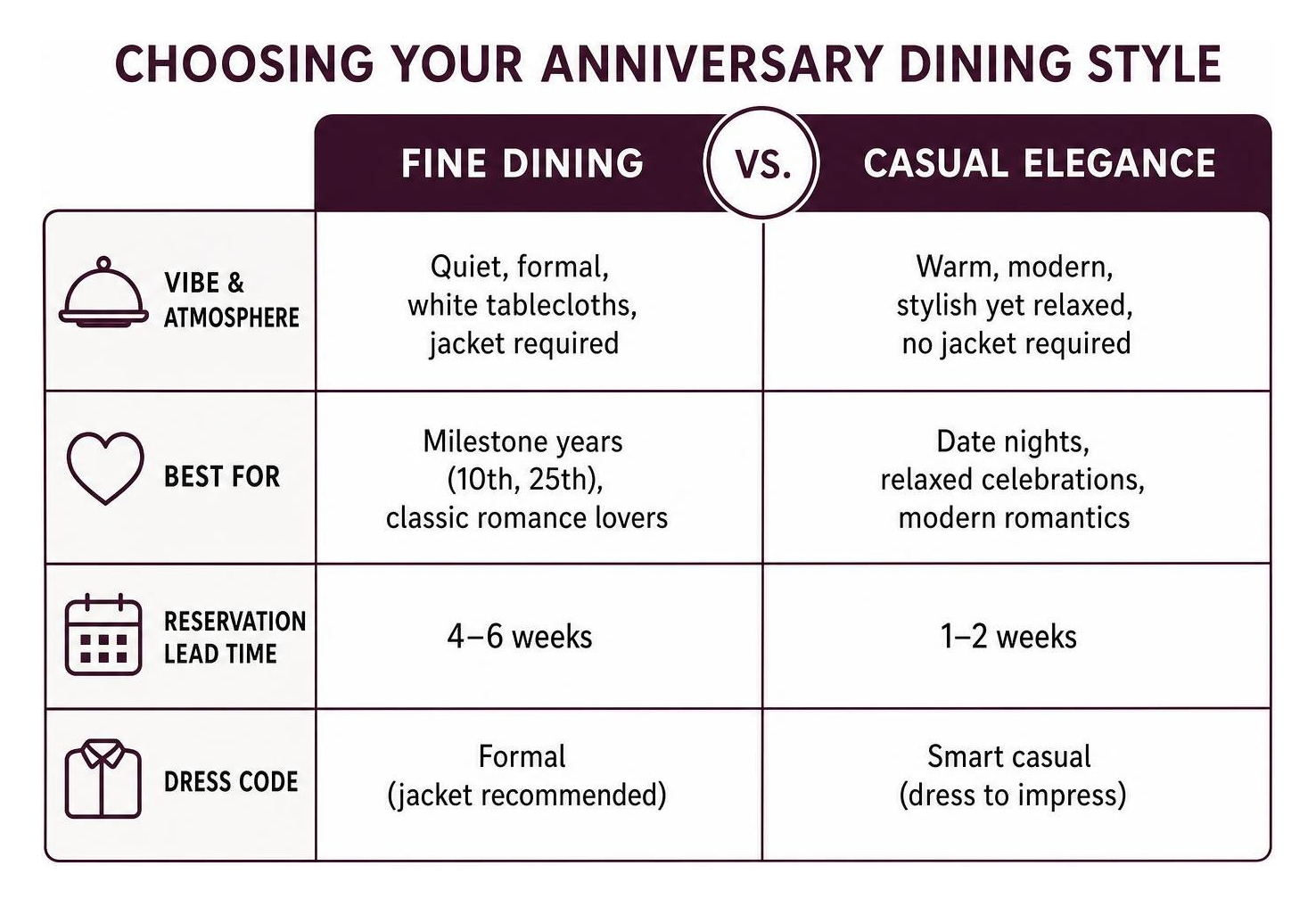
    A successful anniversary dinner requires a bit of strategy. To help you decide what kind of night you want to have, we’ve mapped out the key differences between traditional fine dining and modern casual elegance.

    choosing your anniversary dining style: fine dining vs. casual elegance

    Here is a quick comparison to guide your decision:

    Dining StyleVibe & AtmosphereBest ForReservation Lead Time
    Traditional Fine DiningQuiet, formal, white tablecloths, jacket requiredMilestone years (10th, 25th), classic romance lovers4–6 weeks
    Casual Elegance / FusionLively, artistic, modern music, stylish dressFun dates, foodies who love bold flavors2–3 weeks

    Reservation Tips

    The most popular fancy anniversary restaurants book up quickly, especially for weekend prime-time slots (6:30 PM to 8:30 PM). Aim to book 2 to 4 weeks in advance. When making your reservation, always use the “notes” section to mention that you are celebrating an anniversary. Many restaurants will print custom menus, prepare a complimentary glass of champagne, or seat you in a quieter, more romantic booth.

    Dress Codes

    Always check the restaurant’s dress code before heading out. While some modern spots embrace a “smart casual” look, historic or traditional fine dining venues often require men to wear collared shirts or jackets, and prohibit shorts, t-shirts, and athletic wear. Dressing up is half the fun of an anniversary—it signals to your partner that the night is truly special.

    Budgeting

    An upscale anniversary dinner is an investment. Expect to spend between $150 and $300 per person if you are opting for multi-course tasting menus and wine pairings. To manage costs without sacrificing the experience, consider booking a lunch tasting menu (which is often significantly cheaper than dinner) or choosing a few high-quality shared plates instead of individual multi-course meals. For more budgeting and planning tips, consult our Fine Dining Date Night guide and the Buyers Guide: Best Date Night Restaurants for 2026.

    Frequently Asked Questions about Anniversary Dining

    How far in advance should I book a table?

    For top-tier, Michelin-starred, or highly popular local spots, we recommend booking 2 to 4 weeks in advance for standard weekends. If your anniversary falls on a major holiday, Valentine’s Day, or during graduation season, aim for 6 to 8 weeks to secure your preferred seating time.

    Do these restaurants accommodate dietary restrictions?

    Yes, almost all modern upscale restaurants are happy to accommodate food allergies, vegetarian, vegan, or gluten-free diets. However, it is crucial to notify the restaurant at the time of booking so the kitchen staff has ample time to prepare custom adjustments, especially for fixed tasting menus.

    What is the average cost of an anniversary dinner?

    At a high-end restaurant, couples typically spend between $150 and $300 per person. This generally covers a multi-course meal, a couple of cocktails or glasses of wine, tax, and gratuity. Tasting menus with dedicated wine pairings will lean toward the higher end of this range.

    Conclusion

    Whether you choose to celebrate with a sky-high view in Amsterdam, a historic carriage house dinner in Charleston, or a fiery, artistic fusion feast right here in Illinois, the key to a perfect anniversary is intentionality. Taking the time to plan ahead, dress up, and try new culinary experiences together strengthens your bond and creates beautiful memories.

    Ready to celebrate your love story with incredible food, theatrical flambe skewers, and an unforgettable atmosphere? Book your anniversary table with us today at Flambe Karma and let us handle the details while you focus on each other. Here’s to many more years of love, laughter, and amazing meals!

  • The Best Mexican-Indian Fusion Restaurants to Try Right Now

    The Best Mexican-Indian Fusion Restaurants to Try Right Now

    When Two Spice Traditions Meet: The Best Mexican-Indian Fusion Restaurants Right Now

    A mexican-indian fusion restaurant is exactly what it sounds like – a place where bold masala spices meet smoky chilies, where tacos get filled with tikka, and where nachos get a butter chicken makeover. It’s one of the most exciting dining trends happening right now.

    Here are the dining styles defining Mexican-Indian fusion right now:

    Dining StyleWhere It ShinesKnown For
    Fine-dining fusionMajor culinary citiesTasting menus, elegant plating, spice-led storytelling
    Street-food fusionCasual restaurants and pop-upsMasala tacos, chaat-style tostadas, tikka fillings
    Comfort-food fusionNeighborhood kitchensButter chicken nachos, paneer quesadillas, fusion flatbreads
    Beverage-led fusionCocktail-forward dining roomsMezcal, tamarind, kokum, mango, and chai-inspired drinks
    Family-style fusionGroup dining and celebrationsShareable plates, vegetarian options, bold sauces

    These restaurants aren’t just about novelty. They reflect something real – a deep culinary kinship between two traditions that both love layered spices, slow-cooked meats, and bold, unapologetic flavor.

    It makes sense when you think about it. Indian immigrants in the U.S. often reach for Mexican food first, because it feels familiar – the spice, the street food culture, the vegetarian-friendly options. That instinct has now found its way into professional kitchens around the world.

    And the results are extraordinary.

    From refined tasting menus to casual neighborhood counters, this cuisine is showing up everywhere – and it’s earning serious recognition along the way.

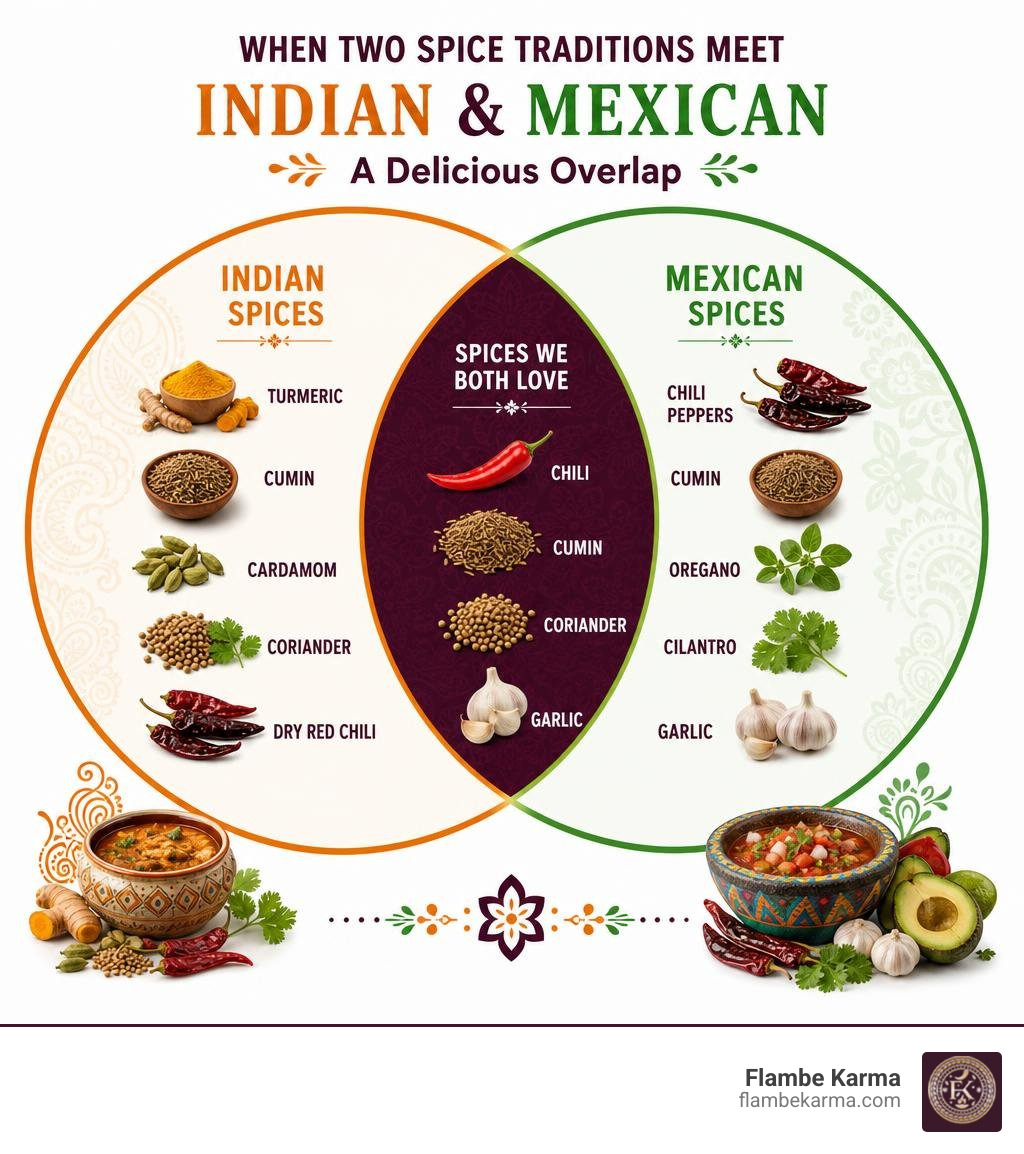
    Infographic showing the spice overlap between Indian and Mexican cuisine traditions infographic

    Mexican-indian fusion restaurant terms you need:

    The Rise of the Mexican-Indian Fusion Restaurant

    The soaring popularity of the mexican-indian fusion restaurant is no accident. At its core, fusion cuisine is about finding harmony between different culinary languages. When we look at Indian and Mexican food, they don’t just speak similar languages – they share a soul. Both cultures rely heavily on slow-cooked legumes, complex sauces that take hours to develop, vibrant street food cultures, and a masterclass level of spice balancing.

    In a well-executed fusion kitchen, chefs balance the bold spices, techniques, and ingredients of both traditions so that neither overpowers the other. Instead of a chaotic clash, you get a complementary dance. For instance, the earthy warmth of cumin and coriander in Indian garam masala pairs seamlessly with the smoky, sweet undertones of Mexican ancho and chipotle chilies. This organic culinary migration has inspired diners to look beyond traditional boundaries, as explored in our guide on how to Taste the Twist: Discovering the Best Indian Fusion Restaurants.

    The Cultural and Historical Roots of Rebellious Mestizaje

    This culinary movement is driven by deep cultural, historical, and personal narratives. Many chefs who work across traditions use their menus to address themes like migration, colonization, and what has been termed mestizaje rebelde (rebellious mestizaje). This concept acknowledges the painful histories of colonization and displacement while celebrating the resilient, beautiful blending of cultures that occurs as a result.

    When people migrate, they carry their culinary heritages with them. When those heritages collide, they adapt. The overlap of ingredients – such as tamarind, cilantro, onions, and various chili peppers – highlights a shared history of global trade winds and the Columbian Exchange, which reshaped foodways across continents. By reclaiming these connections, modern fusion restaurants turn the dining table into a canvas of cultural storytelling, a theme we dive into when examining A Global Twist on Tradition with the Best Indian Fusion Menus.

    What to Expect at a Mexican-Indian Fusion Restaurant

    Stepping into a mexican-indian fusion restaurant is an immersive sensory experience. The atmosphere is often vibrant, colorful, and highly social, reflecting the warm hospitality inherent to both Mexican and Indian homes.

    Diners can expect:

    • Highly Social Dining: Menus are frequently designed for sharing, featuring small plates, street-style snacks, and interactive dishes.
    • Dietary Accommodations: Because Indian cuisine is naturally vegetarian-friendly and Mexican cuisine relies heavily on gluten-free corn-based elements, these restaurants are incredibly accommodating for diverse dietary needs.
    • A Festive Vibe: From lively music to artistic decor that borrows design elements from regions across both culinary traditions, the energy is contagiously fun.

    To see how this style stacks up against other global culinary trends, check out our comparison of The 5 Best Fusion Cuisine Spots Compared.

    Leading Pioneers of the Indo-Mexican Culinary Movement

    Around the globe, creative chefs are redefining what it means to run a fusion kitchen. They are moving away from gimmicky pairings and focusing instead on technical precision, deep cultural respect, and pure imagination.

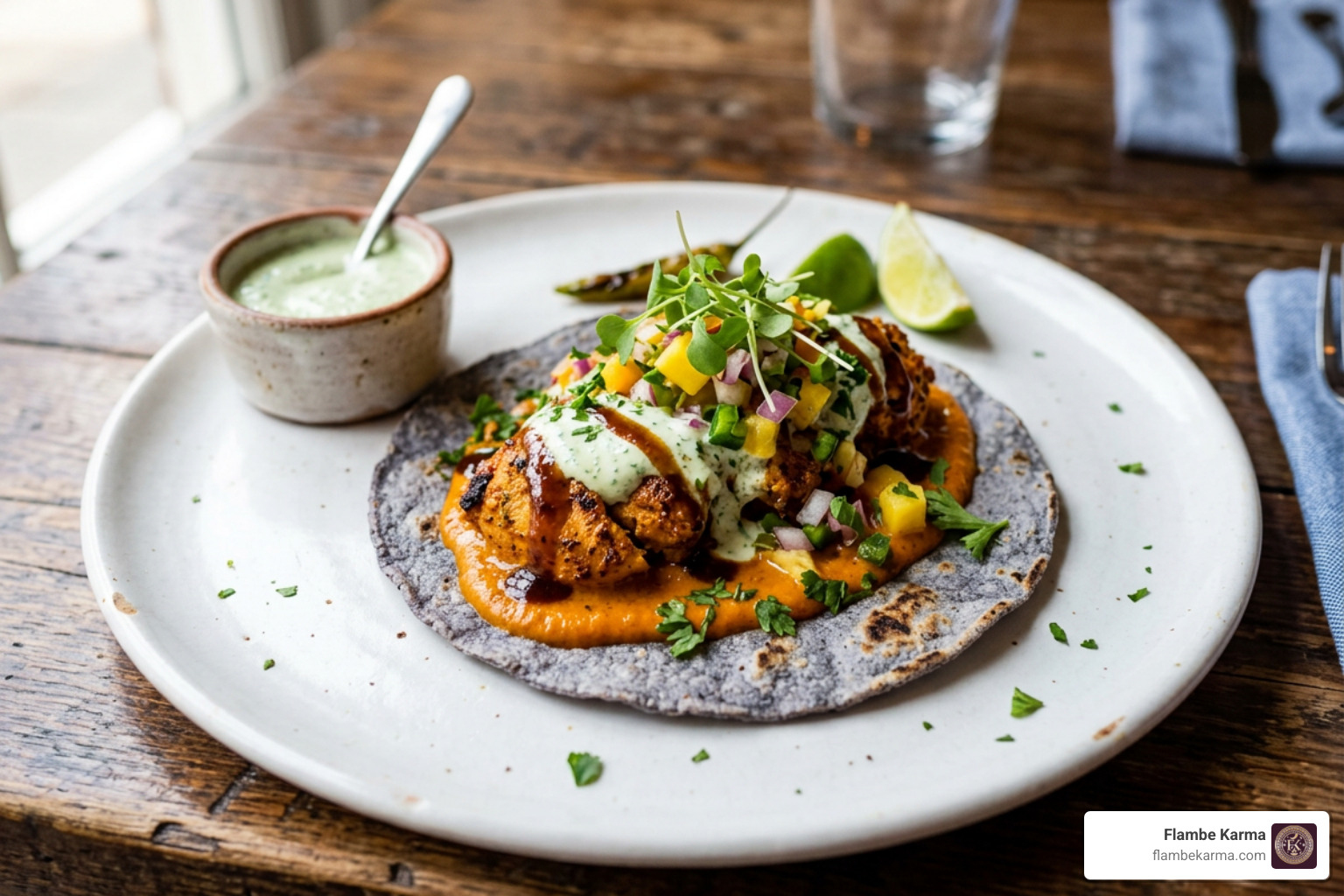
    A beautifully plated Indian-Mexican fusion dish featuring vibrant sauces and fresh herbs

    Activism and Michelin-Starred Innovation in Fusion Cuisine

    At the forefront of this movement are chefs who treat fusion as more than a clever menu format. In the strongest examples, Indian and Mexican influences are woven together through masa, lentils, chilies, pickles, chutneys, slow-cooked meats, fresh herbs, and deeply developed sauces. The goal is not to place two cuisines side by side, but to create dishes that feel intentional from the first bite to the last.

    Some of the most respected fusion kitchens also connect food with social responsibility. Worker-centered business models, fair labor practices, and relationships with small-scale producers are increasingly part of the conversation. For these chefs, food is not only a source of pleasure – it is a way to talk about community, migration, identity, and care.

    The Multi-Course Culinary Journey: Tasting Menus and Pairings

    For diners seeking an upscale, structured experience, Mexican-Indian fusion can shine in a tasting-menu format. A multi-course meal allows chefs to move gradually between regions, ingredients, and techniques: a crisp snack with chutney and salsa, a smoky chili-forward course, a tandoori-inspired preparation, a masa-based dish, and a final dessert that might combine cardamom, chocolate, mango, or cinnamon.

    Beverage pairings can be just as complex. Mezcal and tequila pair beautifully with roasted spices, grilled vegetables, and tangy chutneys, while Indian ingredients like kokum, tamarind, mango, ginger, and chai spices can add depth to cocktails and zero-proof drinks. The best pairings make the spices feel brighter, not heavier.

    Casual Comfort and Award-Winning Flavors

    Fusion doesn’t have to be fine dining to win hearts. Some of the most memorable Mexican-Indian dishes are casual, comforting, and instantly craveable: chicken tikka flatbreads, butter chicken nachos, paneer tacos, masala quesadillas, and chaat-inspired tostadas. These dishes work because they respect the familiar formats of street food and comfort food while adding the layered spice structure that Indian cuisine is known for.

    Closer to home in Illinois, local communities are embracing this trend with open arms. If you are exploring the culinary scene in the western suburbs of Chicago, you will find a growing appetite for innovative, spice-forward menus that beautifully bridge these two worlds.

    Deconstructing the Fusion Menu: Signature Dishes and Beverage Pairings

    What does this culinary marriage actually taste like on the plate? Let’s look at some of the genius creations defining the modern fusion menu.

    • Suadero Samosas: A crispy Indian pastry shell stuffed with slow-braised, tender Mexican beef brisket (suadero), served alongside a dual-sauce presentation of spicy salsa verde and sweet tamarind chutney.
    • Butter Chicken Nachos: Crispy corn tortilla chips piled high with shredded tandoori chicken, smothered in a rich, creamy, spiced tomato-butter sauce, and topped with melted Chihuahua cheese, fresh cilantro, and sliced jalapeños.
    • Masala Tacos: Warm corn tortillas filled with spiced paneer, lamb barbacoa, or chicken tikka, finished with pickled onions, mint chutney, and a squeeze of fresh lime.

    These dishes illustrate how naturally the two flavor profiles intertwine. To explore more mouthwatering creations, read our article on Beyond Butter Chicken: Exploring Delicious Indian Fusion Dishes.

    How to Choose the Best Mexican-Indian Fusion Restaurant Near You

    When searching for an authentic fusion experience, look for establishments that prioritize scratch cooking and high-quality ingredient sourcing. Sourcing specialty items like heirloom Mexican corn (maíz) and single-origin Indian spices can be an operational hurdle, so the best venues are those that respect the integrity of both cuisines.

    If you are living in or visiting the Chicago suburbs, finding these gems is easier than ever. The local dining scene is rich with exceptional, spice-rich Indian bases and authentic Mexican inspiration, making it simple to find comforting, aromatic flavors whether you are dining out or ordering in.

    To help narrow down your search, consult our neighborhood guides:

    Innovative Beverage Programs and Pairings

    A great meal deserves an equally thoughtful drink. Fusion restaurants are elevating their bar programs by incorporating traditional ingredients from both sides of the globe.

    A prime example is the award-winning Tamarind Tres Chile Margarita, which uses sweet-sour tamarind paste alongside a blend of three distinct Mexican chilies to rim the glass. Other popular pairings include Chai Horchata (blending the creamy, cinnamon-spiced rice milk of Mexico with the robust black tea and cardamom of Indian chai) and craft cocktails featuring smoky mezcal paired with tropical Indian mango pulp. For home cooks looking to recreate these fun combinations, check out our collection of Paneer Tacos and Masala Mac: The Best Fusion Indian Food Recipes.

    Frequently Asked Questions about Mexican-Indian Fusion

    What is the difference between Indian-Mexican fusion and traditional Tex-Mex?

    While Tex-Mex focuses on a regional American adaptation of northern Mexican food (heavy on yellow cheese, cumin, and wheat flour), Indian-Mexican fusion blends authentic regional techniques from both India and Mexico. It utilizes complex spice pastes, deep marinades (like tandoori style), and traditional slow-cooking methods to create entirely new flavor profiles rather than just melting cheese over chips.

    Are there vegetarian and gluten-free options at these restaurants?

    Yes, absolutely! In fact, this is one of the most accommodating fusion styles in the world. Traditional Mexican cooking relies heavily on corn tortillas (naturally gluten-free), while Indian cuisine features an incredibly rich array of vegetarian dishes using lentils, chickpeas, and paneer. If you want to enjoy these safe and delicious options at home, check out The Ultimate Guide to Indian Fusion Delivery Near You.

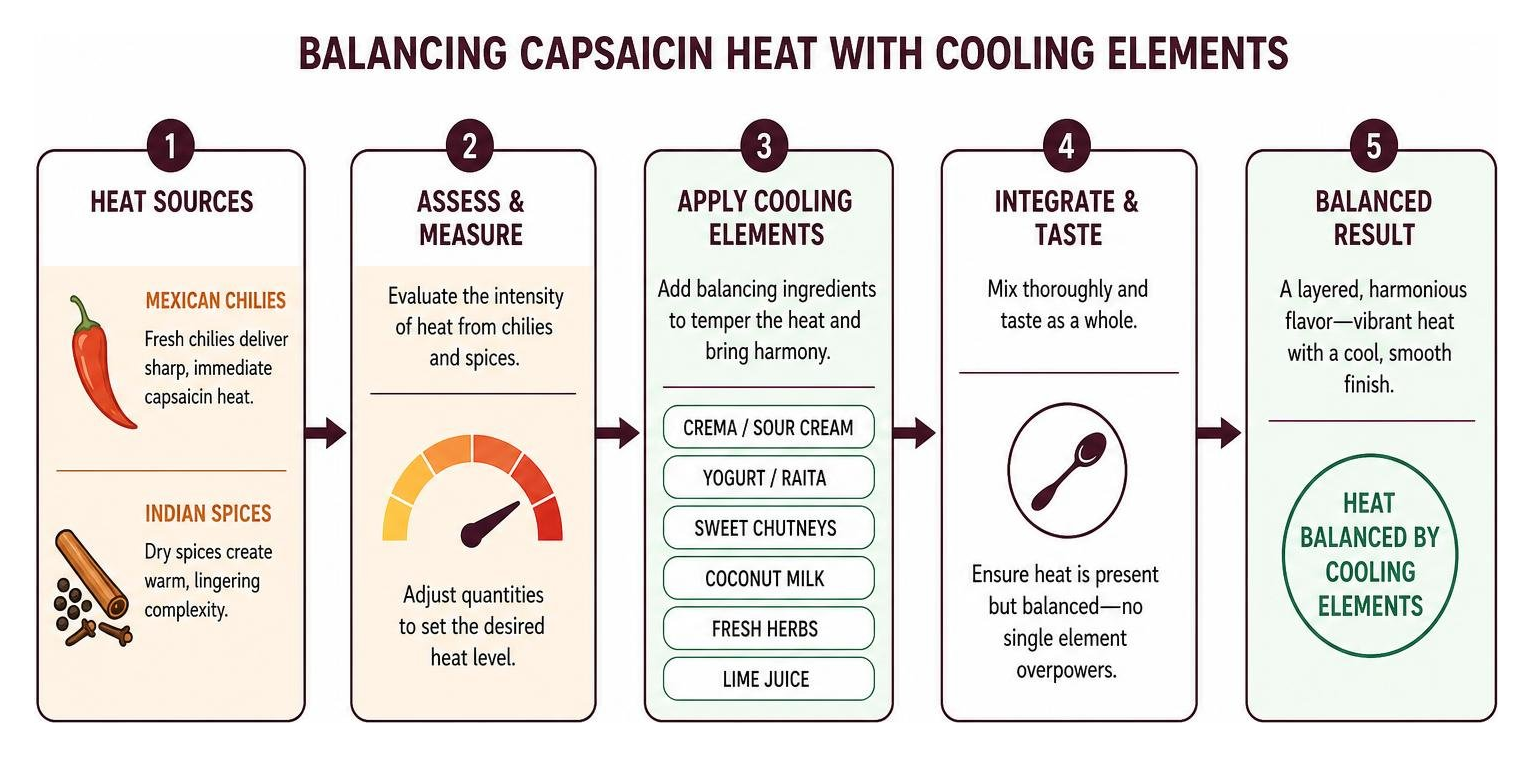
    How do chefs balance the heat levels of Indian and Mexican spices?

    Balancing the heat is a delicate science. Chefs must manage the immediate, sharp capsaicin heat of fresh Mexican chilies (like serranos and jalapeños) with the lingering, warm complexity of dry Indian spices (like black pepper, cloves, and cinnamon).

    Diagram showing the process of balancing capsaicin heat with cooling elements

    To keep the dishes accessible, kitchens often use cooling elements like crema, yogurt-based raita, or sweet chutneys to temper the flame.

    Conclusion

    The beautiful pairing of Mexican and Indian culinary traditions reminds us that food is a universal connector. Whether it is through a multi-course tasting menu or a casual weeknight bite, this fusion concept continues to capture the imaginations of food lovers everywhere.

    If you are in the Chicago area and looking for an unforgettable, artistic dining experience, look no further than Flambe Karma. With locations in both Buffalo Grove and Glen Ellyn, we pride ourselves on offering exquisite Indian and fusion cuisine served in a warm, creative atmosphere. Come try our signature Flambe Skewers and let our exceptional service turn your dinner into a true celebration.

    Ready to taste the magic? Book your reservation at Flambe Karma today!

  • Why These Cool Experience Restaurants Are Taking Over Your Feed

    Why These Cool Experience Restaurants Are Taking Over Your Feed

    Why Cool Experience Restaurants Are Taking Over Everyone’s Feed

    Cool experience restaurants are changing the way people think about going out to eat — and if you’ve seen them flooding your social media feed, there’s a very good reason for that.

    Quick answer — what are the most popular types of cool experience restaurants?

    TypeWhat Makes It Special
    Projection mapping diningAnimated stories play directly on your table and plates
    Dark diningYou eat in total darkness to heighten taste and smell
    Themed immersive diningFully built environments like buses, hobbit houses, or jungle spaces
    Art-integrated diningDigital art reacts to your food as dishes are placed on the table
    Market hall diningHistoric spaces with multiple vendors and a lively crowd
    Performance diningLive acts, burlesque, acrobats, or live music between courses

    Gone are the days when a nice meal meant just good food on a clean plate. Today, over 60% of diners aged 25 to 40 say they now prioritize unique dining experiences over traditional restaurant settings. Reservations at themed and experiential dining concepts in major U.S. cities have grown by 35% since 2022.

    The shift makes sense. People aren’t just hungry — they want a story to tell afterward.

    Whether it’s a 3D chef cooking on your plate, eating blindfolded in complete darkness, or boarding a fake city bus in Brooklyn that takes you through Thailand one course at a time, these restaurants turn dinner into something you remember.

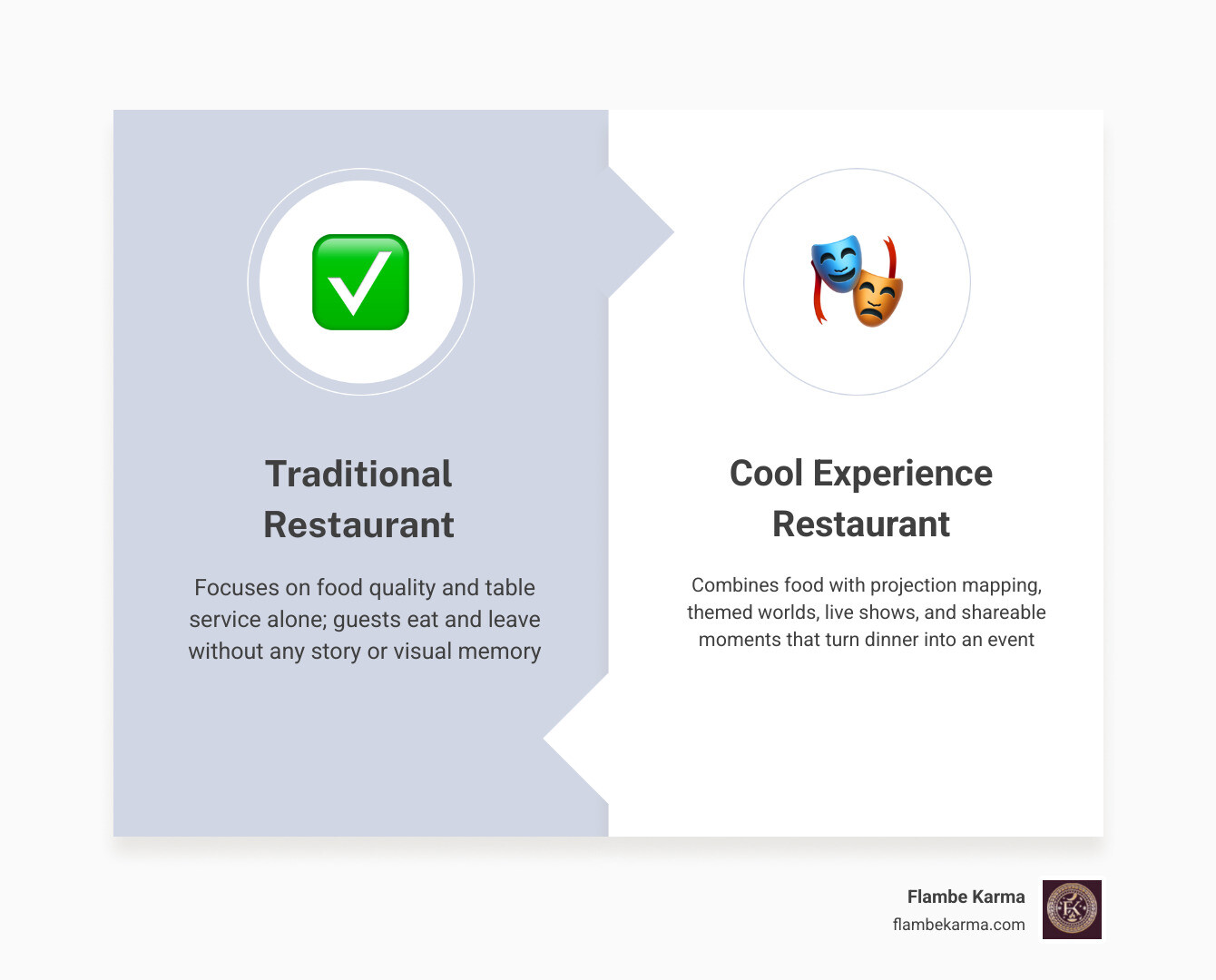
    infographic showing what makes an experience restaurant different from a traditional restaurant infographic

    Quick look at cool experience restaurants:

    What Makes Cool Experience Restaurants Different From Ordinary Dining?

    At a traditional restaurant, the meal is the event. At an experience restaurant, the meal is only one part of the event.

    That difference matters. The best cool experience restaurants combine several elements at once:

    • strong food
    • a memorable setting
    • entertainment or interaction
    • some kind of story, surprise, or sensory hook

    Sometimes that means projection mapping on the table. Sometimes it means dining in darkness. Sometimes it means a dramatic room, an open kitchen, tableside flames, or a space designed to feel like a journey instead of a dining room.

    A regular restaurant asks, “What would you like to order?” An experience restaurant quietly asks, “How would you like to feel tonight?”

    What defines cool experience restaurants in 2026?

    In 2026, an experience restaurant usually has these traits:

    • a concept you can describe in one sentence
    • visuals that feel made for photos and video
    • food that supports the theme instead of fighting it
    • timed pacing, often with set menus or coordinated service
    • moments built for birthdays, date nights, and celebrations

    That last point is huge. These places thrive because they give people a reason to leave home, dress up a little, and do something more exciting than scrolling while eating fries in the car. We support that mission deeply at Flambe Karma, where we believe atmosphere, presentation, and hospitality should make dinner feel special, not forgettable.

    The four pillars of an unforgettable experience restaurant

    We like to think of the best concepts as standing on four pillars:

    1. Food quality
      A flashy room cannot save weak food. The strongest concepts start with a menu people would still enjoy even without the show.

    2. Atmosphere design
      Lighting, decor, layout, sound, scent, and table presentation all shape the mood before the first bite arrives.

    3. Performance element
      This could be live music, projection mapping, theatrical pacing, tableside action, or chef storytelling.

    4. Guest interaction
      The diner should feel included, not just seated nearby. That might mean shared-table energy, synchronized starts, interactive visuals, or service that guides the experience.

    Why diners are choosing experiences over standard meals

    The numbers explain the trend pretty clearly:

    • reservations at experiential concepts are up 35% since 2022
    • more than 60% of diners ages 25 to 40 now favor unique experiences over standard restaurant settings

    Why? A few reasons:

    • celebrations feel bigger
    • group outings become easier to remember
    • photos and videos spread fast online
    • people want novelty without planning a full trip
    • younger diners often value memories as much as menu variety

    In other words, dinner has become part meal, part mini-event, part social content. Not every restaurant needs to turn into a spaceship, of course. But the places that create mood, drama, and delight are winning attention.

    12 Cool Experience Restaurants Worth Planning a Trip Around

    projection dining table with animated storytelling

    Below, we’re looking at standout types of experience restaurants people actively seek out. Since we focus on Buffalo Grove and Glen Ellyn, we’re not building a far-flung travel guide here. Instead, we’re showing the kinds of concepts shaping the category so you know what to look for when planning a special night out.

    Experience styleTypical price rangeFamily-friendly?Booking difficulty
    Projection mapping dinnerPremium to luxuryOften yesHigh
    Art-reactive diningLuxuryUsually adults-focusedHigh
    Transport-themed tasting roomPremiumUsually older kids or adultsMedium to high
    Dark diningMid-range to premiumUsually not ideal for young kidsMedium
    Fantasy private cabinsPremiumGood for groups, depends on policyMedium to high
    Historic market hallBudget to mid-rangeYesLow to medium
    Themed local restaurant with artistic ambianceMid-rangeYesLow to medium

    Cool experience restaurants with projection mapping and visual storytelling

    Projection dining is one of the biggest stars of the category. It uses mapped visuals, animation, sound, and synchronized courses so the table itself becomes part of the show.

    Globally, projection-based dining has grown into one of the most recognizable formats in immersive hospitality. These experiences often combine tabletop animation, timed service, and multi-course menus to create a dinner that feels part culinary event and part live performance. If you want a broader look at the technology behind this style, projection mapping is a useful reference point.

    A few practical things these concepts usually have in common:

    • timed seatings
    • preselected menus
    • advance notice for allergies
    • deposits or prepaid bookings
    • multi-course formats lasting around 2 to 3 hours

    If you love the idea of animation plus dinner, this category is probably your sweet spot.

    Cool experience restaurants built around movement, sound, and transportive themes

    Some restaurants go beyond visuals and try to make you feel like you’re somewhere else entirely.

    This style turns dinner into a journey through cinematic “windows,” immersive sound, and tightly paced courses. The room behaves more like a set than a standard dining room, and that shift can make the evening feel much more memorable.

    What makes this style so effective?

    • movement is suggested, even when you never leave your seat
    • sound design does a lot of emotional work
    • the room acts like a set, not just a dining area
    • the menu supports the narrative instead of distracting from it

    This is the kind of immersive dining that feels almost theatrical. It is less about eating quickly and more about giving yourself over to the pacing of the evening. Basically, not the right place if one person in your group insists on asking for the check halfway through course two.

    Sensory concepts that remove distractions and heighten perception

    Not every experience restaurant is loud or visual. Some do the opposite.

    Dark dining concepts strip away sight so taste, smell, texture, and conversation move to the front. These experiences are designed to heighten awareness and connection while shifting attention away from screens, plating, and visual expectations.

    Why this style stands out:

    • it removes visual judgment
    • flavors can feel more intense
    • guests often talk more to each other
    • the meal becomes surprisingly memorable, even without a single photo

    This type of restaurant is often better for adventurous adults than for very young kids, but it shows how broad the experience-dining category really is. A “cool” restaurant does not always mean a neon sign and confetti cannon. Sometimes it means silence, trust, and trying to identify what you just ate with zero visual clues. Humbling, honestly.

    Family-friendly experience restaurants that kids actually remember

    Some immersive concepts work beautifully for families, especially when they offer:

    • shorter formats
    • visual storytelling
    • junior menus
    • birthday-friendly service
    • less intimidating themes

    Projection mapping is especially strong here because the visuals can keep kids engaged while the meal still feels elevated for adults.

    That matters because many high-concept restaurants are adults-first. Family-friendly experience restaurants succeed when they simplify the menu for younger diners without flattening the excitement. If the visuals are engaging and the timing is tight enough, kids often stay far more interested than they would during a traditional long dinner.

    If you’re planning a family night, look for:

    • minimum age policies
    • child pricing
    • menu flexibility
    • duration of the event
    • whether children will be seated with strangers
    • whether the tone is playful or formal

    Private and fantasy-style dining for celebrations

    Some of the most memorable concepts lean into privacy and fantasy.

    Think cabin dining, themed structures, heated outdoor pods, or storybook-inspired spaces designed for groups and celebrations. These experiences are especially popular for birthdays, anniversaries, and winter evenings because they create intimacy without requiring a full private event buyout.

    What usually defines this category:

    • reservation-only structures
    • multi-course service
    • longer stays
    • premium pricing
    • highly photo-friendly settings

    These are ideal for groups who want a sense of escape. They also tend to book up early because inventory is limited by design. A room with eight tables can stretch. A place with only a handful of private themed spaces cannot.

    Market halls and historic spaces that feel like an adventure

    Not every experience restaurant is formal or expensive. Some of the most fun options are market halls and historic food spaces.

    A well-known example of the format is a large urban market hall with dozens of vendors operating inside a historic building. We mention this style not as a local recommendation, but as proof that “experience dining” can also mean energy, variety, architecture, and freedom of choice. In many cities, this overlaps with the appeal of a food hall, where the setting itself becomes part of the outing.

    historic market hall dining scene

    Why people love this style:

    • groups can split up and order different cuisines
    • the building itself often has personality
    • the atmosphere feels lively and social
    • there’s less pressure than at a tasting-menu venue
    • it works for families, friends, and picky eaters

    For many diners, this is the easiest gateway into experience dining. You still get buzz, visuals, history, and a sense of occasion, just without a three-hour commitment and a cancellation policy that reads like a mortgage document.

    How Cool Experience Restaurants Blend Food, Atmosphere, and Entertainment

    The best experience restaurants do not make you choose between dinner and entertainment. They choreograph both.

    That means:

    • the room sets expectations early
    • service timing supports the mood
    • music and lighting shift with the meal
    • visual moments arrive when the food arrives
    • the menu feels intentional, not random

    When the food is as important as the show

    This is where weaker concepts often fail. If the visuals are great but the food is forgettable, guests leave saying, “Fun place, one time only.”

    The strongest concepts avoid that trap with:

    • chef-driven menus
    • seasonal ingredients
    • well-paced tasting formats
    • plating that fits the theme
    • pairings that add depth instead of just cost

    For more on how memorable dining works when culinary quality leads the way, we recommend Where Art Meets Appetite: Unforgettable Fine Dining Adventures.

    At Flambe Karma, this principle matters to us. Artistic ambiance is powerful, but it has to be backed by food people genuinely crave. That’s why memorable dining lands hardest when flavor, service, and atmosphere all pull in the same direction.

    The design features guests remember most

    When people talk about these places later, they usually mention the same kinds of features:

    • live performers
    • digital projections
    • themed interiors
    • dramatic entryways
    • open kitchens
    • rooftop or panoramic views
    • interactive or theatrical service
    • signature tableside moments

    These details become the “remember when…” part of the night. They also make social sharing easier because there is something to film besides a basket of bread. Nothing against bread, of course. Bread has done excellent work for humanity.

    Why these experiences spread so fast online

    Experience restaurants are built for the internet, whether they admit it or not.

    They spread because they offer:

    • a strong visual hook
    • a simple concept people can explain quickly
    • birthday and celebration energy
    • group reactions people want to record
    • a sense of “you have to see this”

    That social momentum feeds demand, which feeds scarcity, which feeds more demand. In practical terms, if a place is both photogenic and limited-capacity, reservations can disappear fast.

    For more ideas on dining that engages more than just your appetite, see A Dining Experience That Engages All the Senses.

    What to Know Before You Book

    Experience restaurants often come with more rules than a casual night out. That’s not a bad thing. It just means planning helps.

    Typical price ranges for experience restaurants

    Based on the research, here’s a realistic framework:

    • budget fun: $10 to $20 per person at casual halls or low-key themed spots
    • mid-range experiences: $20 to $40 per person
    • premium experiences: $50+ per person
    • luxury immersive dinners: often well above that, especially for tasting menus and projection shows

    Specific examples in the research included:

    • Le Petit Chef global pricing often landing in the premium-to-luxury range
    • MoonFlower Sagaya Ginza at 39,600 yen per person for a 9-dish course
    • kids menus at some projection experiences priced separately at lower rates
    • add-on wine pairings at additional cost

    infographic of experience restaurant price ranges and booking factors infographic

    Reservation tips that save frustration

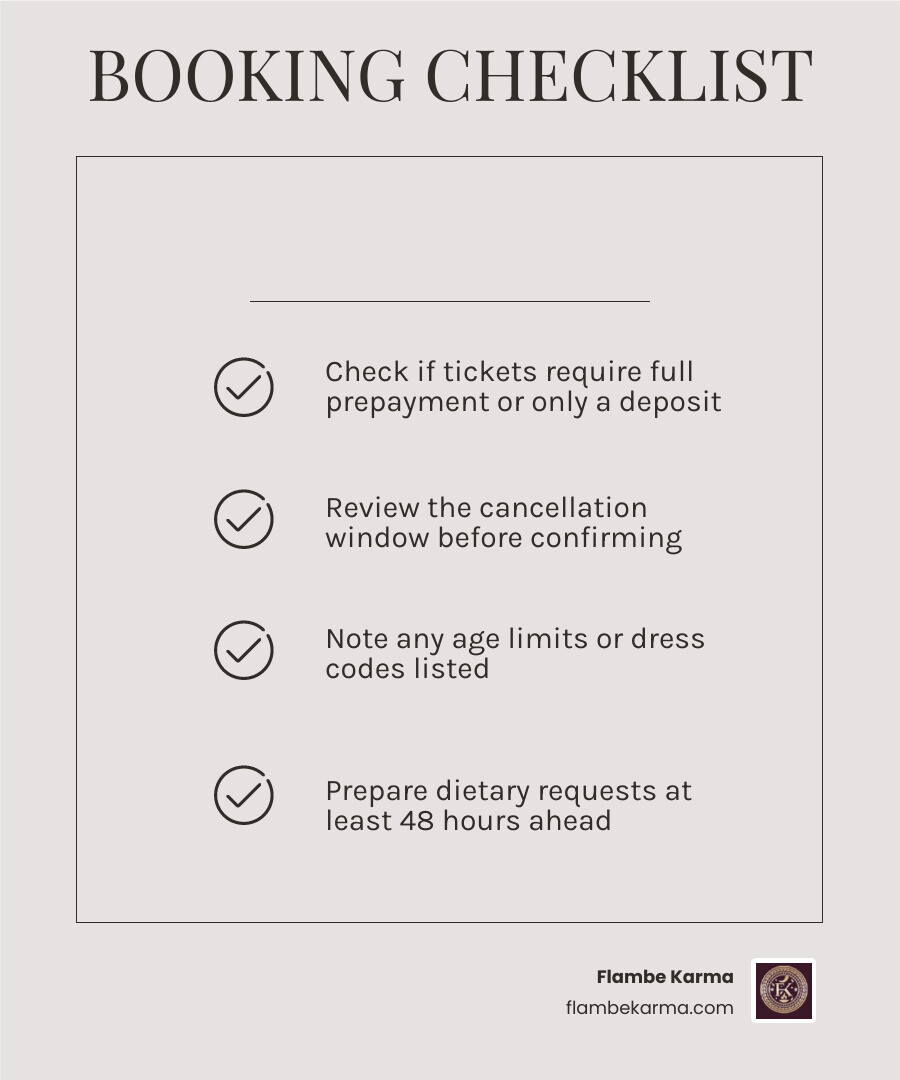
    Before booking, check:

    • whether tickets are prepaid or deposit-based
    • cancellation windows
    • dietary request deadlines
    • fixed start times
    • shared-table policies
    • age restrictions

    Some venues in the research required:

    • 48-hour notice for dietary needs
    • arrival 15 minutes early
    • deposits at booking
    • cancellation penalties within 7 to 14 days
    • exact timed release windows for reservations

    If a place is highly choreographed, being late is not a small issue. You may miss key parts of the experience.

    Practical logistics: parking, timing, and special requests

    A few smart habits make these dinners smoother:

    • arrive early rather than right on time
    • check parking in advance
    • note accessibility needs before booking
    • avoid strong perfume in sensory-forward settings
    • mention allergies clearly and early
    • choose off-peak nights if you want less stress

    Some immersive venues provide parking guidance or validation, while others are strict about start times because all guests begin together. In those cases, “fashionably late” is just regular late.

    How to choose the right experience for your group

    Match the format to the people:

    • date night: projection dining, art dining, fantasy private spaces
    • birthdays: playful visuals, private cabins, shareable tasting menus
    • families: kid-friendly visuals, shorter formats, flexible menus
    • business dinners: polished service, moderate sound levels, clear pacing
    • picky eaters: market halls or themed restaurants with broader menus
    • sensory-sensitive guests: avoid loud, long, or highly fixed formats

    If your group includes young kids, older relatives, and one person who “doesn’t like surprises,” go with a lighter concept instead of a rigid tasting performance.

    How Experience Restaurants Have Evolved-and Where the Trend Is Going

    The category has matured a lot in the past few years.

    From themed decor to full-story worlds

    Older themed restaurants often focused on props and decor. Newer concepts go much further:

    • synchronized visuals
    • tailored sound design
    • interactive projections
    • timed service
    • narrative pacing across courses

    That shift is one reason reservations have grown so much since 2022. Diners are no longer impressed by decor alone. They expect the whole evening to feel intentional.

    What diners expect from cool experience restaurants now

    In 2026, guests want:

    • better food, not just a cool room
    • smoother technology
    • easier online booking
    • clear dietary communication
    • inclusive options for families or varied needs
    • service that feels polished, not robotic

    This is also where local restaurants can shine. You do not need a giant production budget to create a memorable atmosphere. Artistic presentation, thoughtful hospitality, and a strong sense of identity can still turn a meal into an experience.

    Where to find more unique dining inspiration

    If you want to keep exploring, start here:

    You can also browse booking platforms, official venue pages, and city dining guides when comparing policies, pricing, and map locations.

    Frequently Asked Questions About Cool Experience Restaurants

    Are cool experience restaurants worth the higher price?

    Usually, yes, if you value the memory as much as the meal.

    You’re paying for more than food:

    • design
    • staging
    • entertainment
    • technology
    • staffing
    • pacing
    • shareable moments

    For a random Tuesday when you just want dinner fast, maybe not. For birthdays, anniversaries, date nights, or visitors in town, absolutely often yes.

    Are there cool experience restaurants that work for kids and families?

    Yes, but not all of them.

    The best family-friendly options usually offer:

    • junior menus
    • visual storytelling
    • clear age policies
    • lower child pricing
    • shorter or more playful experiences

    Projection dining tends to work especially well for families because the visuals keep kids engaged and the event feels special without being too abstract.

    For popular weekends or holidays, reserve as early as possible.

    A good general rule:

    • casual themed spots: a few days to 1 week
    • popular local concept restaurants: 1 to 3 weeks
    • premium immersive events: several weeks ahead
    • holiday or celebration dates: much earlier if possible

    Always read the booking terms. Deposits, shared seating, dietary cutoffs, and cancellation penalties are common.

    Conclusion

    The rise of cool experience restaurants makes perfect sense to us. People want meals that feel like events, not errands. They want atmosphere, story, flavor, and something worth talking about on the drive home.

    The smartest way to enjoy these places is simple:

    • pick the right format for your group
    • understand the time and price commitment
    • book early
    • read the policies
    • make sure the food matters as much as the visuals

    If that sounds like your kind of night out, explore more inspiration in Eat, Explore, Enchant: The Art of Memorable Dining and visit Flambe Karma’s Buffalo Grove location to plan a memorable meal with artistic ambiance closer to home.

  • The Top Chicken Masala Powders to Order Online

    The Top Chicken Masala Powders to Order Online

    The Best Chicken Masala Powders You Can Order Online Right Now

    If you want to chicken masala order online — whether that means spice blends for home cooking or a restaurant-quality meal delivered to your door — here are the fastest ways to get started:

    1. Order spice blends from online retailers like Amazon, Penzeys, or specialty Indian grocery sites for home cooking.
    2. Order restaurant meals through DoorDash, Grubhub, or directly from your local Indian restaurant’s website.
    3. Subscribe for savings — platforms like DashPass or Grubhub+ reduce or eliminate delivery fees on eligible orders.

    Getting chicken masala right starts with the spice blend. Whether you’re recreating a restaurant-worthy dish at home or just stocking your pantry, the masala powder you choose makes all the difference.

    The good news? You no longer need to hunt down a specialty store. A growing range of high-quality chicken masala spice blends — from everyday grocery brands to small-batch artisan mixes — are available to order online and delivered straight to your kitchen.

    This guide cuts through the noise and shows you exactly which blends are worth your money.

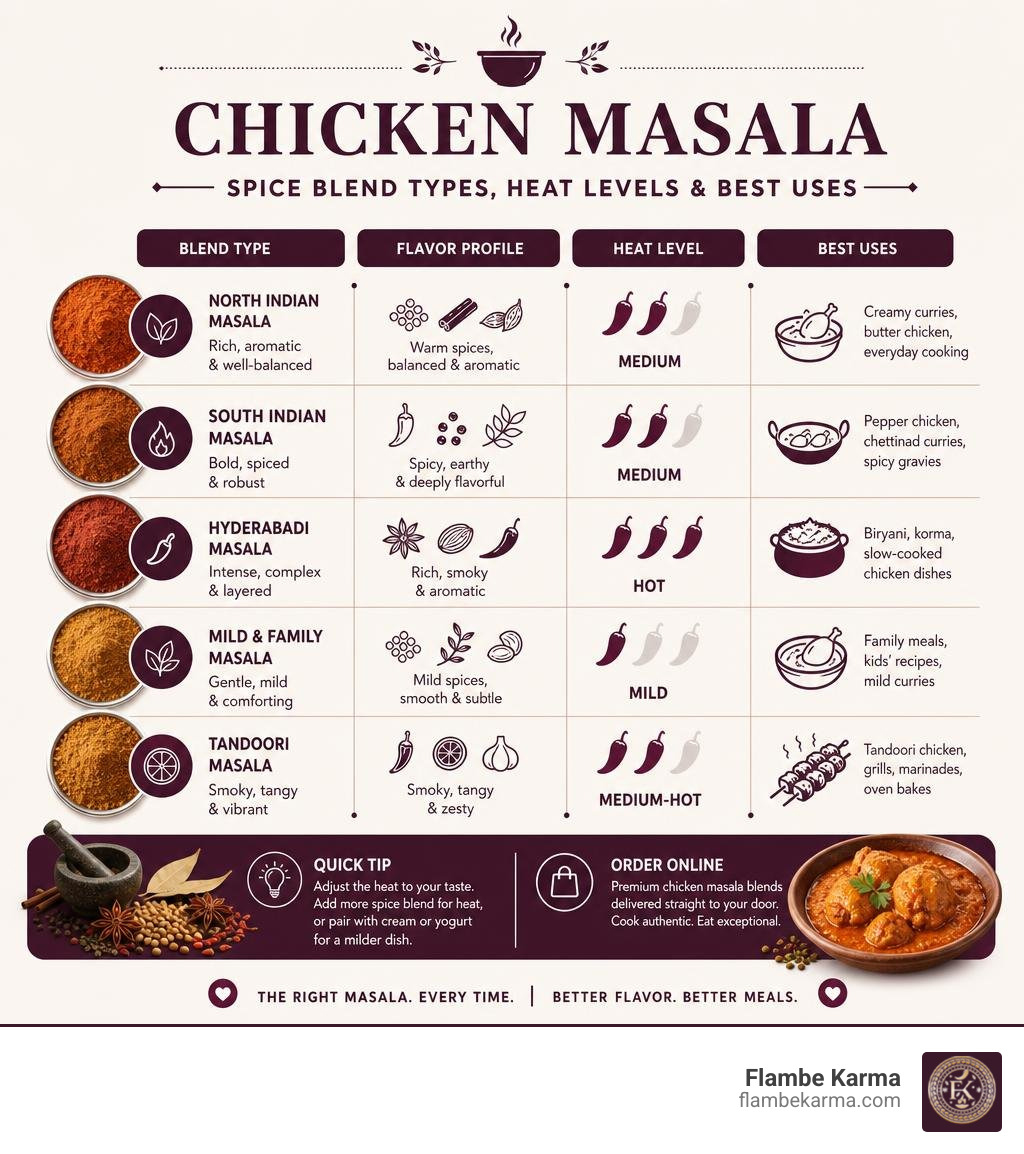
    Comparison infographic of chicken masala spice blend types, heat levels, and best uses infographic

    Simple chicken masala order online word guide:

    Understanding Chicken Tikka Masala vs. Other Indian Curries

    Before you click “add to cart” on your next chicken masala order online, it helps to understand what makes this dish so uniquely beloved. Chicken Tikka Masala is often called the undisputed king of Westernized Indian cuisine. Legend has it that the dish was actually invented in Glasgow, Scotland, when a chef combined traditional spiced chicken tikka with a creamy tomato soup base to satisfy a customer’s request for a saucier meal.

    But how does it actually differ from other heavy hitters on the menu, like Butter Chicken or Chicken Vindaloo?

    creamy chicken tikka masala curry with fresh cilantro

    At its core, Chicken Tikka Masala relies on two main components: marinated, tandoor-roasted chicken pieces (the “tikka”) and a rich, spiced tomato-and-cream sauce (the “masala”). The sauce is characterized by its earthy, tangy, and slightly smoky flavor profile. While it features a luxurious texture, it is generally more robustly spiced and slightly less sweet than Butter Chicken.

    Butter Chicken, on the other hand, is a silky-smooth, buttery curry that highlights sweet tomato tones and a heavy dose of cream, often relying heavily on cashew paste and kasuri methi (dried fenugreek leaves) to achieve its signature profile. If you want to dive deeper into the creamy world of butter-laden curries, check out our guide on Smooth Sailing with the Best Butter Chicken Delivery Options.

    Other curries on the spectrum move in entirely different directions. Chicken Vindaloo is a fiery, vinegar-infused Goan curry that features sharp heat and tangy notes, while Korma leans heavily on coconut milk, yogurt, and mild aromatic spices like cardamom and cinnamon.

    When you decide to chicken masala order online from our team at Flambe Karma, you are getting a dish crafted with precision. We balance the bright acidity of tomatoes with the earthy depth of freshly ground spices, ensuring your meal stands out from standard, overly sweet takeout versions. Whether you are ordering from our Curry A La Flambe Menu Glen Ellyn – Postmates page or looking for a cozy dine-in experience, we make sure every bite is memorable.

    The Top Chicken Masala Powders to Order Online

    If you want to try your hand at cooking this masterpiece at home, choosing the right pre-blended chicken masala powder is key. A great spice blend saves you the trouble of measuring out dozens of individual spices while maintaining an authentic flavor profile.

    Below is a comparison table of the top chicken masala spice brands you can easily order online as of July 2026:

    Brand NameHeat LevelPrimary Flavor NotesBest ForTypical Price Range
    MDH Chicken MasalaMedium-HotCoriander, turmeric, fenugreek, black pepperTraditional, rustic North Indian curries$3.50 – $5.00 (100g)
    Everest Chicken MasalaMild-MediumMild chili, coriander, cumin, gingerBalanced, family-friendly home cooking$3.00 – $4.50 (100g)
    Shan Chicken MasalaHotRed chili, garlic, ginger, green cardamomBold, aromatic, and spicy Pakistani-style curries$3.50 – $5.00 (50g)
    Badshah Chicken MasalaMediumNutmeg, mace, cumin, black cardamomRich, fragrant Mughlai-style dishes$4.00 – $6.00 (100g)
    Organic Larder Chicken MasalaMildClean coriander, organic turmeric, cuminHealth-conscious, preservative-free cooking$6.50 – $8.00 (80g)

    Top Spice Blends: Your Ultimate Chicken Masala Order Online Guide

    When you are ready to make your chicken masala order online for home spice racks, there are a few key factors to consider to ensure you are buying top-tier quality:

    • Spice Quality and Sourcing: Look for brands that list whole spices ground together rather than blends filled with cheap bulking agents like salt or rice flour. High-quality brands preserve the natural oils of the spices, which translates to a much more fragrant dish when cooked.
    • Organic Options: If you prefer clean eating, brands like Organic Larder or various small-batch organic spice merchants on Amazon offer USDA-certified organic options. These blends ensure your turmeric, cumin, and coriander are free from synthetic pesticides and irradiation.
    • Shelf Life and Packaging: Spices degrade quickly when exposed to air, light, and moisture. Opt for brands that package their masala in foil-sealed pouches inside boxes, or better yet, resealable tin canisters. Always check the packaging date to ensure maximum potency.
    • Authentic Flavor Profiles: Different brands cater to different regional tastes. Shan is fantastic for those who love a punchy, garlic-heavy, and spicy kick. Everest is excellent if you prefer a subtle, warming flavor where the sweet spices like cinnamon and cardamom shine through.

    If you are looking for culinary inspiration or want to taste how professional chefs balance these exact spice profiles in the Chicago suburbs, explore what makes an authentic kitchen tick by visiting our Indian Restaurant Buffalo Grove page.

    How to Safely Chicken Masala Order Online for Fresh Home Cooking

    Whether you are ordering raw spices to cook at home or ordering a fully prepared, piping-hot curry for dinner tonight, navigating online delivery platforms safely and efficiently is an art form.

    When ordering prepared food online, you have two primary routes: ordering directly through a restaurant’s website or using a third-party delivery service. Direct ordering is almost always the preferred choice. It ensures the restaurant keeps 100% of the food revenue, and it often results in more accurate delivery times because the restaurant manages its own drivers or trusted local partners.

    For the ultimate convenience, you can easily schedule your orders in advance. If you know you have a busy day of meetings ahead, you can hop online in the morning, place your order for 7:00 PM, and choose contact-free delivery. Your driver will leave your warm, insulated bag of curry right on your doorstep, sending you a text notification the second it arrives.

    How to Chicken Masala Order Online and Avoid High Delivery Fees

    Third-party apps like DoorDash, Uber Eats, and Grubhub are incredibly convenient, but they often come with hidden costs. Between service fees, delivery charges, and inflated menu prices, a single order of chicken masala can quickly cost 30% to 40% more than it would if you ordered directly.

    To keep your hard-earned money in your pocket, use these smart strategies:

    1. Order Direct: Many local restaurants offer direct online ordering with lower delivery fees or even free delivery within a certain radius.
    2. Use Subscription Services: If you order food delivery frequently, subscriptions like DashPass (DoorDash) or Grubhub+ can save you a bundle by offering $0 delivery fees and reduced service charges on eligible orders.
    3. Look for Local Platforms: Some community-based delivery services operate with much lower overhead than the national giants.
    4. Check for Free Delivery Deals: Restaurants frequently run promotions for free delivery on orders over a certain dollar amount. To learn how to hunt down these cost-saving hacks, read our guide on How to Find Indian Restaurants with Free Delivery Near You.

    If you are located in the Buffalo Grove area, you can easily find local delivery options through the 15 Best Indian Delivery Restaurants in Buffalo Grove – Grubhub page to compare delivery windows and fees.

    Perfect Pairings: Sides, Breads, and Drinks for Your Feast

    No chicken masala order online is complete without the proper supporting cast. To turn your curry into a true feast, you need to pair it with sides that complement and balance its rich, spiced profile:

    • The Breads: Garlic naan is the absolute gold standard here. Its charred, buttery, and garlic-flecked surface is practically designed for wiping your plate clean of every last drop of masala sauce. If you want something lighter, roti or paratha are excellent alternatives.
    • The Rice: A bed of fragrant, fluffy Basmati rice is essential. Look for saffron-infused rice or jeera (cumin) rice to add an extra layer of aromatic complexity to your meal.
    • The Starters: Kick off your meal with something crispy. Veggie samosas or a side of tandoori grilled meats work beautifully. If you want to add some smoky, clay-oven goodness to your spread, you can easily Get Your Spice Fix and Order Tandoori Chicken Online.
    • The Drinks: A cool, creamy Mango Lassi is the ultimate palate cleanser. The yogurt base helps tame the heat of the spices, while the sweet mango flavor provides a refreshing contrast.

    Frequently Asked Questions about Chicken Masala Delivery

    What is the difference between Chicken Tikka Masala and Butter Chicken?

    While both feature a creamy, tomato-based sauce, Chicken Tikka Masala is generally more robustly spiced, featuring a tangier profile with prominent notes of onion, garlic, ginger, and cumin. The chicken pieces are marinated in yogurt and spices before being charred in a tandoor oven. Butter Chicken (Murgh Makhani) is smoother, creamier, and milder, featuring a heavy emphasis on butter, cream, and sweet tomato tones with very little heat.

    Are there gluten-free or dairy-free chicken masala options available?

    Most traditional chicken masala recipes are naturally gluten-free, as the sauce is thickened by reducing tomatoes, onions, and spices rather than using flour. However, dairy is a core ingredient in traditional masala sauces (usually in the form of heavy cream, yogurt, or butter). If you require a dairy-free version, look for restaurants or spice kits that substitute heavy cream with coconut milk or cashew cream. Always make sure to check with the restaurant regarding allergen cross-contamination.

    How do I ensure my chicken masala delivery arrives hot and fresh?

    To get the freshest possible meal, try to order from restaurants located within a 3- to 5-mile radius of your home. You can also schedule your order slightly ahead of the peak dinner rush (around 5:30 PM or after 8:00 PM) to ensure your driver doesn’t get stuck in traffic. If your curry arrives slightly cooled, don’t worry! Simply transfer it to a saucepan and heat it gently over medium-low heat on your stove, stirring constantly, to restore its velvety texture without splitting the cream.

    Conclusion

    When you decide to chicken masala order online, you are opening the door to one of the world’s most comforting and flavorful culinary traditions. Whether you are stocking your pantry with premium spice blends to master the dish in your own kitchen or ordering a ready-to-eat feast for a cozy night in, the key is prioritizing quality, authenticity, and freshness.

    At Flambe Karma, we take pride in bringing the vibrant, bold, and artistic flavors of authentic Indian cuisine straight to your table. With our locations in Buffalo Grove and Glen Ellyn, Illinois, we serve up memorable dining experiences, specialty Flambe Skewers, and rich, perfectly spiced curries that will keep you coming back for more.

    Ready to elevate your next meal? Skip the third-party hassle and order your next feast directly from our Indian Restaurant Buffalo Grove location today!

  • Kachi Yakhni Made Easy: Authentic Hyderabadi Boneless Chicken Biryani

    Kachi Yakhni Made Easy: Authentic Hyderabadi Boneless Chicken Biryani

    The Ancient Art of Hyderabadi Boneless Chicken Biryani — And Why It’s Worth Mastering

    Hyderabadi boneless chicken biryani is one of the most aromatic and celebrated rice dishes in the world — and making it at home is more achievable than most people think.

    Quick answer: How to make Hyderabadi boneless chicken biryani

    1. Marinate boneless chicken overnight in yogurt, spices, and lemon juice
    2. Parboil aged Basmati rice with whole spices to 75% doneness
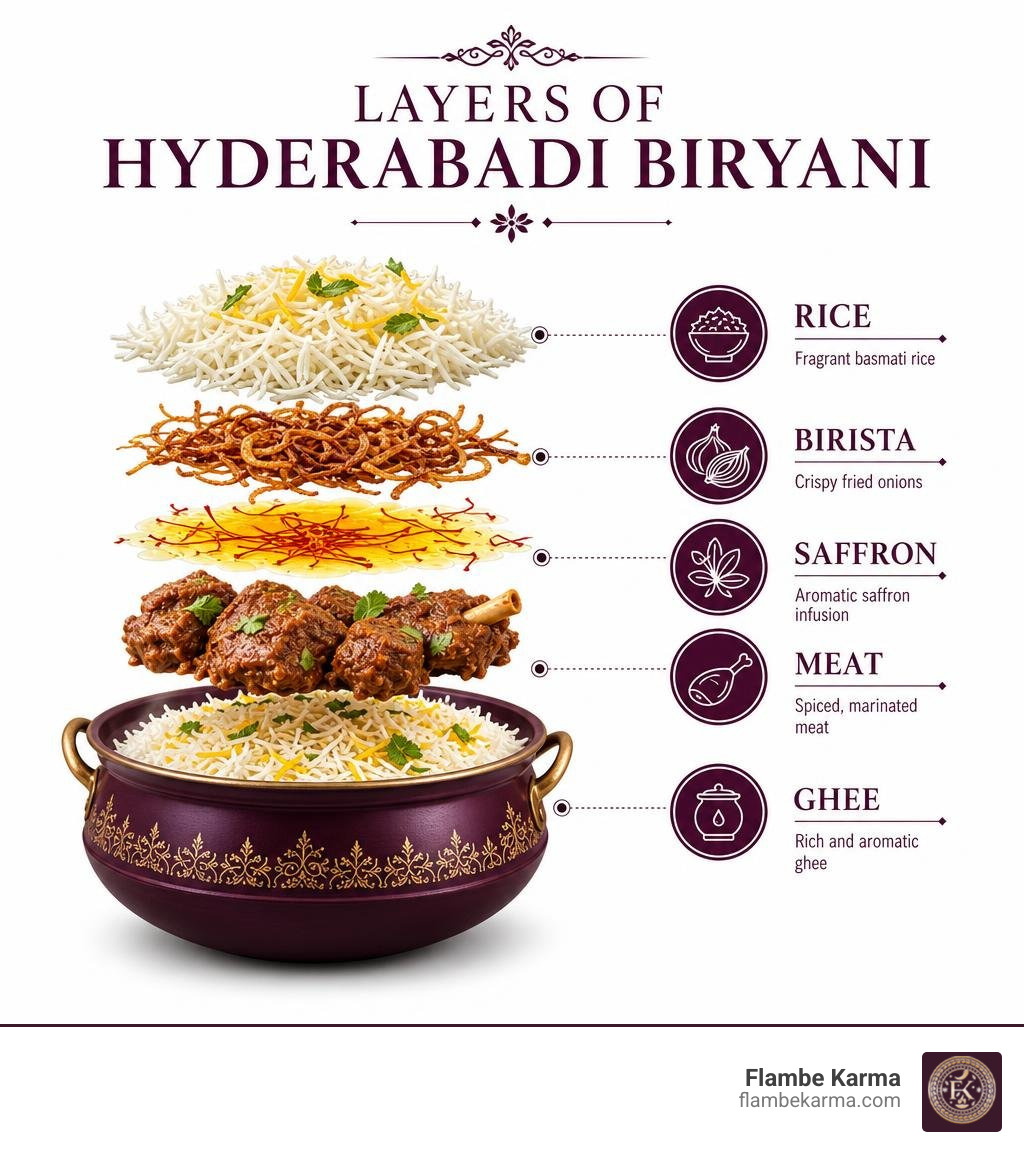
    3. Layer raw marinated chicken at the bottom, then top with partially cooked rice
    4. Add saffron milk, ghee, and fried onions (birista) between layers
    5. Seal the pot tightly with foil and a lid
    6. Dum cook on low heat (or bake at 375°F) for about one hour
    7. Rest for 20–30 minutes before serving

    This method is called Kachi Yakhni — the classic Hyderabadi style where raw marinated meat and partially cooked rice finish cooking together, sealed in their own steam.

    The result? Rice that absorbs every drop of spiced, aromatic chicken juice. Tender, fall-apart chicken. That unmistakable fragrance that fills the whole house.

    The boneless version makes it even more approachable — no bones to navigate, easier to serve, and just as deeply flavorful when marinated properly.

    Biryani has roots in the Mughlai culinary tradition, brought to the Indian subcontinent centuries ago and perfected in Hyderabad into something truly iconic. As of July 2026, it remains one of the most searched and cooked Indian dishes globally — and for good reason.

    This guide walks you through every step, from marinade to dum, so you can pull it off confidently at home.

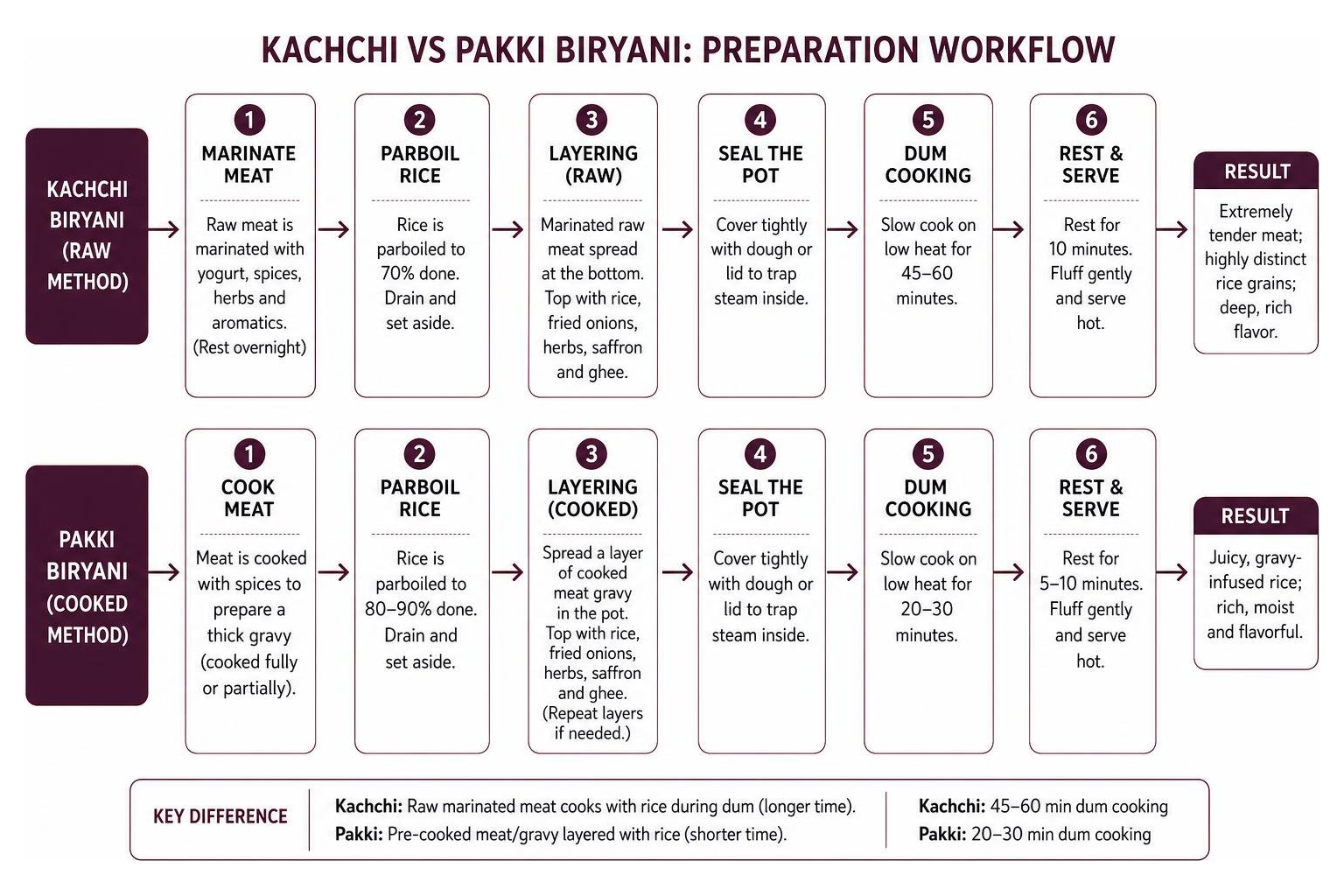
    Kachi Yakhni vs Pakki Biryani process comparison infographic infographic

    What is Kachi Yakhni and How Does It Differ from Traditional Biryani?

    To truly appreciate a great hyderabadi boneless chicken biryani, we must first understand the magic of Kachi Yakhni.

    In the vast world of biryani, there are two primary preparation methods: Pakki (cooked) and Kachi (raw).

    • Pakki Biryani: The meat is fully or partially cooked into a rich gravy before being layered with parboiled rice and steamed. This is a safer, more forgiving method often used in restaurant kitchens to ensure speed and consistency.
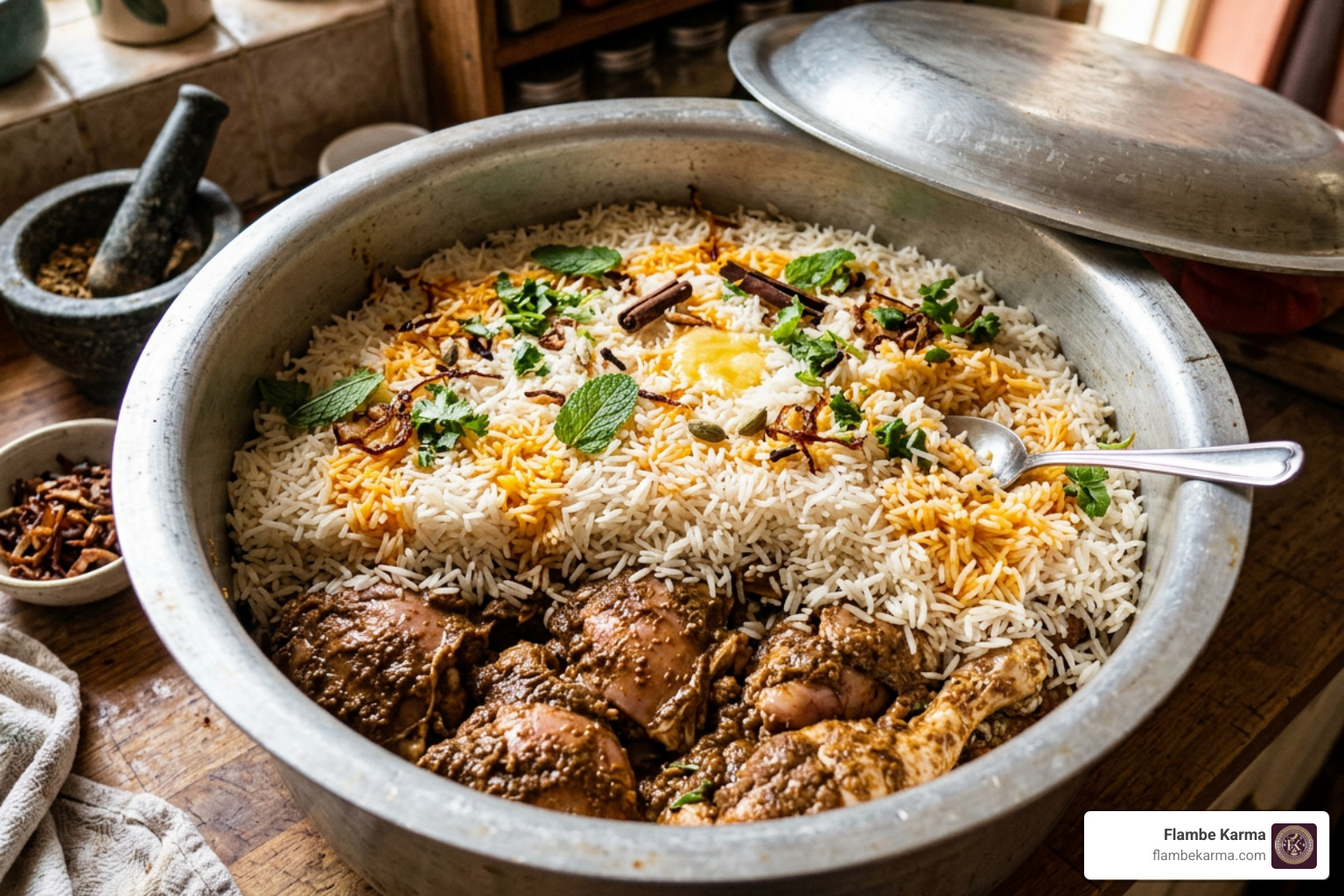
    • Kachi Yakhni Biryani: Raw, heavily marinated meat is placed at the absolute bottom of a heavy pot. Partially cooked, warm Basmati rice is layered directly over this raw meat. The pot is then sealed hermetically. As the pot heats, the juices from the raw meat vaporize, rise through the rice, and cook the entire dish in a closed loop of pure flavor.

    Using boneless chicken for a Kachi Yakhni preparation was once considered a culinary gamble. Traditionalists argued that bones are essential because they release marrow and gelatin, which keep the meat moist and flavor the rice. However, as modern home cooking has evolved into July 2026, the demand for a clean, bone-free dining experience has made the boneless variation incredibly popular.

    To make this work without drying out the chicken, we rely on a long, acidic marination process and the use of Sella Basmati rice. Sella Basmati is parboiled in its husk before milling, making the grains sturdier, harder to overcook, and less likely to turn mushy during the long steam phase.

    If you are curious about how this technique fits into the broader landscape of South Asian culinary arts, you can read more about Signature Dishes That Bring Flair to Indian Cuisine. For a deeper dive into the family-style roots of this raw-meat method, take a look at the traditional Hyderabadi Boneless Chicken Biryani {Kachi Yakhni} approach.

    Mastering Hyderabadi Boneless Chicken Biryani: Essential Ingredients

    An authentic biryani is only as good as the ingredients you put into it. There are no shortcuts here; using stale spices or low-grade rice will result in a bland dish.

    To set your kitchen up for success, we recommend starting with a well-curated pantry. You can build your foundation by reviewing A Traditional Indian Food List for Your Kitchen.

    For this recipe, you will need:

    • Aged Basmati Rice: Look for premium brands labeled “aged” (ideally 1 to 2 years). Aged rice loses its moisture, allowing the grains to expand into long, separate needles that scatter like pearls rather than sticking together.
    • High-Quality Ghee: Pure clarified butter is the lifeblood of biryani. It adds a rich, nutty aroma and prevents the rice from drying out.
    • Saffron: Do not skip this! Steep a generous pinch of saffron threads in warm milk for at least 20 minutes to create a golden, fragrant liquid.
    • Yogurt (Curd): Use fresh, whole-milk yogurt. Avoid sour or low-fat yogurt, which can split during cooking and ruin the texture of your marinade.
    • Homemade Biryani Masala: While store-bought is convenient, grinding whole spices (cardamom, cinnamon, cloves, mace, nutmeg, and shahi jeera) at home elevates the dish to restaurant-quality.

    Because boneless chicken behaves differently than bone-in cuts under heat, we must adjust our preparation techniques accordingly:

    FeatureBone-In Chicken PrepBoneless Chicken Prep
    Ideal CutThighs and drumsticksThigh fillets (highly recommended) or thick-cut breasts
    Marination Time2 to 4 hours4 hours to overnight (crucial for tenderizing)
    Heat SensitivityForgiving; bones protect against drying outHigh; prone to drying if overcooked
    Fat ContentNaturally highLow to moderate (requires extra ghee/yogurt)
    Cooking Window45 to 60 minutes35 to 45 minutes on low heat

    Sourcing and Preparing the Perfect Birista (Fried Onions)

    If biryani is the king of Indian dishes, then birista—deep-fried onions—is its crown. Birista provides a sweet, savory, and caramelized depth that cannot be replicated by raw or sautéed onions.

    To make perfect birista:

    1. Peel and slice red onions as thinly and uniformly as possible. If the slices are uneven, the thin ones will burn while the thick ones remain soggy.
    2. Heat a generous amount of ghee or neutral oil in a wide pan over medium heat.
    3. Fry the onions in batches. Do not crowd the pan, or they will steam instead of fry.
    4. Stir constantly as they begin to turn golden. Onions can go from perfectly golden to bitter and burnt in a matter of seconds.
    5. Remove them from the oil just before they reach your desired shade of brown, as they will continue to cook and darken from residual heat after being drained.
    6. Spread them out on paper towels to cool and become crisp.

    For a classic reference on how to balance these aromatics in your base, you can consult Hyderabadi Chicken Biryani – Swasthi’s Recipes.

    The Art of Marination and Layering

    With your ingredients prepped and your birista cooling, it is time to build the foundation of your hyderabadi boneless chicken biryani. This is where the magic happens.

    How to Marinate Boneless Chicken for Maximum Flavor

    Because boneless meat lacks the natural moisture-retaining properties of bone-in cuts, your marinade must do double duty: infuse deep flavor and tenderize the meat fibers.

    marinated boneless chicken thighs for biryani

    For the absolute best results, use boneless, skinless chicken thighs cut into generous two-inch pieces. Chicken breast can be used, but it requires a shorter cooking window and a highly acidic marinade to prevent it from becoming chalky.

    In a large bowl, whisk together whole-milk yogurt, fresh ginger-garlic paste, lemon juice, green chilies, red chili powder, turmeric, garam masala, chopped mint, cilantro, a splash of oil (or leftover onion-frying oil), and half of your prepared birista.

    Pro Tip: Add a teaspoon of raw papaya paste to the marinade if you are using chicken breast. Raw papaya contains papain, a natural enzyme that breaks down tough proteins, ensuring your boneless chicken remains incredibly succulent.

    Cover and refrigerate the mixture for at least 4 hours, though letting it sit overnight is highly recommended.

    Step-by-Step Assembly of Hyderabadi Boneless Chicken Biryani

    Layering is an architectural process. Done correctly, it creates a beautiful contrast of white, yellow, and orange rice grains interspersed with tender meat.

    1. The Meat Base: Spread the cold, marinated boneless chicken in an even layer at the very bottom of your heavy-bottomed cooking pot. Do not cook it first!
    2. The Rice Prep: Wash your aged Basmati rice until the water runs completely clear to remove excess starch. Soak it for 30 minutes. Boil a large pot of water salted “like the sea” with whole spices (cloves, cardamom, cinnamon, bay leaves).
    3. The 75% Rule: Drop the rice into the boiling water. Watch it closely. You want to cook it until it is al dente—about 5 to 7 minutes. The grain should be long and bendable but still have a firm, uncooked core when pinched between your fingers. Drain immediately.
    4. The First Layer: Gently spread half of the hot, drained rice directly over the raw chicken.
    5. The Mid-Layer Garnish: Sprinkle a handful of birista, chopped mint, cilantro, a drizzle of saffron milk, and a spoonful of melted ghee over the rice.
    6. The Second Layer: Add the remaining rice on top.
    7. The Final Touch: Pour the rest of the saffron milk in streaks across the top to create beautiful color variation. Drizzle more ghee around the edges of the pot to help steam release.
    8. Create Steam Holes: Using the back of a wooden spoon, gently poke three or four vertical holes through the rice layers down to the bottom of the pot. This allows the steam generated by the raw chicken juices to rise evenly through the rice.

    To see a variation of this assembly process, you can explore Hyderabadi Special Chicken Dum Biryani | Boneless Hyderabadi Dum Biryani — Crunchy Kitchen.

    Achieving the Perfect Dum (Steam Cooking)

    Dum pukht is the ancient culinary technique of slow-cooking food in its own steam. To achieve this at home, you must create an airtight seal so no moisture escapes.

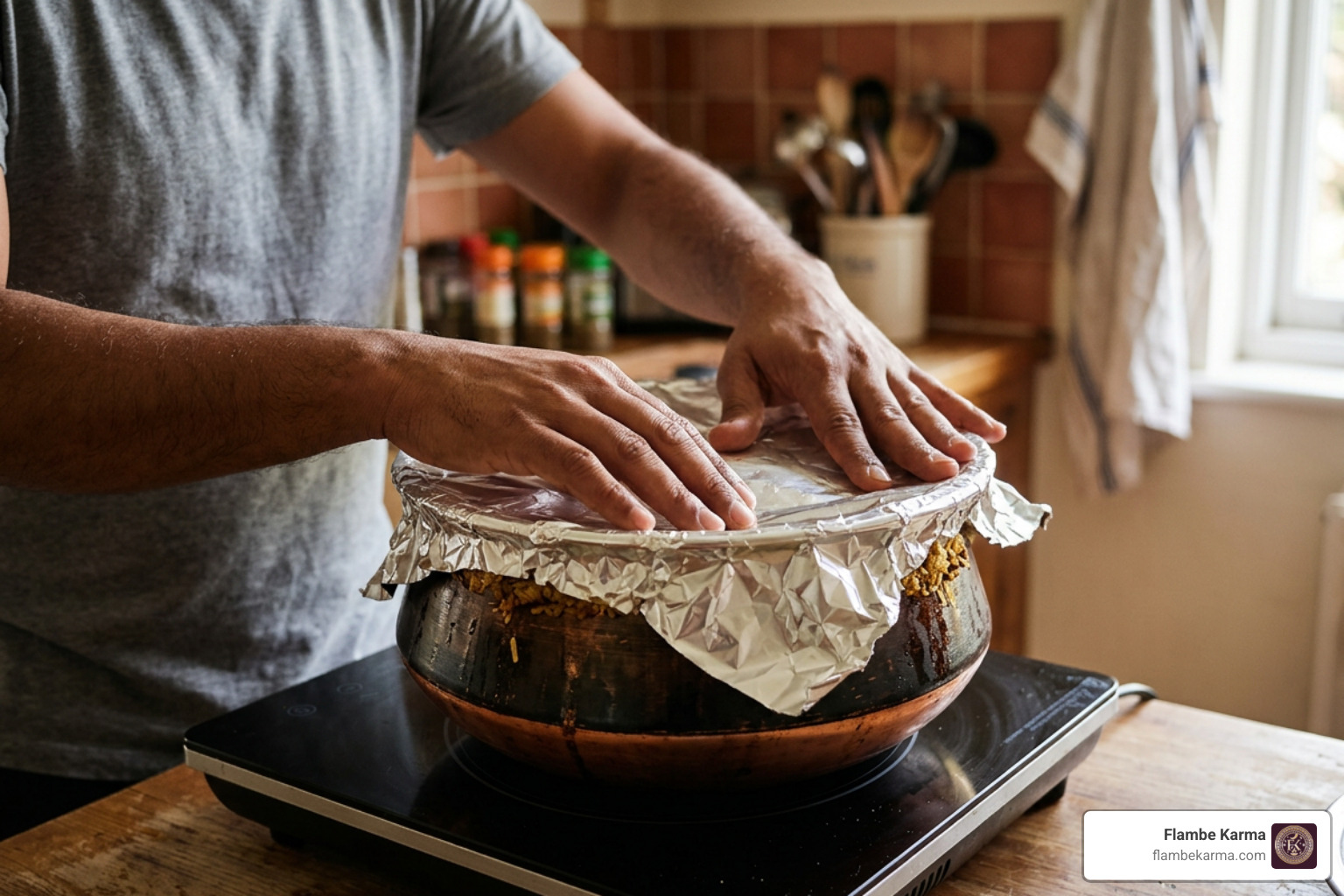
    sealing the biryani pot with foil

    Traditionally, chefs used a rim of wheat dough to seal the lid to the pot. A highly effective modern alternative is to cover the top of your pot with a double layer of heavy-duty aluminum foil, press it firmly down around the edges, and then place a heavy lid on top.

    The Stovetop Tawa Method:

    • Place your sealed pot on medium-high heat for 8 to 10 minutes. This quickly heats the bottom of the pot, gets the raw chicken juices boiling, and starts the steam generation.
    • Once you see a whisper of steam escaping from the edges (or hear the sizzle from within), lower the heat to the absolute minimum.
    • To prevent the bottom from scorching, place a heavy cast-iron skillet or flat griddle (tawa) directly onto your stove burner, and set your biryani pot on top of the tawa. This diffuses the heat beautifully.
    • Keep it on low heat for 30 to 35 minutes.

    The Oven Method:

    • Alternatively, you can bake your sealed pot in a preheated oven at 375°F (190°C) for 45 to 50 minutes. The oven provides perfectly even heat from all directions, which is excellent for boneless chicken.

    The Golden Rule of Dum: Once the cooking time is up, turn off the heat but do not open the lid. Let the pot rest, undisturbed, for 20 to 30 minutes. This allows the steam to settle back into the rice grains, making them firm and preventing them from breaking when you fluff and serve the dish.

    Serving Suggestions and Accompaniments

    Biryani is a complete meal on its own, but the right side dishes can balance its rich, spicy profile.

    • Mirchi Ka Salan: A traditional Hyderabadi gravy made with green chilies, peanuts, sesame seeds, and tamarind. Its nutty, tangy flavor profile pairs perfectly with the spiced rice.
    • Raita: A cool, refreshing yogurt dip made with grated cucumber, toasted cumin powder, and fresh mint. The creaminess cuts through the heat of the biryani.
    • Fresh Mint Chutney: A bright, herbaceous condiment that adds a clean, zesty finish to every bite.

    If you are hosting a festive gathering and want to create a full multi-course feast, consider pairing your biryani with some of the Best Indian Appetizers to kick off the meal.

    Common Mistakes to Avoid with Hyderabadi Boneless Chicken Biryani

    Even experienced home cooks can run into trouble with Kachi Yakhni. Keep these common pitfalls in mind:

    • Overcooking the Rice: If your rice is cooked past 75% before layering, the steam from the chicken will turn it into a mushy porridge. Err on the side of undercooking.
    • Using Sour Curd: If your yogurt has been sitting in the fridge for too long and has turned sour, your gravy will taste unpleasantly acidic. Stick to fresh, mild yogurt.
    • Insufficient Salt: Rice absorbs a massive amount of salt. If you do not salt your boiling rice water generously, the entire dish will taste flat, no matter how spiced your chicken is.
    • Burning the Bottom: If you do not use a heavy-bottomed pot or a heat diffuser (tawa), the direct heat will scorch the raw chicken before it has a chance to cook through.

    Frequently Asked Questions about Hyderabadi Biryani

    Can I use chicken breast instead of chicken thighs for boneless biryani?

    Yes, you can use chicken breast, but you must be careful. Because chicken breast lacks fat, it can dry out quickly during the long steam phase. To prevent this, cut the breast into large, thick chunks (about 2.5 inches), marinate them overnight in a full-fat yogurt base, and consider adding a tablespoon of oil or ghee directly to the marinade to help retain moisture.

    What is the difference between Kachi and Pakki biryani?

    In Kachi biryani, raw marinated meat is layered with parboiled rice and cooked entirely from scratch inside the sealed pot. In Pakki biryani, the meat is cooked into a finished curry before it is layered with cooked rice and steamed. Kachi biryani is more challenging to master but yields a far more cohesive, deeply aromatic flavor profile because the rice absorbs the raw meat’s pure cooking juices.

    How do I prevent the bottom layer of biryani from burning?

    To protect the bottom layer, always use a heavy-bottomed pot (like a Dutch oven or a heavy clay pot). Always cook on low heat, and place a flat griddle or cast-iron tawa under your pot to act as a heat diffuser. Additionally, spreading a thin layer of ghee or oil at the bottom of the pot before adding the marinated chicken creates a protective barrier.

    If you are looking to enjoy this legendary dish without the kitchen cleanup, you can read about the local culinary scene in our guide to Hyderabadi Biryani Buffalo Grove.

    Conclusion

    Mastering the raw-meat Kachi Yakhni method is a true badge of honor for any home cook. With patience, high-quality aged Basmati, and a perfectly sealed pot, you can recreate the iconic flavors of Hyderabad right in your own kitchen.

    At Flambe Karma, we believe that dining should be an artistic, memorable experience. If you would rather sit back, relax, and let our expert chefs handle the fire, we invite you to join us at our locations in Buffalo Grove and Glen Ellyn, Illinois. Come experience our beautiful, artistic ambiance, exceptional service, and our famous signature dishes.

    Ready to plan your next meal with us? Explore our full selection of Indian and fusion favorites on our Menu Indian Food Buffalo Grove IL page and book your table today!

  • How to Choose the Best Live Dosa Catering Near Me

    How to Choose the Best Live Dosa Catering Near Me

    What Is Live Dosa Catering — and Why Is Everyone Talking About It?

    Live dosa catering brings skilled chefs directly to your event, where they prepare fresh, crispy South Indian dosas to order — right in front of your guests.

    Here’s a quick snapshot of what to expect:

    • What it is: An on-site cooking station where chefs make dosas fresh throughout your event
    • Common events: Weddings, birthday parties, corporate gatherings, and housewarmings
    • Typical pricing: Roughly $12–$25 per person (US), or £11–£15 per person (UK), depending on package and location
    • Minimum guests: Usually 30–50 people, depending on the provider
    • Service duration: Typically 2–3 hours, with setup taking 30–45 minutes beforehand
    • What’s included: Multiple dosa varieties, sambar, chutneys, and often a light dessert
    • Dietary options: Most providers offer vegetarian, vegan, gluten-free, and Jain-friendly choices
    • Equipment: Caterers generally bring their own grills, gas, and tables

    Unlike a standard buffet where food sits in trays, a live dosa station is interactive. Guests watch their dosa hit the hot griddle, choose their fillings, and eat it moments after it’s made. The result is food that’s hotter, crispier, and far more exciting than anything served from a warming tray.

    For anyone tired of the same tired catering spread, a live dosa station turns the food itself into part of the experience.

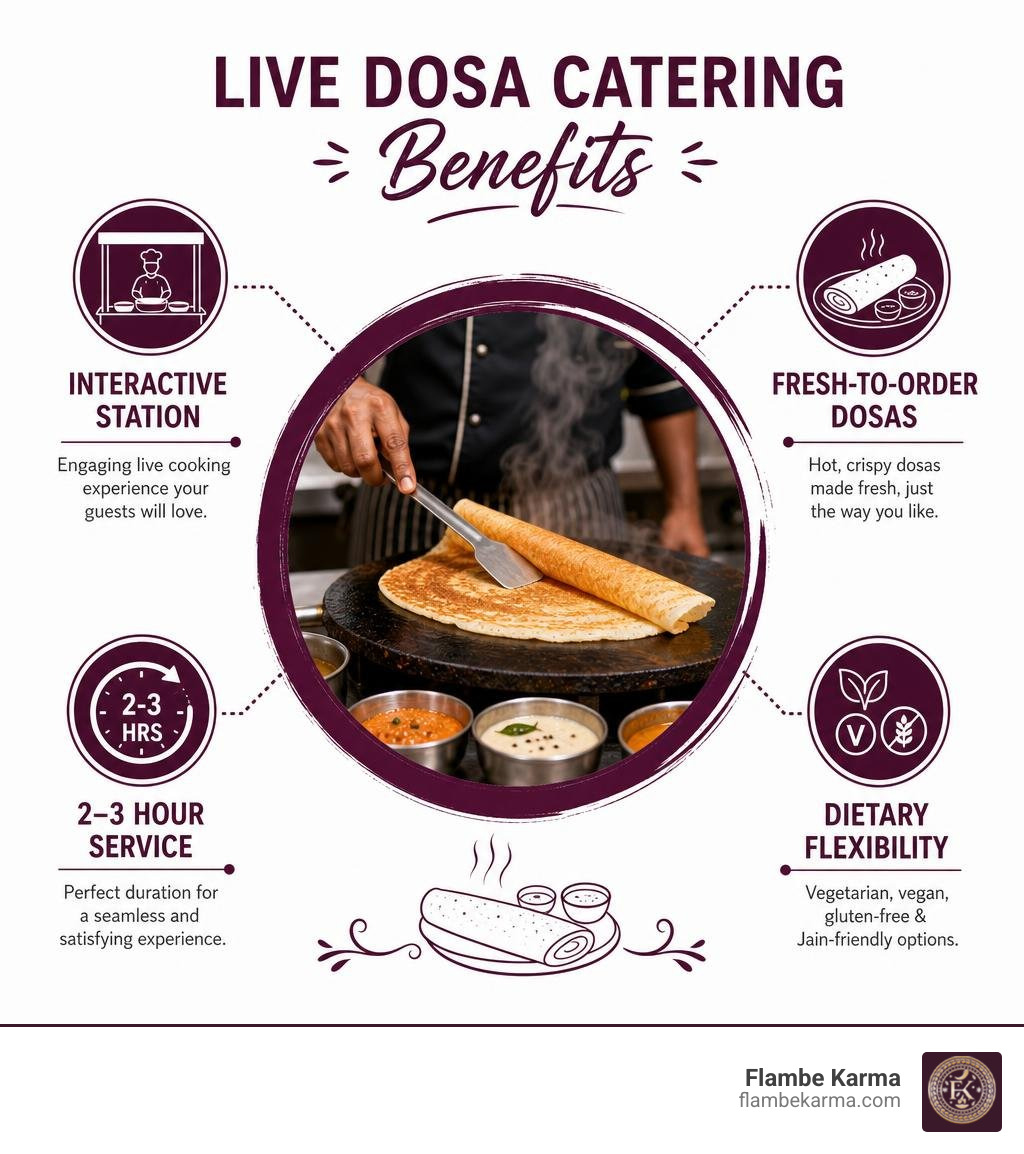
    Live dosa catering benefits infographic: interactive station, fresh-to-order dosas, 2-3hr service, dietary flexibility

    Live dosa catering terms you need:

    Why Choose Live Dosa Catering for Your Next Event?

    When you host an event in the Chicagoland area, you want your guests talking about the food long after the last plate is cleared. Traditional catering often relies on chafing dishes that keep food warm but can leave delicate dishes soggy. That is where live dosa catering completely changes the game.

    An on-site dosa station turns mealtime into interactive entertainment. There is a distinct, theatrical joy in watching a professional chef ladle fermented batter onto a screaming-hot flat-top griddle, spread it into a perfect, paper-thin circle with a few swift sweeps of a hand, and watch it turn a beautiful golden brown. The sensory experience—the hiss of the batter hitting the grill, the rich aroma of ghee and spices, and the visual spectacle of the chef flipping the massive crepe—creates an instant conversation starter.

    chef pouring golden dosa batter onto a sizzling hot flat-top griddle

    Your guests get to engage directly with the culinary team, customize their fillings, and receive a piping-hot, custom-made meal customized precisely to their liking.

    What is Live Dosa Catering and How Does It Work?

    Traditional catering involves preparing food in a commercial kitchen hours in advance, transporting it in insulated hot boxes, and setting it up on a buffet line. While this works beautifully for curries and rice dishes, it is the natural enemy of the dosa. A dosa is meant to be eaten within seconds of leaving the griddle; otherwise, it loses its signature crispiness.

    With live cooking, the kitchen comes to you. The caterer sets up heavy-duty commercial griddles (often powered by portable propane tanks or high-voltage electric outlets) right at your venue. The batter, fillings, chutneys, and sambar are prepared fresh ahead of time and kept chilled until the moment they are cooked. If you want to dive deeper into the rich culinary heritage behind these dishes, check out our guide on Everything You Need to Know About South Indian Food Catering.

    On-site dosa counters are incredibly versatile and fit seamlessly into a wide variety of gatherings:

    • Weddings & Receptions: Perfect as an interactive late-night food station or a standout feature during the main reception buffet. To see how to balance this with other traditional items, review The Essential Indian Wedding Food Checklist for Your Reception.
    • Corporate Events: Ditch the standard boxed lunches for an engaging lunch experience that gets coworkers talking and networking.
    • Milestone Birthday Parties & Anniversaries: A fun, casual way to feed a crowd of mixed ages—kids love watching the process (and eating the cheese-filled versions!).
    • Housewarmings & Puja Celebrations: Since dosas are traditionally vegetarian, they are the ultimate crowd-pleasing comfort food for auspicious family gatherings at home.

    Designing Your Custom Dosa Station Menu

    Planning a menu for a live station is highly customizable. While the focus is on the griddle, a complete meal requires a balance of starch, spice, warmth, and sweetness.

    A standard live dosa menu typically includes:

    1. Unlimited dosas): Cooked to order with a selection of fillings.
    2. Sambar): A hot, lentil-based vegetable stew flavored with tamarind and a special spice blend.
    3. Chutneys: At least two varieties, usually a cool coconut chutney and a tangy tomato-onion or spicy mint-coriander chutney.
    4. Tiffin Sidekick: Many packages include a secondary item like crispy vadas (savory lentil donuts) or soft idlis (steamed rice cakes).
    5. Dessert & Beverage: A sweet finish like warm kesari (semolina pudding) or payasam, paired with traditional Madras filter coffee or mango lassi.

    To help you visualize your options, here is how standard and premium packages generally compare in the Chicagoland market:

    FeatureStandard Dosa PackagePremium Dosa Package
    Average Price$15 – $18 per person$21 – $25+ per person
    Dosa Varieties3–5 options (Plain, Masala, Onion)8+ options (including Cheese, Paneer, Mysore, Chocolate)
    Included SidesSambar, 2 Chutneys, 1 AppetizerSambar, 3 Chutneys, 2 Appetizers, 1 Specialty Rice
    Dessert & Drink1 basic dessert1 premium dessert & specialty beverage (e.g., Mango Lassi)
    Chef FeeOften charged separately ($200–$250)May be included or reduced for larger guest counts

    Traditional and Fusion Dosa Varieties

    The beauty of a live station is that your guests do not have to settle for just one style. A professional setup allows guests to sample multiple varieties, such as:

    • Plain Dosa & Ghee Roast: Golden, thin, and beautifully simple, brushed with clarified butter for a rich flavor.
    • Masala Dosa: The classic favorite, stuffed with a seasoned, spiced potato-and-onion mash.
    • Mysore Masala Dosa: Lined with a fiery red garlic-chili chutney before the potato filling is added.
    • Onion Chili Dosa: Sprinkled with finely chopped red onions and green chilies for a sharp, crunchy kick.
    • Cheese & Paneer Dosa: Fusion favorites where shredded cheese or spiced crumbled paneer melts directly onto the hot crepe.
    • Nutella or Chocolate Dosa: A massive hit with children and dessert lovers, featuring a sweet spread rolled into a crispy crepe.

    Customizing Your Live Dosa Catering Menu

    One of the biggest advantages of live dosa catering is how easily it accommodates diverse dietary needs. Because the batter is naturally made from fermented rice and black lentils, traditional dosas are inherently gluten-free and vegan (provided they are cooked with oil instead of ghee).

    We can easily customize the menu to accommodate:

    • Jain Requirements: Preparing custom batches of sambar and chutneys without onions, garlic, or root vegetables, and serving dosas without the potato masala.
    • Severe Food Allergies: Because each dosa is made individually, chefs can clean the griddle surface between orders to prevent cross-contamination of dairy or nuts.
    • Fusion Pairings: Want to mix South Indian favorites with street food or tandoori specialties? Check out our tips on Naan Stop Deliciousness for Your Next Indian BBQ Event to see how to blend different regional styles seamlessly.

    Event Logistics: Equipment, Setup, and Service Details

    Executing a flawless live station requires careful coordination behind the scenes. Here is what a typical setup looks like:

    • Setup Time: Chefs require at least 30 to 45 minutes before the service start time to set up their tables, connect propane or electrical lines, and heat the heavy cast-iron griddles to the perfect temperature.
    • Service Duration: Standard packages include 2 to 3 hours of continuous live cooking. If your party is going strong, extra time can usually be added for a flat hourly fee (typically around $50 to $100 per half hour).
    • Geographic Coverage: Providers in Illinois generally service the entire Chicagoland area, including suburbs like Buffalo Grove and Glen Ellyn. Some caterers may charge a modest per-mile transportation fee for venues located outside their immediate radius.
    • Cleanup: The catering team is responsible for cleaning up the cooking station, packing away their grills, and clearing any food debris from their immediate service area.

    For a comprehensive look at how to coordinate these logistics alongside your main buffet, read The Ultimate Indian Catering Buffet Checklist for Your Next Big Event.

    Pricing, Packages, and Booking Timelines

    Understanding the financial and scheduling side of planning helps prevent any last-minute surprises.

    • Minimum Guest Count: Most providers require a minimum of 30 to 50 guests to book an on-site live station. For smaller, intimate gatherings, you may still book the service, but you will typically be required to pay the equivalent minimum guest rate.
    • Chef & Setup Fees: In addition to the per-person plate cost, expect a flat chef/setup fee (usually ranging from $200 to $250). This covers the labor of the specialized chef operating the hot griddle.
    • Booking Advance: High-quality live stations book up quickly, especially during wedding and graduation seasons. It is best to reserve your date at least 4 to 6 weeks in advance.
    • Tasting Sessions: Many caterers offer tasting sessions so you can sample the batter texture, chutney spice levels, and filling options. These typically require at least two weeks’ advance notice to prepare.

    If you are planning an event in the northwest suburbs, you can learn more about local options in The Ultimate Guide to Authentic Indian Catering in Buffalo Grove.

    Frequently Asked Questions About Live Dosa Stations

    happy guests holding fresh crispy dosas served with colorful chutneys

    Who keeps the leftovers after the event?

    You do! Any leftover sambar, chutneys, fillings, or unused batter that you paid for are yours to keep. We highly recommend having a few airtight plastic containers ready at the end of the night so the catering team can easily transfer the remaining food for you to store in your refrigerator.

    Do caterers provide plates, cutlery, and cleanup?

    Standard packages typically include basic disposable plates, napkins, and plastic cutlery for the dosa station. Many providers offer upgrades to eco-friendly options like biodegradable palm leaf plates for a small additional fee (usually around $0.99 per person). While the caterers will clean and dismantle their own cooking station, they do not handle general party cleanup or clearing guest tables unless you arrange for additional waitstaff.

    What are the typical power and space requirements for setup?

    For a standard setup, the catering team will need a level space of at least 8ft x 8ft to accommodate their tables and griddles. If the event is indoors, they will need access to dedicated, high-voltage electrical outlets to run their electric grills. For outdoor events, they can often bring portable propane burners, but you will need to provide a flat, stable surface shelter (like a patio or garage space) in case of wind or rain, as drafty conditions can affect the griddle temperature.

    Conclusion

    Choosing live dosa catering is one of the easiest ways to transform a standard gathering into an extraordinary, interactive culinary experience. From the visual thrill of watching the crepes hand-stretched on a hot griddle to the unmatched taste of fresh, crispy food served straight to your plate, it is a dining style that appeals to all senses.

    At Flambe Karma, we are passionate about creating memorable dining experiences through artistic presentation, warm hospitality, and incredible Indian and fusion cuisine. Whether you are hosting an intimate backyard party or a grand milestone celebration, we bring that dedication to every event we touch.

    If you are planning an upcoming event in Buffalo Grove, Glen Ellyn, or the wider Chicagoland area, explore how we can elevate your celebration by reading about The Best Indian Cuisine Catering Buffalo Grove Can Provide.

    Ready to design a custom menu that your guests will rave about? Visit our Catering Buffalo Grove IL page to connect with our team and start planning your perfect interactive dining experience today!

  • Curry Favor: How to Find the Ultimate Indian Restaurant Near Me Vegetarian Friendly

    Curry Favor: How to Find the Ultimate Indian Restaurant Near Me Vegetarian Friendly

    Looking for the best indian restaurant near me vegetarian options? Here’s a quick guide to get you started:

    Top ways to find a great vegetarian Indian restaurant near you:

    1. Search Google Maps or Yelp with filters for “vegetarian” or “vegan-friendly”
    2. Check ratings and recent reviews — look for 4.5 stars or higher
    3. Browse the menu online before you go to confirm vegetarian depth
    4. Look for restaurants that list dietary labels (vegan, Jain, gluten-free) on their menus
    5. Book directly through the restaurant’s website for better service and lower fees

    Indian vegetarian food is one of the richest plant-based cuisines on the planet. Lentil stews, fermented rice crepes, smoky tandoor-fired breads, and spiced paneer curries — there’s nothing bland about it.

    But not every Indian restaurant takes vegetarian dining seriously. Some treat it as an afterthought. Others build their entire menu around it, sourcing fresh spices, offering Jain-friendly options, and training staff to handle allergy questions properly.

    That gap matters — especially if you’re looking for a memorable meal, not just a safe one.

    Whether you’re craving a crispy dosa, a slow-cooked dal, or a vegetable biryani loaded with whole spices, the right restaurant makes all the difference. This guide helps you find it.

    Regional diversity of Indian vegetarian cuisine: South Indian, North Indian, Jain, and vegan options explained infographic

    Indian restaurant near me vegetarian terminology:

    How to Find the Best Indian Restaurant Near Me Vegetarian Dining

    Searching for local Indian vegetarian food on a phone

    The search for the perfect plate of chana masala or a perfectly folded masala dosa often starts with a quick tap on your smartphone. However, typing “best Indian food” into a search bar can sometimes leave you sorting through heavily meat-centric menus. To find a truly spectacular indian restaurant near me vegetarian experience, we need to look beyond the surface level of local search results.

    When we look for an Indian Restaurant Near Me, we aren’t just looking for a kitchen that can pull the chicken out of a curry. We want a restaurant that celebrates plant-based dining as an art form. This means examining how a local spot handles its menu layout, reading between the lines of customer reviews, and utilizing direct booking platforms to ensure our dietary needs are communicated clearly.

    Online directories are excellent starting points, but you have to know how to filter them. Simply looking at raw star ratings won’t always tell you if the vegetarian dishes are actually good, or if they are just basic side dishes. When browsing platforms like Yelp or Google Maps, try searching specifically for terms like “paneer,” “dal,” “vegan,” or “Jain” within the reviews to see what actual diners are saying about the plant-based options.

    If you are dining in the Glen Ellyn area, checking curated local lists such as THE BEST 10 INDIAN RESTAURANTS NEAR GLEN ELLYN, IL 60137 can give you a fantastic overview of what neighborhood foodies are raving about. Look for consistent feedback regarding spice levels, portion sizes, and how welcoming the staff is when answering questions about dietary preferences.

    Booking Tables and Ordering Online Directly

    Once you have found a restaurant that makes your mouth water, the next step is securing your table or placing an order. While third-party delivery apps are convenient, ordering directly through the restaurant’s official website is almost always the better route. Direct ordering helps you avoid inflated menu prices and hidden service fees, and it ensures that your special instructions—such as “make it vegan” or “no nuts”—go straight to the kitchen without getting lost in translation.

    For those planning a special night out in Glen Ellyn, utilizing reservation systems like 10 Best Indian Restaurants In Glen Ellyn | OpenTable can secure your spot instantly. If you prefer a cozy night in, ordering directly from your chosen restaurant’s website can connect you with delicious, fresh meals delivered straight to your door.

    Regional Specialties: From South Indian Classics to North Indian Comforts

    A traditional Indian thali with steel bowls filled with colorful curries

    Indian cuisine is not a monolith; it is a massive, beautiful tapestry of regional traditions. To truly appreciate a vegetarian Indian menu, it helps to understand the difference between the fiery, rice-based dishes of the South and the rich, wheat-and-dairy-heavy comforts of the North. Familiarizing yourself with A Traditional Indian Food List for Your Kitchen can help you decipher complex menus like a seasoned pro.

    South Indian Delights: Dosa, Idli, and Thalis

    If you are looking for light, tangy, and incredibly flavorful options, South Indian cuisine is where you want to focus. Built around fermented rice and lentil batters, these dishes are naturally gluten-free and often entirely vegan.

    The undisputed king of South Indian comfort food is the dosa—a massive, crispy crepe served with a flavorful lentil soup called sambar and cool, creamy coconut chutney. If you prefer something soft and pillowy, idli (steamed savory rice cakes) are a must-try. For those who want a little bit of everything, ordering a South Indian thali—a round platter featuring small bowls of various curries, lentil dishes, rice, and bread—is the ultimate way to feast. To bring some of these incredible flavors into your own kitchen, check out these Spice Up Your Life Essential Indian Vegetarian Meal Recipes.

    North Indian Gravies and Tandoor Breads

    When most people think of Indian comfort food, they are picturing the rich, aromatic gravies of North India. These dishes rely heavily on warming spices, tomatoes, onions, and dairy elements like ghee, cream, and paneer (a firm, unaged cheese that absorbs flavors beautifully).

    Signature dishes like paneer butter masala or vegetable korma pair beautifully with freshly baked garlic naan pulled straight from a clay tandoor oven. Another cornerstone of North Indian dining is the slow-cooked dal makhani, a black lentil dish simmered for hours with butter and spices until it reaches a velvety perfection. If you are looking to plan a cozy dinner gathering, you can find inspiration with these Curry Favour with These Amazing Indian Vegetarian Dinner Ideas.

    Accommodating Dietary Preferences: Vegan, Jain, and Gluten-Free Options

    One of the greatest strengths of Indian vegetarian cooking is its natural adaptability to various dietary lifestyles. Because plant-based eating has been deeply integrated into Indian culture for thousands of years, kitchens are uniquely equipped to handle complex dietary requests without sacrificing an ounce of flavor.

    Dietary StyleAllowed IngredientsExcluded IngredientsCommon Menu Highlights
    Standard VegetarianDairy, vegetables, grains, legumes, nutsMeat, poultry, seafood, gelatinPaneer Butter Masala, Dal Makhani, Samosas
    VeganVegetables, coconut milk, grains, legumes, nutsAll animal products (including ghee, cream, honey, paneer)Chana Masala, Aloo Gobi, Dal Tadka, Roti
    Jain / SwaminarayanDairy, lentils, grains, select above-ground vegetablesMeat, fish, eggs, root vegetables (onions, garlic, potatoes)Jain-style Dal, Paneer dishes made with tomato-cashew gravy

    When dining out, it is always wise to ask the staff about cross-contamination prevention, especially if you have a severe allergy. A truly accommodating restaurant will gladly guide you through their menu and point you toward dishes that naturally fit your needs. For those living in or visiting the northwest suburbs of Chicago, finding a dedicated Vegan Restaurant Buffalo Grove IL can make dining out completely stress-free.

    Finding a Vegan Indian Restaurant Near Me Vegetarian Friendly Spot

    While many Indian dishes are vegetarian, they often use dairy ingredients like cream or clarified butter (ghee). However, a great vegan-friendly spot will easily substitute coconut milk or plant-based oils to make these dishes entirely dairy-free.

    Classic dishes like chana masala (spiced chickpeas), aloo gobi (potatoes and cauliflower), and bhindi masala (okra) are naturally vegan-friendly and travel incredibly well for takeout. If you are exploring the local food scene in the suburbs, browsing directories like 9 Indian Food Restaurants in Buffalo Grove, IL can help you identify kitchens that excel at plant-forward cooking.

    Jain, Swaminarayan, and Gluten-Free Customizations

    For diners who follow strict Jain or Swaminarayan diets, eating out can sometimes feel like navigating a minefield. These spiritual dietary paths avoid not only meat but also root vegetables like onions, garlic, potatoes, and carrots. Fortunately, high-quality Indian kitchens are highly skilled at creating rich, savory gravies using tomato bases, melon seeds, and cashews instead of the traditional onion-garlic foundation.

    Gluten-free diners will also find plenty to love. Because many Indian appetizers and breads are crafted from chickpea flour (besan) or rice and lentil batters, finding delicious gluten-free options is incredibly easy. To find a spot that caters directly to these specialized needs, look for a dedicated Vegetarian Restaurant Buffalo Grove IL that clearly labels its menu.

    What Makes a Vegetarian Indian Restaurant Stand Out?

    A truly exceptional vegetarian Indian restaurant stands out through its commitment to authenticity, ingredient quality, and dining atmosphere. It isn’t just about feeding people; it’s about creating an experience.

    When you walk into a top-tier Indian Restaurant Buffalo Grove, you should immediately be greeted by the warm, complex aroma of spices being roasted and ground in-house. A great restaurant avoids pre-made spice packets and instead grinds cardamom, cumin, coriander, and cloves daily to preserve their essential oils and vibrant flavors.

    Signature Dishes and Menu Highlights

    While standard curries are great, a standout restaurant will offer unique signature dishes that showcase the culinary team’s creativity. Look for menu highlights like:

    • Street Food Chaat: Savory, sweet, and tangy snacks like palak patta chaat (crispy spinach leaves topped with yogurt and chutneys) or avocado dahi papdi chaat.
    • Vegetable Biryani: A slow-cooked, aromatic rice dish layered with saffron, fresh herbs, and seasonal vegetables, served with a side of cool raita.
    • Fusion Appetizers: Creative dishes that bridge traditional Indian spices with modern culinary formats, such as spiced skewers or vegetable-stuffed flatbreads.

    If you love hosting gatherings and want to replicate some of these vibrant, bite-sized starters at home, check out these Quick and Easy Indian Vegetarian Finger Food Recipes for Parties. For a look at how high-end vegetarian Asian fusion is done right, you can also explore creative presentations that elevate traditional ingredients.

    What to Look for in an Indian Restaurant Near Me Vegetarian Menu

    An exceptional restaurant will offer more than just standard dinner options. Look for features like a curated business lunch thali for quick weekday meals, private party halls for hosting family celebrations, and live-station catering options (like a live dosa or chaat counter) that can elevate any special event.

    To see an example of a menu designed to cater to both traditional cravings and modern culinary adventures, take a look at the Flambe Karma Indian Food Menu.

    Frequently Asked Questions About Vegetarian Indian Dining

    The most popular vegetarian Indian dishes include Samosas (crispy pastry pockets stuffed with spiced potatoes and peas), Paneer Butter Masala (soft cheese cubes in a creamy tomato sauce), Chana Masala (tangy chickpea curry), and Vegetable Biryani (fragrant, slow-cooked rice).

    How do Indian restaurants accommodate gluten-free diets?

    Indian cuisine is highly gluten-free friendly. Many popular dishes rely on rice, lentils, and chickpea flour rather than wheat. Standard gluten-free options include dosas, idlis, pakoras (vegetable fritters fried in chickpea batter), and most lentil-based curries. Just be sure to skip the wheat-based flatbreads like naan and opt for corn-based makki di roti or rice-based options instead.

    Can I find Jain or Swaminarayan options at local Indian restaurants?

    Yes, many authentic Indian restaurants can prepare dishes without onions, garlic, or root vegetables upon request. It is always best to call ahead or notify your server before ordering so the kitchen can prepare a custom, compliant version of your favorite curry.

    Conclusion

    Finding the ultimate indian restaurant near me vegetarian friendly spot doesn’t have to be a chore. When you know what to look for—from regional specialties like crispy South Indian dosas to rich North Indian paneer gravies—you can transform an ordinary dinner into an extraordinary culinary journey.

    At Flambe Karma, we are passionate about elevating Indian and fusion cuisine into an unforgettable dining experience. We combine an artistic, warm ambiance with exceptional service to make every visit feel like a celebration. Our locations in Buffalo Grove, Illinois and Glen Ellyn, Illinois are proud to serve a diverse array of vegetarian-friendly masterpieces, including our signature Flambe Skewers that bring a touch of theatrical flavor straight to your table.
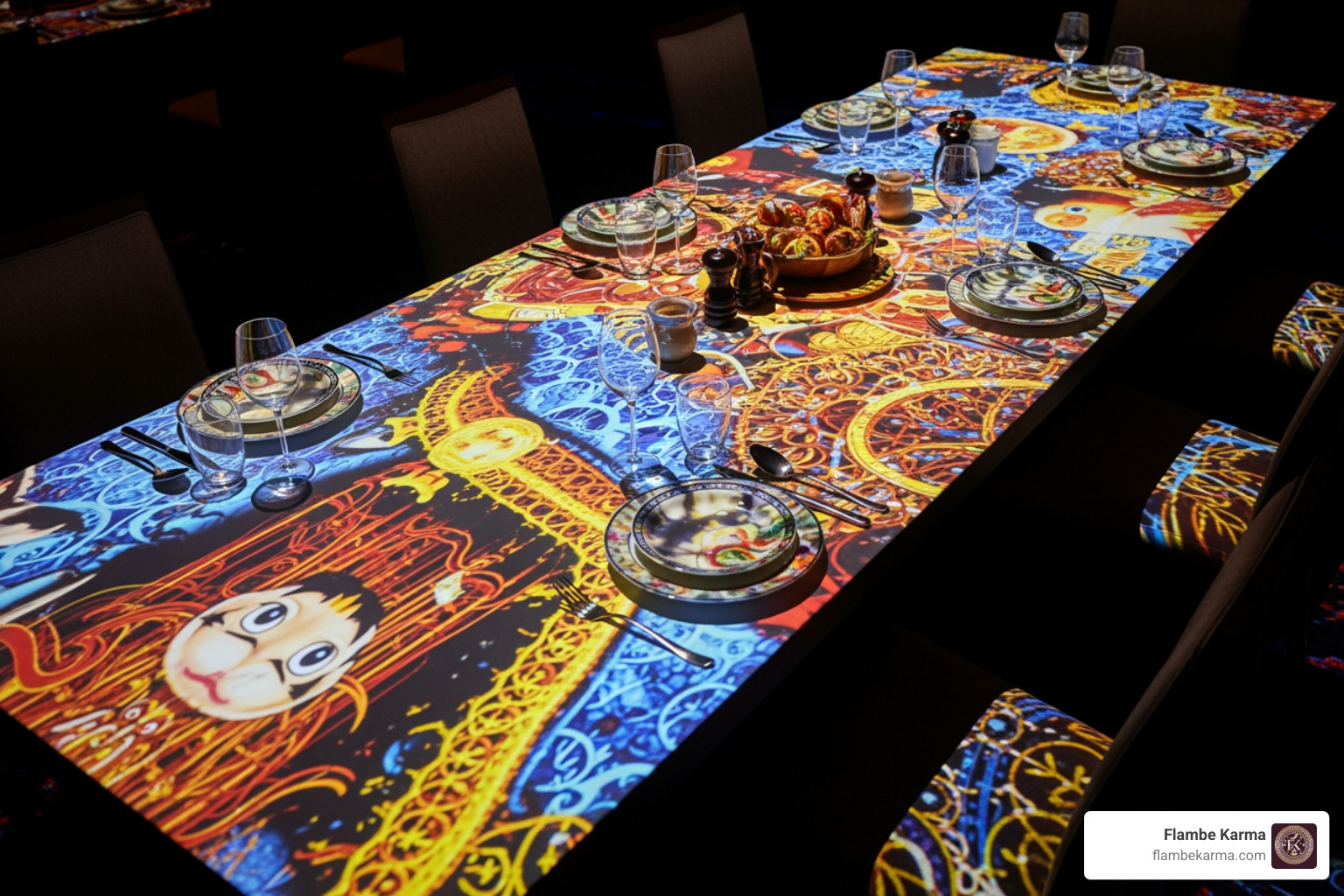
    Ready to experience the ultimate fusion of taste and artistry? Explore our full range of plant-based and fusion creations on the Flambe Karma Menu and book your table with us today!

  • Indian Food Delivery: 7 of the Best Options for You

    Indian Food Delivery: 7 of the Best Options for You

    Why Indian Food Delivery Is Worth Getting Right

    Indian food delivery has never been more accessible — or more varied. Whether you’re craving butter chicken on a weeknight or planning a full spread for a dinner party, you have more options than ever to get great Indian food to your door.

    Here are the best ways to order Indian food delivered in 2026:

    1. Direct restaurant delivery — Order straight from a local Indian restaurant’s website or phone
    2. Multi-restaurant apps — Uber Eats, DoorDash, and Grubhub list 20+ Indian spots in most metro areas
    3. Scheduled advance ordering — Plan meals ahead for dinner parties or busy weeks
    4. Contactless or curbside pickup — Skip the wait and grab your order fresh
    5. Large-group and catering delivery — Bulk orders for events and family gatherings
    6. Specialty Indian fusion delivery — Modern, creative takes on classic dishes
    7. Local suburban delivery networks — Community-focused services covering areas outside city centers

    The challenge? Not every platform covers every location, fees vary widely, and food quality can be hit or miss depending on how far your order travels.

    Platforms like Uber Eats serve spots like Monroe Township, NJ, while Postmates lists over 20 Indian restaurants in Yonkers, NY alone. In smaller suburban areas like Idlewild, IL, a single well-placed local restaurant can deliver in around 45 minutes.

    The right choice depends on where you live, what you’re ordering, and how much you want to spend. This guide breaks down seven of the best options so you can find what works for you.

    How Indian food delivery works: platforms, fees, delivery times, and dish types infographic

    Similar topics to Indian food delivery:

    7 Best Ways to Order Indian food delivery

    A spread of diverse Indian dishes ready for delivery

    When you are hungry for the deep, complex spices of South Asian cuisine, you want your meal to arrive hot, fresh, and exactly how you ordered it. Navigating online food ordering can feel like trying to balance a tray of hot samosas on a unicycle. To help you find the absolute best route to your next meal, we have analyzed the top channels available today.

    Depending on your location, your budget, and how quickly you need your spice fix, different ordering methods will suit your needs. For a complete look at how to navigate your local dining scene, check out The Ultimate Guide to Finding Indian Restaurant Delivery Near You.

    1. Direct Restaurant Delivery Services

    For those who want the freshest food while supporting local culinary artists, ordering directly from a restaurant’s own website or phone line is the gold standard.

    When you order directly, you bypass the steep commission fees that third-party apps charge local businesses. This means the restaurant keeps 100% of the revenue, allowing them to invest more in premium ingredients and better packaging. Furthermore, direct communication makes it much easier to handle special requests, such as adjusting spice levels or catering to specific dietary restrictions like gluten-free or vegan preferences. Many local gems even offer exclusive loyalty discounts or free delivery when you order from them directly. To learn how to bag these deals, read our guide on How to Find Indian Restaurants with Free Delivery Near You.

    2. Multi-Restaurant Delivery Apps

    If variety is what you seek, national multi-restaurant delivery apps like Uber Eats, DoorDash, and Grubhub are incredibly convenient.

    These platforms aggregate dozens of local eateries into a single interface, making it easy to compare menus, read customer reviews, and track your driver in real-time. If you are an active subscriber to services like Uber One or DashPass, you can often waive delivery fees entirely on orders from eligible restaurants. However, keep in mind that these convenience-focused apps often add service fees, delivery fees, and small-order surcharges that can quickly inflate your final bill.

    3. Scheduled and Advance Delivery Ordering

    Have you ever hosted a dinner party and realized at 6:00 PM that you forgot to cook? Scheduled and advance delivery ordering is your secret weapon for stress-free hosting.

    Many delivery services allow you to place your order hours, or even days, in advance. This is particularly beneficial for authentic Indian dishes like slow-cooked biryanis and tandoori meats, which require meticulous preparation. By scheduling your delivery slot ahead of time, you give the kitchen ample time to prepare your food during non-peak hours, ensuring your meal arrives exactly when your guests do, piping hot and perfectly spiced.

    4. Contactless and Curbside Pickup Options

    If you want to save on delivery fees and tips while ensuring your food spends the absolute minimum time in transit, curbside pickup is the way to go.

    Most modern ordering platforms offer a “Pickup” tab. This option is perfect for busy commuters who want to grab dinner on their way home. Curbside pickup allows you to pull up to the restaurant, notify the staff via an app or phone call, and have your warm meal handed directly to you through your car window. It keeps your food as fresh as possible, ensuring that crispy appetizers like pakoras and samosas don’t lose their crunch in a delivery driver’s thermal bag.

    5. Large-Group and Catering Delivery

    When it comes to feeding a crowd—whether it is a family reunion, a holiday party, or a corporate luncheon—standard individual entrees won’t cut it. That is where large-group and catering delivery comes in.

    Many premium Indian restaurants offer dedicated catering menus featuring bulk trays of classic dishes, complete with large baskets of garlic naan, basmati rice, and assortments of chutneys. Ordering family-style platters is highly cost-effective and ensures that everyone gets a generous portion of their favorite curries. Many restaurants even provide chafing dishes and serving utensils to keep your buffet warm throughout your event.

    6. Specialty Fusion Food Delivery

    For the culinary adventurers, specialty fusion delivery offers an exciting twist on traditional flavors.

    The culinary world in June 2026 is filled with creative chefs combining traditional Indian spices with global formats—think butter chicken tacos, tandoori chicken pizzas, or masala-spiced skewers. These gourmet options bring a modern, playful energy to your dining table. If you are looking to explore these creative culinary boundaries from the comfort of your couch, take a look at Doorstep Delights: The Best Fusion Food Delivery Services.

    7. Local Suburban Delivery Networks

    While big-city diners are spoiled for choice, suburban areas often rely on highly localized delivery networks to bridge the gap.

    In tight-knit suburban communities like Buffalo Grove and Glen Ellyn, local delivery services and direct-to-consumer restaurant networks provide a level of care that national giants simply cannot match. These localized networks understand the geography of the suburbs, resulting in more accurate delivery windows, friendlier drivers, and food that arrives fresh from the kitchen.

    Key Factors: Fees, Delivery Times, and Locations

    A delivery driver carrying a thermal bag with Indian food

    When ordering Indian food delivery, the experience can vary dramatically depending on where you live. Delivery times, service fees, and restaurant availability are highly dependent on local geography.

    For instance, in Monroe Township, NJ, hungry diners can browse over 20 Indian restaurants on Uber Eats, with local favorites like Biryani Pot and Crown Of India Restaurant keeping suburban households well-fed. Meanwhile, in Yonkers, NY, Postmates lists more than 20 active Indian delivery spots, including popular choices like Neha and Mumbai Spices Indian Cuisine, offering everything from late-night cravings to plant-based vegetarian feasts.

    In smaller suburban pockets like Idlewild, IL, delivery times average about 45 minutes from nearby culinary hubs. For those living in Illinois suburbs, planning your weekend meals is made simple with resources like Buffalo Grove Food Delivery: Your Couch-Side Dining Guide and Order Buffalo Grove Food Delivery in Seconds.

    To give you a clearer picture of how location impacts your ordering experience, here is a quick comparison of delivery metrics across different regions:

    LocationPrimary PlatformsAverage Delivery TimeTypical FeesPopular Local Dishes
    Buffalo Grove, ILDirect, DoorDash, Uber Eats30 – 45 minsLow to ModerateButter Chicken, Biryani, Fusion Skewers
    Glen Ellyn, ILDirect, Grubhub, Uber Eats35 – 50 minsModerateTandoori Specialties, Garlic Naan
    Monroe Township, NJUber Eats, DoorDash40 – 55 minsModerateBiryani Pot Specialties, Curry
    Yonkers, NYPostmates, DoorDash30 – 45 minsModerate to HighPalak Paneer, Chapati, Tandoori Chicken
    Idlewild, ILDirect, Local Networks45 – 60 minsFlat RateSamosas, Shrimps Vindaloo, Dum Aloo

    The food delivery landscape in June 2026 is being rapidly reshaped by new technologies, business models, and a growing focus on ethical practices.

    One of the most significant shifts involves gig worker safety and delivery speed commitments. For years, quick-commerce platforms raced to offer ultra-fast delivery times. However, following key interventions by labor officials, major platforms like Blinkit, Zepto, and Zomato have agreed to drop rigid, high-pressure “10-minute” delivery promises. This change came after widespread discussions regarding driver safety on congested roads, prioritizing the well-being of delivery partners over extreme speed. You can read more about this industry milestone in the report on Govt Asks Online Delivery Platforms To Drop ‘10-Minute’ Commitments for Gig Worker Safety; Blinkit, Zepto and Zomato To Comply After Mansukh Mandaviya’s Intervention | 🍔 LatestLY .

    Despite these safety-oriented adjustments, quick-commerce continues to thrive. For example, the Zepto: Groceries in minutes – Apps on Google Play app has surpassed 100 million downloads, proving that consumers still highly value rapid, reliable home delivery for groceries and quick meals.

    At the same time, delivery giants are experiencing massive financial growth. Swiggy, a dominant player in the global delivery space, reported a massive revenue of 230.53 billion INR in fiscal year 2026—a stunning 51.4% increase from the previous year. For more on their market performance, see the Swiggy (BOM:544285) Stock Price & Overview . To make their app more accessible to India’s diverse population, Swiggy partnered with Sarvam AI to launch a groundbreaking multilingual, voice-based shopping feature, allowing users to place orders in 11 different regional languages. Learn more about this technology via Swiggy partners Sarvam AI to bring India’s first multilingual voice-based shopping feature: What is it and how it works – The Times of India .

    Furthermore, platforms like Gintaa are gaining traction by introducing zero-commission models for restaurants. By eliminating high commission fees, these models allow local eateries to pass savings directly to consumers, offering significant discounts while ensuring that local kitchens remain profitable and sustainable.

    Frequently Asked Questions

    The most popular Indian dishes ordered for delivery include rich, saucy curries like butter chicken and tikka masala, which travel exceptionally well and retain their heat. Slow-cooked chicken biryani is another favorite, offering a complete, fragrant meal in a single container. Tandoori chicken and various flatbreads like garlic naan are also highly popular, though they are best enjoyed immediately upon arrival to maintain their texture.

    For a deeper dive into these classic dishes, check out Smooth Sailing with the Best Butter Chicken Delivery Options and Get Your Spice Fix and Order Tandoori Chicken Online.

    How do delivery platforms ensure food quality and freshness?

    Top delivery platforms and restaurants utilize advanced thermal packaging, sturdy spill-proof containers, and ventilated boxes to prevent steam from making crispy items soggy. Many restaurants also separate hot curries from cold sides (like raita or mint chutney) to ensure everything arrives at its optimal temperature.

    How much should I tip for Indian food delivery?

    Tipping etiquette generally suggests tipping between 15% to 20% of your order total, or a minimum of $5 for local deliveries. If your driver is navigating difficult weather conditions, heavy traffic, or delivering a large catering order, a higher tip is always greatly appreciated. 100% of your tips go directly to the drivers, helping support their livelihood.

    Conclusion

    At the end of the day, getting Indian food delivery right is all about balancing speed, cost, and culinary execution. While national apps offer undeniable convenience, nothing quite matches the care, flavor, and excitement of ordering directly from a dedicated local establishment.

    If you are located in Buffalo Grove or Glen Ellyn, Illinois, we invite you to experience the very best of modern Indian cuisine with us at Flambe Karma. We specialize in authentic Indian flavors and creative fusion dishes, served up with an artistic flair. From our signature specialty Flambe Skewers to our rich, comforting classics, we prepare every meal with the utmost care to ensure it arrives at your doorstep tasting just as spectacular as it does in our dining room.

    Ready to elevate your next meal? Skip the third-party middleman and order directly from our kitchen today at Flambe Karma Indian Restaurant in Buffalo Grove. Let us bring the magic of the flame straight to your table!

  • Spice Up Your Holiday with These Indian Fusion Thanksgiving Recipes

    Spice Up Your Holiday with These Indian Fusion Thanksgiving Recipes

    What Is Indian Fusion Thanksgiving — and Why It’s Worth Trying

    Indian fusion Thanksgiving is one of the most exciting food trends reshaping the American holiday table. It blends the familiar comfort of classic Thanksgiving dishes — turkey, mashed potatoes, cranberry sauce, pumpkin pie — with bold Indian spices, techniques, and flavors like garam masala, cardamom, tandoori marinade, and tamarind chutney.

    Quick answer — here’s what an Indian fusion Thanksgiving looks like:

    • Main: Tandoori-rubbed turkey or whole roasted cauliflower (Gobi Musallam)
    • Sides: Tadka mashed potatoes, spiced ginger cranberry chutney, garam masala roasted carrots
    • Appetizers: Puff pastry samosa pinwheels, achaari deviled eggs, mango chutney brie bites
    • Desserts: Cardamom pumpkin pie, pumpkin halwa, masala chai cheesecake
    • Drinks: Masala chai, spiced apple cider, pomegranate rose spritz

    More than 60% of Indian Americans celebrate Thanksgiving, and 42% now incorporate Indian spices or dishes into their holiday meals. The result? A table that honors gratitude and togetherness — but tastes anything but ordinary.

    Whether you’re cooking for a crowd or just tired of the same one-note holiday spread, Indian fusion Thanksgiving gives you a way to make the meal yours — full of warmth, color, and flavor that guests will actually remember.

    infographic showing growth of Indian fusion Thanksgiving traditions and popular dish swaps infographic

    Indian fusion thanksgiving terms to learn:

    The Rise of the Indian Fusion Thanksgiving

    family sharing a vibrant indian fusion thanksgiving meal

    The landscape of American holidays is shifting, and our dinner tables are reflecting this beautiful evolution. As the fastest-growing ethnic group in the United States—surpassing 4.5 million residents in recent years—Indian-Americans have brought a rich culinary heritage that naturally weaves into classic Western celebrations.

    Thanksgiving, in its essence, is a secular holiday centered around abundance, gratitude, and a massive feast. Because it lacks specific religious or political ties, it has become the ultimate canvas for cultural expression. For first-generation immigrants and multi-generational households alike, blending Indian flavors with American traditions isn’t just about making the food taste better (though a pinch of garam masala certainly helps!); it is about claiming a sense of belonging.

    By introducing aromatic spices to the holiday, families create a unique culinary identity. It’s a way of saying, “We are here, we are thankful, and we bring something extraordinary to the table.” To understand how these menus come together, you can explore how modern culinary minds approach this in A Global Twist on Tradition with the Best Indian Fusion Menus.

    Why the Indian Diaspora Embraces Thanksgiving

    For many South Asian families, the concept of a massive, slow-cooked family meal is second nature. Gathering around a table to express gratitude aligns perfectly with traditional Indian cultural values of hospitality (Atithi Devo Bhava) and family togetherness.

    Unlike other major U.S. holidays like Christmas, which can carry religious connotations, Thanksgiving offers a neutral, inclusive space. It serves as a meaningful pause in the year—a cultural reset where families can celebrate their dual identities. The beauty of this holiday is captured perfectly in the personal essay Turkey With a Delhi Accent: We Didn’t Merely Adopt Thanksgiving. We Rewrote it in Saffron – American Kahani, which details how immigrant families didn’t simply adopt the holiday, but actively rewrote its culinary language to reflect their own journeys.

    The Evolution of the Desi Thanksgiving Table

    Over the years, the “Desi Thanksgiving” has evolved from a segregated buffet to a fully integrated culinary experience. In the early days of immigration, it was common to see a strict division on the table: a dry, traditional American turkey on one side, and a backup lamb curry or biryani on the other to ensure everyone actually enjoyed the meal.
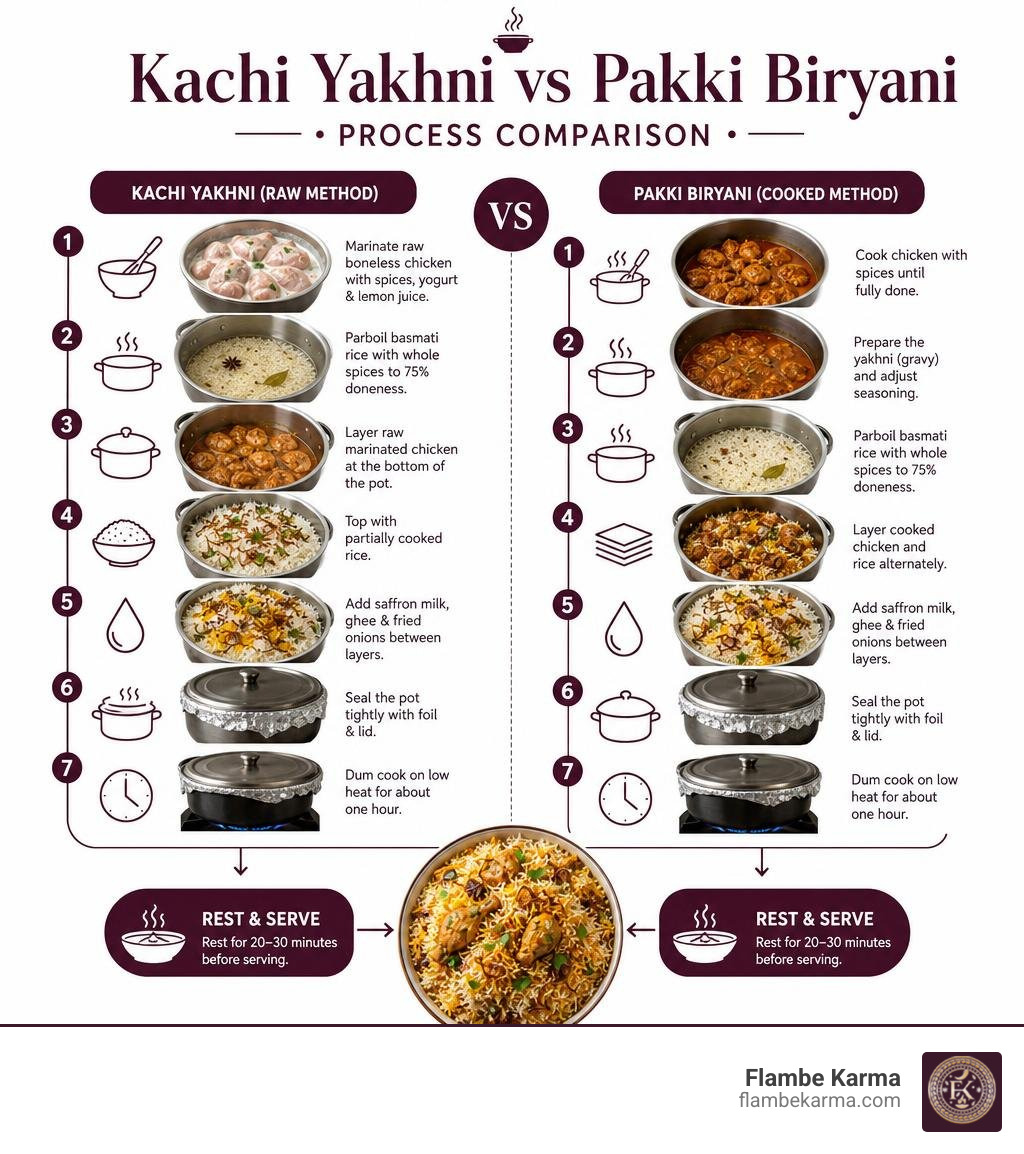
    Today, second- and third-generation home cooks are leading a creative revolution. Instead of keeping the cuisines separate, they are merging them. We now see dishes like tandoori-spiced turkey breasts, stuffing made from spiced bread upma, and pumpkin pies infused with sweet chai masala. Potlucks have become collaborative culinary playgrounds where aunties, uncles, and kids cross-pollinate their plates. This culinary evolution mirrors the broader movement of modern dining, which you can read about in Taste the Twist: Discovering the Best Indian Fusion Restaurants.

    Transforming Holiday Classics with Desi Spices

    variety of aromatic indian spices like cardamom cumin and garam masala

    Traditional Thanksgiving food is the ultimate comfort food, but let’s be honest: it can occasionally lean a bit one-note. When everything on the plate is soft, sweet, and beige, your palate can get tired quickly.

    Indian culinary techniques introduce a “third dimension” to these classics. By using spices not just for heat, but for aroma, acidity, and complexity, we can elevate standard holiday ingredients into something truly spectacular. To see how these flavor profiles are redefining modern dinners, check out Taste the Future: Innovative Fusion Dinner Ideas That Will Blow Your Mind.

    Tandoori Turkey and Masala Mains

    The centerpiece of the table deserves a major upgrade. Instead of a standard herb-butter rub that barely penetrates the thick turkey breast, an indian fusion thanksgiving main relies on deep marination.

    • Tandoori Turkey: By brining the bird in a mixture of salt, warm spices, and water, and then coating it in a thick yogurt marinade infused with ginger-garlic paste, Kashmiri chili, garam masala, and lemon juice, you achieve two things: incredible moisture and a gorgeous, charred red crust. The lactic acid in the yogurt gently tenderizes the turkey meat, preventing the classic dry-turkey syndrome.
    • Turkey Galauti Kebab: For a unique twist on ground turkey, you can adapt the classic Lucknowi Galauti Kebab. Traditionally made with minced lamb, using lean U.S. turkey mixed with raw papaya paste (a natural tenderizer), fried onion paste, and a bouquet of aromatic spices yields a melt-in-your-mouth appetizer or main. You can find a detailed breakdown of this technique in Make Thanksgiving U.S. Turkey with an Indian Masala Twist!.

    Spiced Sides: From Tadka Potatoes to Cranberry Chutney

    The side dishes are where the fusion concept truly shines. By applying simple Indian tempering techniques (tadka) to classic American sides, you can completely transform your meal:

    • Tadka Mashed Potatoes: Swap out the heavy cream and plain butter for mashed potatoes folded with a warm tadka of ghee, mustard seeds, cumin, curry leaves, and a pinch of turmeric. The result is a vibrant, golden dish bursting with textured aromatics.
    • Spiced Ginger Cranberry Sauce: Ditch the canned jelly. Cook fresh cranberries down with orange juice, fresh ginger, cardamom, cinnamon, star anise, and a touch of green chili. This sweet, tangy, and spicy chutney cuts through the richness of the meal beautifully.
    • Bread Upma Stuffing: Instead of standard herb stuffing, use seasoned bread upma—sautéed with onions, green chilies, mustard seeds, and turmeric—as a brilliantly spiced stuffing alternative that your guests will be talking about for weeks.

    For more inspiration on pairing starches and cheeses with bold spices, take a look at Paneer Tacos and Masala Mac: The Best Fusion Indian Food Recipes.

    Vegetarian and Vegan Showstoppers

    Because a large percentage of South Asian households follow a vegetarian diet, a Desi Thanksgiving is naturally incredibly accommodating to plant-based diners. You won’t find anyone relegated to eating just a sad side salad here.

    • Gobi Musallam: This stunning dish features a whole head of cauliflower blanched and roasted, then smothered in a rich, creamy makhani (butter chicken style) or spiced cashew gravy. It looks just as grand as a roasted turkey at the center of the table.
    • Roasted Cauliflower Tikka: Marinated in spiced yogurt and roasted at high heat, this dish delivers smoky, tandoori-style goodness that satisfies vegetarians and meat-eaters alike.
    • Sweet Potato Poriyal: A South Indian classic where sweet potatoes are sautéed with mustard seeds, urad dal, curry leaves, and fresh grated coconut, offering a light, fresh contrast to heavy casseroles.

    To explore how these vegetarian centerpieces have taken over modern holiday spreads, read Desi Twist to Thanksgiving Staples: Gobi Musallam, Bread Upma Stuffing, and Curried Caramelized Brussels Sprouts – American Kahani and discover personal family adaptations in Making it Our Own: An Indian American Thanksgiving With Tandoori Turkey and Sweet Potato Poriyal – American Kahani.

    Planning Your Feast: Sample Menus and Pairings

    Curation is key to a successful fusion dinner. You want to strike a balance between rich, comforting textures and bright, spiced elements so your guests don’t experience palate fatigue. To understand how to balance these complex menus, read Beyond Butter Chicken: Exploring Delicious Indian Fusion Dishes.

    Traditional Thanksgiving DishIndian Fusion CounterpartKey Aromatics & Spices Used
    Roast TurkeyTandoori Roasted TurkeyYogurt, Kashmiri Chili, Garam Masala, Ginger
    Cranberry SauceSpiced Ginger Cranberry ChutneyGinger, Cardamom, Star Anise, Green Chili
    Mashed PotatoesTadka Mashed PotatoesGhee, Mustard Seeds, Curry Leaves, Turmeric
    Bread StuffingSpiced Bread Upma StuffingGreen Chilies, Turmeric, Mustard Seeds, Cilantro
    Roasted CarrotsGaram Masala Roasted CarrotsGaram Masala, Honey, Cumin
    Pumpkin PieCardamom Pumpkin Pie SamosasCardamom, Nutmeg, Chai Masala

    Crafting Your Indian Fusion Thanksgiving Menu

    To help you plan, here is a curated sample menu designed to delight both traditionalists and adventurous foodies:

    Appetizers

    • Puff Pastry Samosa Pinwheels: Flaky puff pastry rolled with a spiced potato and pea filling.
    • Achaari Deviled Eggs: Classic deviled eggs kicked up with spicy Indian pickle (achaar) oil and mustard seeds.

    Main Course

    • Tandoori Turkey Breast (or Gobi Musallam for a vegetarian centerpiece).
    • Served alongside a rich, velvety saffron gravy.

    Side Dishes

    • Tadka Mashed Potatoes.
    • Spiced Ginger Cranberry Chutney.
    • Chaat-Style Brussels Sprouts: Crispy roasted Brussels sprouts tossed with lemon juice and tangy chaat masala.

    Desserts & Drinks

    • Masala Chai Cheesecake: A creamy cheesecake spiced with ginger, cardamom, and black tea.
    • Pomegranate Rose Spritz: A refreshing mocktail or cocktail to cleanse the palate.

    For a massive compilation of 25 tried-and-tested ideas, browse 25 Indian-Inspired Thanksgiving Recipes – Masala and Chai.

    Hosting and Prepping for Your Desi Feast

    Hosting a Thanksgiving dinner can be stressful, but incorporating Indian cooking techniques actually gives you a secret weapon: many Desi dishes are designed to be made in advance. In fact, curries, chutneys, and marinades actually taste better after sitting in the fridge for a day or two as the flavors marry and deepen. To see how professional kitchens organize their fusion execution, check out The 5 Best Fusion Cuisine Spots Compared.

    Essential Prep Tips for an Indian Fusion Thanksgiving

    To keep your sanity intact on the big day, we highly recommend following this simple preparation timeline:

    1. One Week Ahead: Make your spiced ginger cranberry chutney. Because of the high sugar and acid content, it stores beautifully in an airtight container in the fridge.
    2. Three Days Ahead: Chop all your vegetables (carrots, Brussels sprouts, onions) and store them in labeled bags. Prepare any sweet syrups for your cocktails or desserts.
    3. Two Days Ahead: Assemble your casseroles or fusion lasagnas. Cover them tightly and keep them unbaked in the refrigerator.
    4. One Day Ahead: Begin the marination process for your proteins. Whether you are making tandoori chicken, turkey, or cauliflower, a full 24-hour soak in spiced yogurt is the secret to maximum flavor. You can read more about hosting timelines and community potluck coordination in the guide on Foodism Networking.

    Frequently Asked Questions

    What is the difference between traditional Thanksgiving and an Indian fusion Thanksgiving?

    While traditional Thanksgiving relies on herbs like sage, thyme, and rosemary paired with rich, buttery, and sweet flavors, an Indian fusion Thanksgiving introduces spices like cumin, ginger, cardamom, and garam masala. It swaps out standard cooking methods for Indian techniques like marination, tandoori roasting, and tempering (tadka) to create a more vibrant, aromatic, and multidimensional meal.

    How do you make a vegetarian centerpiece for an Indian-inspired Thanksgiving?

    The most popular and dramatic vegetarian centerpiece is Gobi Musallam—a whole head of cauliflower that is blanched, marinated in tandoori spices, and roasted until golden brown. It is then served over a rich makhani (butter sauce) or cashew gravy, mimicking the grand presentation of a roasted turkey.

    Can I prepare Indian fusion Thanksgiving dishes in advance?

    Absolutely! In fact, it is highly recommended. Cranberry chutneys can be made a week in advance. Casseroles, gravies, and spiced mashed potatoes can be assembled the day before, which actually allows the complex spices to develop deeper flavors overnight.

    Conclusion

    At Flambe Karma, we believe that food is a living, breathing celebration of culture, storytelling, and connection. Our passion is bringing people together over culinary innovation, turning familiar dishes into unforgettable dining experiences. Whether you are looking to spice up your own home kitchen this holiday season or want to experience the absolute best of modern Indian cuisine without lifting a finger, we are here to welcome you.

    If you are hosting a festive gathering or simply craving a spectacular meal in Illinois, come visit us! We serve up artistic ambiance, impeccable service, and our famous specialty Flambe Skewers in both Buffalo Grove and Glen Ellyn.

    Ready to taste the future of fusion dining? Spice Up Your Search: Indian Fusion Restaurants in Your Neighborhood or book your next memorable gathering directly at Flambe Karma Buffalo Grove. Let’s make this holiday season full, fearless, and beautifully spiced!

  • The Ultimate Indian Catering Buffet Checklist for Your Next Big Event

    The Ultimate Indian Catering Buffet Checklist for Your Next Big Event

    Why an Indian Catering Buffet Makes or Breaks Your Next Big Event

    Planning a large event? An Indian catering buffet is one of the most effective ways to feed a crowd, impress guests, and create a dining experience people actually remember.

    Here’s a quick answer to what you need to know before booking:

    What to look for in an Indian catering buffet service:

    1. Menu variety – Appetizers, curries, biryanis, breads, and desserts from regional Indian cuisines
    2. Dietary options – Vegetarian, vegan, Jain, gluten-free, and nut-free selections
    3. Service format – Choose from per-person buffet packages, party trays, or live interactive counters
    4. Pricing – Typically ranges from $14 to $25 per person depending on menu complexity and guest count
    5. Booking window – Book 1-2 months in advance for weddings or large corporate events
    6. Logistics – Confirm delivery, setup, staffing, and cleanup before signing any agreement

    Indian buffet catering isn’t just about the food. It’s about the whole experience — the aromas, the colors, the variety of dishes that bring different cultures and tastes together in one spread.

    And the numbers back this up. Buffet-style catering is preferred by 70% of clients for events with 50 or more guests, largely because it balances cost, variety, and guest satisfaction better than any other format.

    The rest of this guide walks you through everything — from building the right menu to understanding pricing, booking timelines, and what separates a forgettable buffet from one guests talk about for years.

    Anatomy of a perfect Indian buffet layout infographic showing stations and dish categories infographic

    Indian catering buffet terms to know:

    Why the Indian Catering Buffet is the Ultimate Choice for Large Events

    guests serving themselves at an Indian buffet

    When hosting an event in Buffalo Grove or Glen Ellyn, the dining format you choose sets the tone for the entire celebration. Sit-down plated dinners have their place, but nothing matches the sheer energy, visual appeal, and flexibility of an indian catering buffet.

    First and foremost, Indian cuisine is defined by its outstanding culinary diversity. From the rich, cream-infused gravies of the North to the tangy, coconut-laced dishes of the South, a single plate can carry a universe of contrasting flavors. A buffet allows your guests to embark on a self-guided culinary tour, sampling small portions of dishes they might never have ordered individually. It turns dinner into an interactive, conversational journey.

    From a practical standpoint, a buffet is a massive crowd-pleaser and highly cost-effective. Instead of forcing guests to choose between a rigid “chicken or fish” option weeks in advance, a buffet accommodates everyone simultaneously. If a guest wants a plate piled high with spicy lamb biryani alongside a delicate, mild paneer tikka, they can have exactly that.

    For hosts, this format drastically reduces the logistical headache of tracking individual meal choices. Furthermore, buffet setups naturally handle large groups efficiently, keeping the lines moving while offering a feast that looks as abundant and generous as traditional hospitality demands. To learn more about how this works locally, check out The Ultimate Guide to Authentic Indian Catering in Buffalo Grove.

    Essential Components of a Premium Indian Catering Buffet

    To elevate a standard buffet line into a premium dining experience, the menu must follow a structured flow that balances textures, temperatures, and spice levels. A truly complete Indian buffet is built on several key pillars:

    • Welcome Drinks & Beverages: The experience begins before guests even reach the food. Refreshing options like Mango Lassi, spiced Masala Chai, or a cooling Nimbu Pani (Indian lemonade) set a welcoming tone.
    • Appetizers & Street Food (Chaat): These should be bite-sized, crispy, and vibrant. Think of golden vegetable samosas, spiced pakoras, and tangy papri chaat topped with yogurt and sweet tamarind chutney.
    • Tandoori & Clay-Oven Specialties: Smoky, charred skewers of Chicken Tikka, Paneer Tikka, or seekh kebabs served straight from the heat provide a robust, protein-packed start.
    • The Main Curries: This is the heart of the buffet. A premium spread features a balance of vegetarian and non-vegetarian curries. Classic rich options like Butter Chicken or Paneer Tikka Masala should be balanced with lighter, earthier dishes like Chana Masala, Aloo Gobi, or Dal Makhani.
    • Aromatic Biryanis & Rice: Fluffy basmati rice is a canvas for the curries. An authentic vegetable, chicken, or goat biryani layered with fried onions, saffron, and mint acts as a centerpiece.
    • Fresh Breads: No Indian meal is complete without bread to scoop up the delicious gravies. Soft, warm Butter Naan, Garlic Naan, and whole-wheat rotis are essential.
    • Desserts (Mithai): End the feast on a high note with a mix of warm and cold sweets, such as syrup-soaked Gulab Jamun, creamy Rasmalai, or cardamom-infused Kheer (rice pudding).

    For a deeper dive into how regional variations can shape these essential components, explore Everything You Need to Know About South Indian Food Catering.

    The beauty of an indian catering buffet lies in its adaptability. Depending on your guest list and the theme of your event, you can craft a menu that highlights specific regional traditions or bridges multiple culinary styles.

    • North Indian Classics: Known for rich, aromatic, and creamy profiles. Popular dishes include Chicken Tikka Masala, Lamb Rogan Josh, Shahi Paneer, and Malai Kofta, paired with flaky tandoori breads.
    • South Indian Favorites: Lighter, tangy, and often utilizing coconut, curry leaves, and mustard seeds. Popular buffet items include crisp idlis, savory medu vada, lemon rice, and rich chicken Chettinad.
    • Indo-Chinese Fusion: A massive hit at modern celebrations, this unique fusion style features bold, savory, and spicy flavors. Crowd favorites include Gobi Manchurian (crispy cauliflower tossed in a tangy soy-chili sauce), Chilli Paneer, and vegetable Hakka noodles.
    • Modern Fusion Options: For those looking to add a contemporary flair, modern fusion dishes bring an exciting twist to the table. Think of innovative pairings like Mexican-Indian fusion tacos, tandoori sliders, or our signature Flambe Skewers that combine theatrical presentation with authentic spices.

    When planning your event, it helps to look at local resources. You can browse THE BEST 10 INDIAN RESTAURANTS NEAR GLEN ELLYN, IL 60137 to see what flavor profiles are trending in the area to gather inspiration for your custom menu.

    How to Customize Your Indian Catering Buffet Menu

    Customizing your menu is about more than just picking your favorite dishes; it is about creating a cohesive culinary narrative. When designing your menu, consider the cultural traditions of your families, the general taste preferences of your guests, and the setting of the venue.

    One of the most critical aspects of customization is managing spiciness levels. A common misconception is that all Indian food is hot. In reality, authentic Indian cooking relies on complex spice blending rather than pure heat.

    A professional caterer can easily adjust the heat levels of individual dishes. We highly recommend labeling your buffet items clearly with spice indicators (Mild, Medium, Spicy) so guests can navigate the spread comfortably. Balancing rich, heavy dishes with lighter, citrusy, or yogurt-based elements (like a refreshing cucumber raita) ensures your guests leave feeling satisfied rather than weighed down.

    For a step-by-step breakdown of how to align your menu with formal wedding timelines, see The Essential Indian Wedding Food Checklist for Your Reception.

    Accommodating Dietary Restrictions and Preferences

    Modern event planning requires a deep commitment to inclusivity. Fortunately, Indian cuisine is naturally one of the most accommodating culinary traditions in the world for various dietary needs.

    • Vegetarianism: A huge portion of traditional Indian cuisine is entirely vegetarian. Unlike other cuisines where vegetarian options can feel like an afterthought, dishes like Dal Tadka, Chana Masala, and Baingan Bharta are celebrated main events packed with protein and flavor.
    • Vegan Options: Because many Indian dishes rely on coconut milk, lentils, and vegetable oils rather than dairy, creating a satisfying vegan spread is incredibly simple. Just ensure your caterer substitutes ghee (clarified butter) with plant-based oils in selected dishes.
    • Jain and Swaminarayan Diets: These strict vegetarian diets exclude root vegetables like onions, garlic, and potatoes. Experienced Indian caterers can easily prepare delicious, specialized versions of classic curries using raw bananas, tomatoes, and unique spice blends to replicate the rich textures without using root ingredients.
    • Gluten-Free and Nut-Free: Many Indian dishes are naturally gluten-free, especially those featuring rice, lentils, and chickpea flour (like pakoras). For nut allergies, caterers can swap out traditional cashew-based thickening pastes in kormas for melon seed paste or coconut cream.

    By proactively planning for these dietary requirements, you ensure that every guest at your Buffalo Grove or Glen Ellyn event feels welcomed and thoroughly fed.

    Choosing the Right Catering Package and Service Style

    live dosa counter at an event

    Once you have an idea of your menu, the next step is choosing how the food will be served and presented. The right service format depends heavily on your budget, venue space, and the overall vibe of your gathering.

    Catering Service Formats

    1. Party Trays (Drop-off Service): The most casual and budget-friendly option. The food is prepared at our kitchen, packed into heavy-duty aluminum trays, and delivered directly to your venue. This is perfect for casual backyard gatherings, small office lunches, or home-based celebrations where you prefer to handle the setup and serving yourself.
    2. Standard Per-Person Buffet: A classic, full-service setup. The caterer brings professional chafing dishes, sternos to keep the food hot, serving utensils, and a team to set up, monitor, and clean up the buffet line. This ensures the food remains at optimal temperatures throughout your event.
    3. Live Counters & Interactive Food Stations: The gold standard of modern event dining. Live counters bring a theatrical element to your buffet. Guests can watch chefs spin fresh, paper-thin dosas, assemble custom chaat on the spot, or grill sizzling skewers right in front of them. It adds energy, interaction, and a sense of luxury to the celebration.

    To explore how interactive barbecue and live bread stations can elevate outdoor summer events, read Naan Stop Deliciousness for Your Next Indian BBQ Event.

    Comparing Indian Catering Service Formats

    To help you decide which style fits your next big event in the Chicago suburbs, here is a direct comparison of the three primary formats:

    Service FormatBest ForSetup TimeStaffing NeedsGuest InteractionCost Tier
    Party TraysCasual parties, home gatherings (20–50 guests)Minimal (15–20 mins)None (Self-serve)LowBudget-Friendly
    Per-Person BuffetCorporate events, mid-sized celebrations (50–200 guests)Moderate (1–2 hours)2–4 Service StaffModerateMid-Range
    Live Food CountersWeddings, high-end galas, milestone parties (100+ guests)Extensive (2–3 hours)Dedicated chefs & serversHigh (Interactive)Premium

    Pricing, Logistics, and Booking Timelines

    Planning the financial and logistical side of an indian catering buffet is all about understanding the moving parts that go into a professional food service operation.

    Key Factors Influencing Catering Costs

    • Guest Count: Most professional caterers utilize tiered per-person pricing. Larger guest counts often benefit from economies of scale, lowering the cost per head, while smaller gatherings under 50 guests may have slightly higher per-person rates or minimum order requirements.
    • Menu Complexity: A simple buffet with two appetizers, three mains, and one dessert will naturally cost less than a grand multi-course spread featuring live stations, seafood options, and multiple specialty meats.
    • Logistics & Distance-Based Charges: Transporting hot, fresh food across the Chicago suburbs requires specialized equipment. Delivery charges are typically calculated based on distance from the kitchen in Buffalo Grove or Glen Ellyn.
    • Equipment & Hot Box Fees: To ensure food safety, caterers use insulated transit cabinets (hot boxes). Some venues may also require renting additional warming equipment, tables, or linens.
    • Staffing & Service Charges: Professional, uniformed staff to manage the buffet, replenish dishes, and handle post-event cleanup is an invaluable investment that is typically charged as a flat hourly rate or a percentage-based service fee.

    To find local professional listings and compare regional services, you can check out THE BEST Indian Catering Services in Buffalo Grove, IL – Sulekha US .

    Timeline Checklist for Booking and Coordination

    To ensure a seamless, stress-free planning process, we recommend following this structured timeline:

    1. Secure Your Date (2–3 Months in Advance): Popular dates in the spring, summer, and fall fill up quickly. Secure your catering partner with a deposit as early as possible.
    2. Tasting Session (1 Month in Advance): For larger events, arrange a tasting session to sample the specific dishes, adjust spice levels, and finalize your menu selections.
    3. Venue Coordination (2 Weeks in Advance): Ensure your venue has the necessary electrical outlets, prep space, or staging areas required by your catering team.
    4. Final Guest Count (7–10 Days in Advance): Provide your final head count to the caterer so they can order ingredients and schedule the appropriate number of staff members.
    5. Lock the Menu (3–5 Days in Advance): Make any final minor adjustments. After this window, the kitchen begins prep and ordering, meaning no further changes can be accommodated.

    Frequently Asked Questions about Indian Catering

    How far in advance should I book an Indian catering service?

    For large-scale events like weddings, formal galas, or major corporate holiday parties, we highly recommend booking 1 to 2 months in advance. If your event falls during peak wedding season (May through October) or the winter holiday rush, booking even earlier is wise to secure your preferred date. For smaller private parties or office lunches using party trays, a lead time of 1 to 2 weeks is usually sufficient.

    What is typically included in a per-person Indian buffet package?

    While packages can be customized, a standard per-person buffet package typically includes:

    • A selection of 2 appetizers (one vegetarian, one non-vegetarian)
    • 3 main curries (two vegetarian, one non-vegetarian)
    • Aromatic basmati rice or biryani
    • Freshly baked tandoori breads (Naan or Roti)
    • A classic dessert (like Gulab Jamun or Kheer)
    • Standard chafing dishes, sternos, serving utensils, and basic disposable dinnerware (plates, forks, napkins)

    How do caterers ensure food safety and hygiene for large buffets?

    Professional catering teams adhere to strict food safety regulations. Food is prepared in fully licensed, sanitized commercial kitchens. During transport, dishes are kept in temperature-controlled, insulated hot boxes to stay well above the safe threshold of 140°F. At the venue, food is transferred immediately to commercial chafing dishes heated by sternos. Our trained service staff monitors food temperatures throughout the service window, rotates dishes frequently, and follows strict hygiene protocols, including wearing gloves and hairnets.

    Conclusion

    At Flambe Karma, we believe that an extraordinary event deserves an equally extraordinary culinary experience. Operating in both Buffalo Grove and Glen Ellyn, Illinois, we specialize in crafting memorable dining experiences that combine the rich, comforting traditions of authentic Indian food with a sophisticated, artistic ambiance.
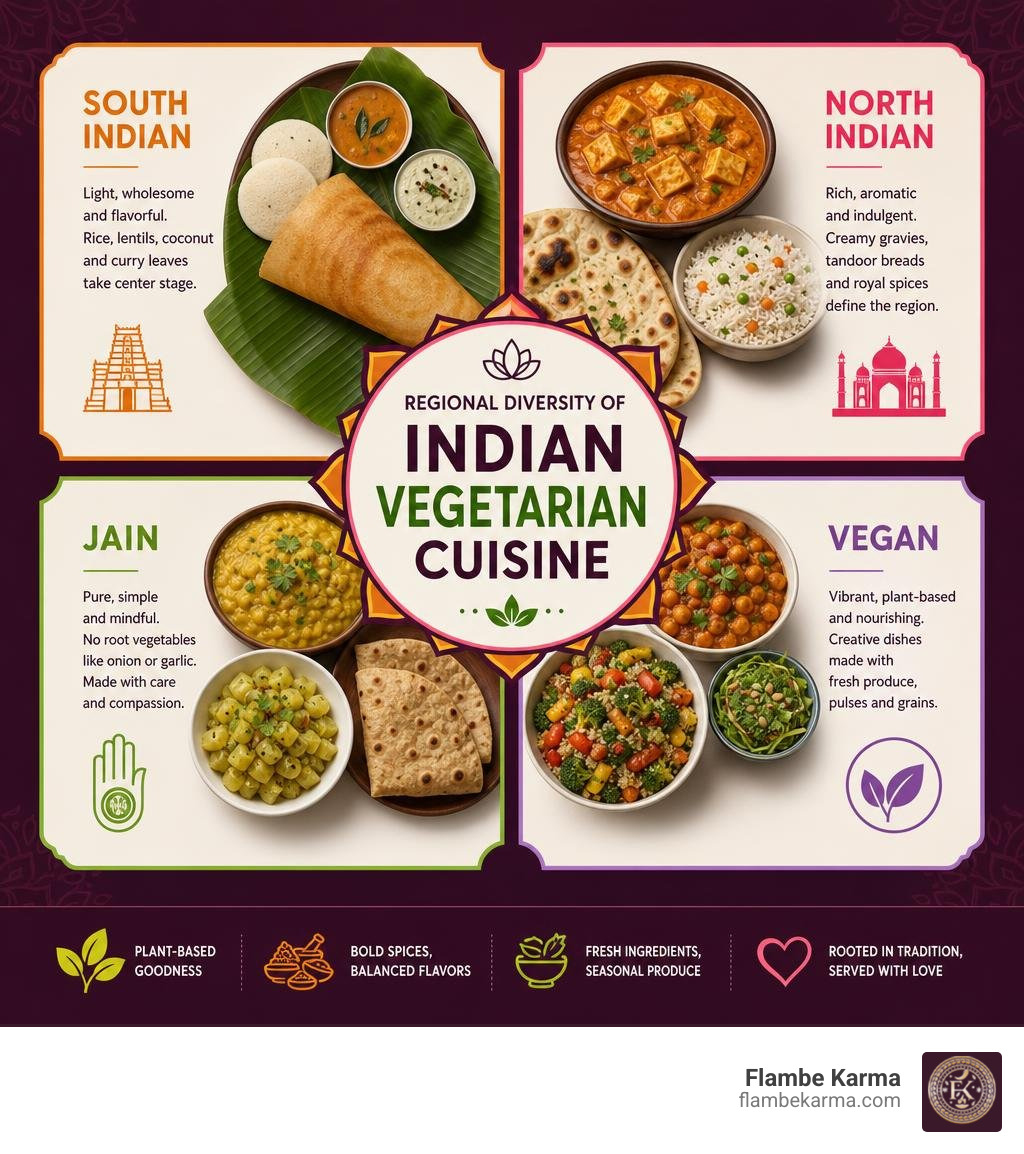
    Whether you want to impress corporate clients with an impeccably organized lunch buffet, delight wedding guests with a grand multi-course feast, or bring the drama of our specialty Flambe Skewers directly to your party, our team is dedicated to handling every detail with absolute professionalism.

    Ready to make your next big event unforgettable? Explore how we can bring your vision to life by checking out The Best Indian Cuisine Catering Buffalo Grove Can Provide or visit our main service page at Catering Buffalo Grove IL.

    Let us take the stress out of planning so you can focus on enjoying the celebration. Enquire Now to connect with our catering specialists and start designing your custom menu today!