
Why Cool Experience Restaurants Are Taking Over Everyone’s Feed
Cool experience restaurants are changing the way people think about going out to eat — and if you’ve seen them flooding your social media feed, there’s a very good reason for that.
Quick answer — what are the most popular types of cool experience restaurants?
| Type | What Makes It Special |
|---|---|
| Projection mapping dining | Animated stories play directly on your table and plates |
| Dark dining | You eat in total darkness to heighten taste and smell |
| Themed immersive dining | Fully built environments like buses, hobbit houses, or jungle spaces |
| Art-integrated dining | Digital art reacts to your food as dishes are placed on the table |
| Market hall dining | Historic spaces with multiple vendors and a lively crowd |
| Performance dining | Live acts, burlesque, acrobats, or live music between courses |
Gone are the days when a nice meal meant just good food on a clean plate. Today, over 60% of diners aged 25 to 40 say they now prioritize unique dining experiences over traditional restaurant settings. Reservations at themed and experiential dining concepts in major U.S. cities have grown by 35% since 2022.
The shift makes sense. People aren’t just hungry — they want a story to tell afterward.
Whether it’s a 3D chef cooking on your plate, eating blindfolded in complete darkness, or boarding a fake city bus in Brooklyn that takes you through Thailand one course at a time, these restaurants turn dinner into something you remember.
Quick look at cool experience restaurants:
What Makes Cool Experience Restaurants Different From Ordinary Dining?
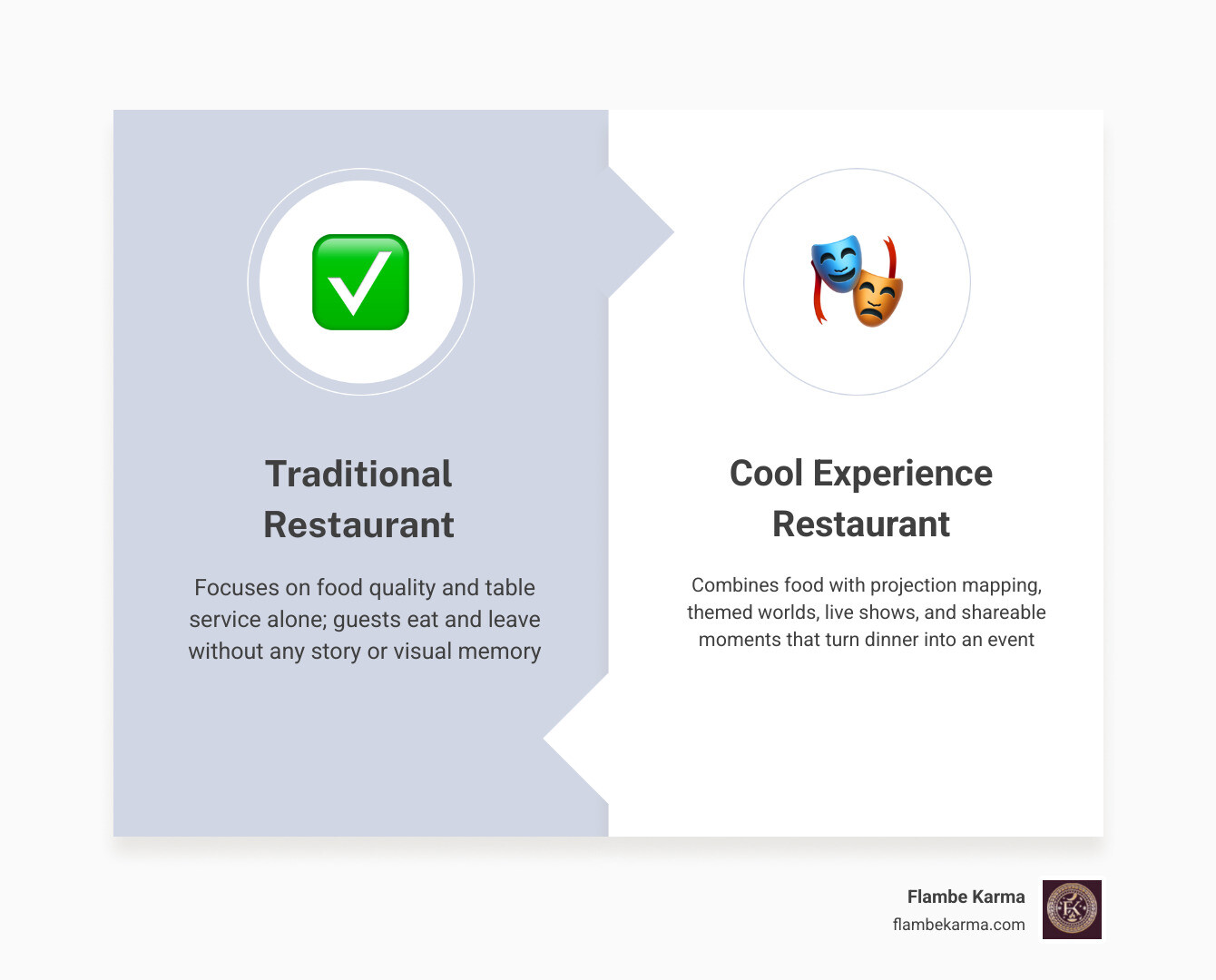
At a traditional restaurant, the meal is the event. At an experience restaurant, the meal is only one part of the event.
That difference matters. The best cool experience restaurants combine several elements at once:
- strong food
- a memorable setting
- entertainment or interaction
- some kind of story, surprise, or sensory hook
Sometimes that means projection mapping on the table. Sometimes it means dining in darkness. Sometimes it means a dramatic room, an open kitchen, tableside flames, or a space designed to feel like a journey instead of a dining room.
A regular restaurant asks, “What would you like to order?” An experience restaurant quietly asks, “How would you like to feel tonight?”
What defines cool experience restaurants in 2026?
In 2026, an experience restaurant usually has these traits:
- a concept you can describe in one sentence
- visuals that feel made for photos and video
- food that supports the theme instead of fighting it
- timed pacing, often with set menus or coordinated service
- moments built for birthdays, date nights, and celebrations
That last point is huge. These places thrive because they give people a reason to leave home, dress up a little, and do something more exciting than scrolling while eating fries in the car. We support that mission deeply at Flambe Karma, where we believe atmosphere, presentation, and hospitality should make dinner feel special, not forgettable.
The four pillars of an unforgettable experience restaurant
We like to think of the best concepts as standing on four pillars:
Food quality
A flashy room cannot save weak food. The strongest concepts start with a menu people would still enjoy even without the show.Atmosphere design
Lighting, decor, layout, sound, scent, and table presentation all shape the mood before the first bite arrives.Performance element
This could be live music, projection mapping, theatrical pacing, tableside action, or chef storytelling.Guest interaction
The diner should feel included, not just seated nearby. That might mean shared-table energy, synchronized starts, interactive visuals, or service that guides the experience.
Why diners are choosing experiences over standard meals
The numbers explain the trend pretty clearly:
- reservations at experiential concepts are up 35% since 2022
- more than 60% of diners ages 25 to 40 now favor unique experiences over standard restaurant settings
Why? A few reasons:
- celebrations feel bigger
- group outings become easier to remember
- photos and videos spread fast online
- people want novelty without planning a full trip
- younger diners often value memories as much as menu variety
In other words, dinner has become part meal, part mini-event, part social content. Not every restaurant needs to turn into a spaceship, of course. But the places that create mood, drama, and delight are winning attention.
12 Cool Experience Restaurants Worth Planning a Trip Around
Below, we’re looking at standout types of experience restaurants people actively seek out. Since we focus on Buffalo Grove and Glen Ellyn, we’re not building a far-flung travel guide here. Instead, we’re showing the kinds of concepts shaping the category so you know what to look for when planning a special night out.
| Experience style | Typical price range | Family-friendly? | Booking difficulty |
|---|---|---|---|
| Projection mapping dinner | Premium to luxury | Often yes | High |
| Art-reactive dining | Luxury | Usually adults-focused | High |
| Transport-themed tasting room | Premium | Usually older kids or adults | Medium to high |
| Dark dining | Mid-range to premium | Usually not ideal for young kids | Medium |
| Fantasy private cabins | Premium | Good for groups, depends on policy | Medium to high |
| Historic market hall | Budget to mid-range | Yes | Low to medium |
| Themed local restaurant with artistic ambiance | Mid-range | Yes | Low to medium |
Cool experience restaurants with projection mapping and visual storytelling
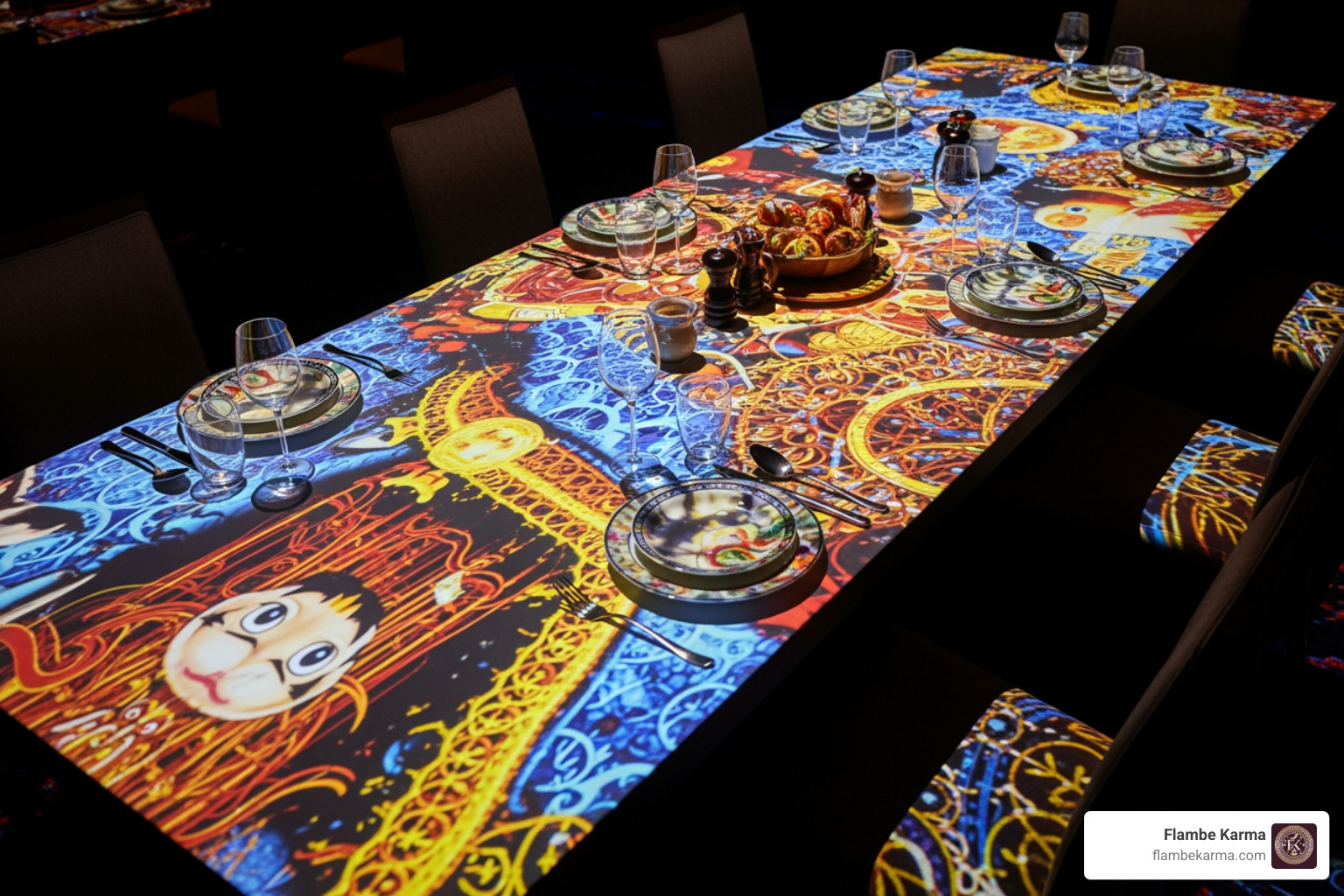
Projection dining is one of the biggest stars of the category. It uses mapped visuals, animation, sound, and synchronized courses so the table itself becomes part of the show.
Globally, projection-based dining has grown into one of the most recognizable formats in immersive hospitality. These experiences often combine tabletop animation, timed service, and multi-course menus to create a dinner that feels part culinary event and part live performance. If you want a broader look at the technology behind this style, projection mapping is a useful reference point.
A few practical things these concepts usually have in common:
- timed seatings
- preselected menus
- advance notice for allergies
- deposits or prepaid bookings
- multi-course formats lasting around 2 to 3 hours
If you love the idea of animation plus dinner, this category is probably your sweet spot.
Cool experience restaurants built around movement, sound, and transportive themes
Some restaurants go beyond visuals and try to make you feel like you’re somewhere else entirely.
This style turns dinner into a journey through cinematic “windows,” immersive sound, and tightly paced courses. The room behaves more like a set than a standard dining room, and that shift can make the evening feel much more memorable.
What makes this style so effective?
- movement is suggested, even when you never leave your seat
- sound design does a lot of emotional work
- the room acts like a set, not just a dining area
- the menu supports the narrative instead of distracting from it
This is the kind of immersive dining that feels almost theatrical. It is less about eating quickly and more about giving yourself over to the pacing of the evening. Basically, not the right place if one person in your group insists on asking for the check halfway through course two.
Sensory concepts that remove distractions and heighten perception
Not every experience restaurant is loud or visual. Some do the opposite.
Dark dining concepts strip away sight so taste, smell, texture, and conversation move to the front. These experiences are designed to heighten awareness and connection while shifting attention away from screens, plating, and visual expectations.
Why this style stands out:
- it removes visual judgment
- flavors can feel more intense
- guests often talk more to each other
- the meal becomes surprisingly memorable, even without a single photo
This type of restaurant is often better for adventurous adults than for very young kids, but it shows how broad the experience-dining category really is. A “cool” restaurant does not always mean a neon sign and confetti cannon. Sometimes it means silence, trust, and trying to identify what you just ate with zero visual clues. Humbling, honestly.
Family-friendly experience restaurants that kids actually remember
Some immersive concepts work beautifully for families, especially when they offer:
- shorter formats
- visual storytelling
- junior menus
- birthday-friendly service
- less intimidating themes
Projection mapping is especially strong here because the visuals can keep kids engaged while the meal still feels elevated for adults.
That matters because many high-concept restaurants are adults-first. Family-friendly experience restaurants succeed when they simplify the menu for younger diners without flattening the excitement. If the visuals are engaging and the timing is tight enough, kids often stay far more interested than they would during a traditional long dinner.
If you’re planning a family night, look for:
- minimum age policies
- child pricing
- menu flexibility
- duration of the event
- whether children will be seated with strangers
- whether the tone is playful or formal
Private and fantasy-style dining for celebrations
Some of the most memorable concepts lean into privacy and fantasy.
Think cabin dining, themed structures, heated outdoor pods, or storybook-inspired spaces designed for groups and celebrations. These experiences are especially popular for birthdays, anniversaries, and winter evenings because they create intimacy without requiring a full private event buyout.
What usually defines this category:
- reservation-only structures
- multi-course service
- longer stays
- premium pricing
- highly photo-friendly settings
These are ideal for groups who want a sense of escape. They also tend to book up early because inventory is limited by design. A room with eight tables can stretch. A place with only a handful of private themed spaces cannot.
Market halls and historic spaces that feel like an adventure
Not every experience restaurant is formal or expensive. Some of the most fun options are market halls and historic food spaces.
A well-known example of the format is a large urban market hall with dozens of vendors operating inside a historic building. We mention this style not as a local recommendation, but as proof that “experience dining” can also mean energy, variety, architecture, and freedom of choice. In many cities, this overlaps with the appeal of a food hall, where the setting itself becomes part of the outing.
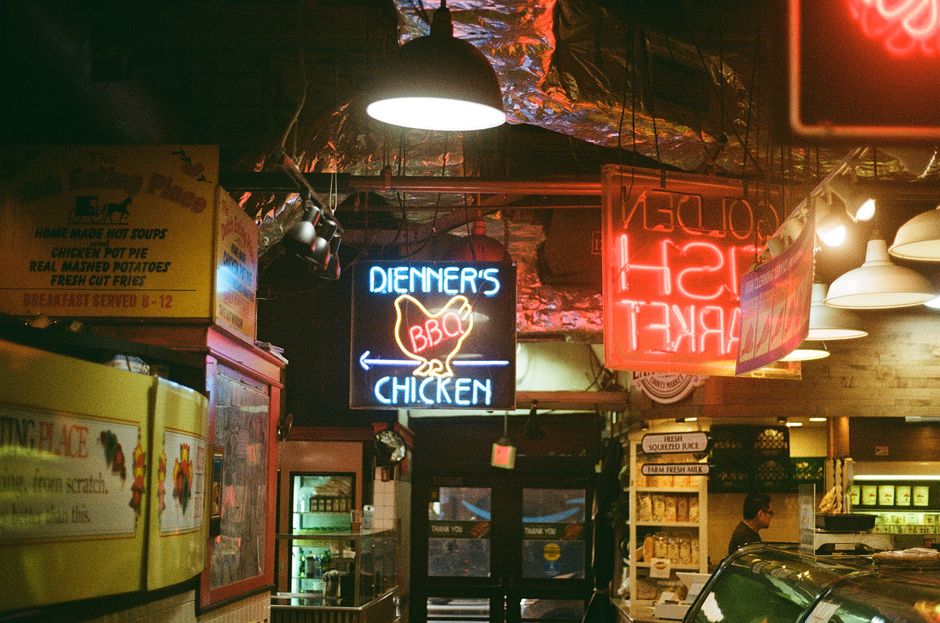
Why people love this style:
- groups can split up and order different cuisines
- the building itself often has personality
- the atmosphere feels lively and social
- there’s less pressure than at a tasting-menu venue
- it works for families, friends, and picky eaters
For many diners, this is the easiest gateway into experience dining. You still get buzz, visuals, history, and a sense of occasion, just without a three-hour commitment and a cancellation policy that reads like a mortgage document.
How Cool Experience Restaurants Blend Food, Atmosphere, and Entertainment
The best experience restaurants do not make you choose between dinner and entertainment. They choreograph both.
That means:
- the room sets expectations early
- service timing supports the mood
- music and lighting shift with the meal
- visual moments arrive when the food arrives
- the menu feels intentional, not random
When the food is as important as the show
This is where weaker concepts often fail. If the visuals are great but the food is forgettable, guests leave saying, “Fun place, one time only.”
The strongest concepts avoid that trap with:
- chef-driven menus
- seasonal ingredients
- well-paced tasting formats
- plating that fits the theme
- pairings that add depth instead of just cost
For more on how memorable dining works when culinary quality leads the way, we recommend Where Art Meets Appetite: Unforgettable Fine Dining Adventures.
At Flambe Karma, this principle matters to us. Artistic ambiance is powerful, but it has to be backed by food people genuinely crave. That’s why memorable dining lands hardest when flavor, service, and atmosphere all pull in the same direction.
The design features guests remember most
When people talk about these places later, they usually mention the same kinds of features:
- live performers
- digital projections
- themed interiors
- dramatic entryways
- open kitchens
- rooftop or panoramic views
- interactive or theatrical service
- signature tableside moments
These details become the “remember when…” part of the night. They also make social sharing easier because there is something to film besides a basket of bread. Nothing against bread, of course. Bread has done excellent work for humanity.
Why these experiences spread so fast online
Experience restaurants are built for the internet, whether they admit it or not.
They spread because they offer:
- a strong visual hook
- a simple concept people can explain quickly
- birthday and celebration energy
- group reactions people want to record
- a sense of “you have to see this”
That social momentum feeds demand, which feeds scarcity, which feeds more demand. In practical terms, if a place is both photogenic and limited-capacity, reservations can disappear fast.
For more ideas on dining that engages more than just your appetite, see A Dining Experience That Engages All the Senses.
What to Know Before You Book
Experience restaurants often come with more rules than a casual night out. That’s not a bad thing. It just means planning helps.
Typical price ranges for experience restaurants
Based on the research, here’s a realistic framework:
- budget fun: $10 to $20 per person at casual halls or low-key themed spots
- mid-range experiences: $20 to $40 per person
- premium experiences: $50+ per person
- luxury immersive dinners: often well above that, especially for tasting menus and projection shows
Specific examples in the research included:
- Le Petit Chef global pricing often landing in the premium-to-luxury range
- MoonFlower Sagaya Ginza at 39,600 yen per person for a 9-dish course
- kids menus at some projection experiences priced separately at lower rates
- add-on wine pairings at additional cost
Reservation tips that save frustration
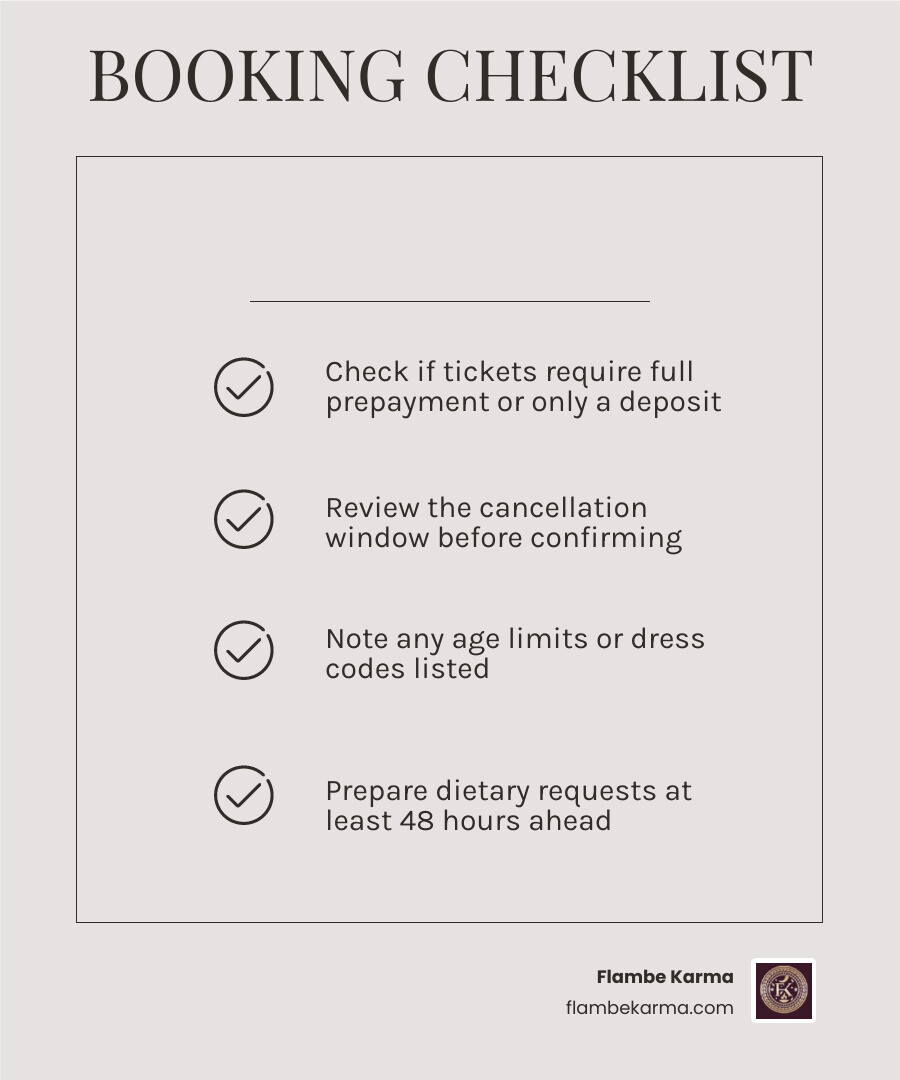
Before booking, check:
- whether tickets are prepaid or deposit-based
- cancellation windows
- dietary request deadlines
- fixed start times
- shared-table policies
- age restrictions
Some venues in the research required:
- 48-hour notice for dietary needs
- arrival 15 minutes early
- deposits at booking
- cancellation penalties within 7 to 14 days
- exact timed release windows for reservations
If a place is highly choreographed, being late is not a small issue. You may miss key parts of the experience.
Practical logistics: parking, timing, and special requests
A few smart habits make these dinners smoother:
- arrive early rather than right on time
- check parking in advance
- note accessibility needs before booking
- avoid strong perfume in sensory-forward settings
- mention allergies clearly and early
- choose off-peak nights if you want less stress
Some immersive venues provide parking guidance or validation, while others are strict about start times because all guests begin together. In those cases, “fashionably late” is just regular late.
How to choose the right experience for your group
Match the format to the people:
- date night: projection dining, art dining, fantasy private spaces
- birthdays: playful visuals, private cabins, shareable tasting menus
- families: kid-friendly visuals, shorter formats, flexible menus
- business dinners: polished service, moderate sound levels, clear pacing
- picky eaters: market halls or themed restaurants with broader menus
- sensory-sensitive guests: avoid loud, long, or highly fixed formats
If your group includes young kids, older relatives, and one person who “doesn’t like surprises,” go with a lighter concept instead of a rigid tasting performance.
How Experience Restaurants Have Evolved-and Where the Trend Is Going
The category has matured a lot in the past few years.
From themed decor to full-story worlds
Older themed restaurants often focused on props and decor. Newer concepts go much further:
- synchronized visuals
- tailored sound design
- interactive projections
- timed service
- narrative pacing across courses
That shift is one reason reservations have grown so much since 2022. Diners are no longer impressed by decor alone. They expect the whole evening to feel intentional.
What diners expect from cool experience restaurants now
In 2026, guests want:
- better food, not just a cool room
- smoother technology
- easier online booking
- clear dietary communication
- inclusive options for families or varied needs
- service that feels polished, not robotic
This is also where local restaurants can shine. You do not need a giant production budget to create a memorable atmosphere. Artistic presentation, thoughtful hospitality, and a strong sense of identity can still turn a meal into an experience.
Where to find more unique dining inspiration
If you want to keep exploring, start here:
- The World’s Most Unique Dining Experiences for Foodies
- The Complete List of Unique Dining Experiences
- Crazy Fun Restaurants Where Every Meal Is an Experience
You can also browse booking platforms, official venue pages, and city dining guides when comparing policies, pricing, and map locations.
Frequently Asked Questions About Cool Experience Restaurants
Are cool experience restaurants worth the higher price?
Usually, yes, if you value the memory as much as the meal.
You’re paying for more than food:
- design
- staging
- entertainment
- technology
- staffing
- pacing
- shareable moments
For a random Tuesday when you just want dinner fast, maybe not. For birthdays, anniversaries, date nights, or visitors in town, absolutely often yes.
Are there cool experience restaurants that work for kids and families?
Yes, but not all of them.
The best family-friendly options usually offer:
- junior menus
- visual storytelling
- clear age policies
- lower child pricing
- shorter or more playful experiences
Projection dining tends to work especially well for families because the visuals keep kids engaged and the event feels special without being too abstract.
How far ahead should you reserve the most popular cool experience restaurants?
For popular weekends or holidays, reserve as early as possible.
A good general rule:
- casual themed spots: a few days to 1 week
- popular local concept restaurants: 1 to 3 weeks
- premium immersive events: several weeks ahead
- holiday or celebration dates: much earlier if possible
Always read the booking terms. Deposits, shared seating, dietary cutoffs, and cancellation penalties are common.
Conclusion
The rise of cool experience restaurants makes perfect sense to us. People want meals that feel like events, not errands. They want atmosphere, story, flavor, and something worth talking about on the drive home.
The smartest way to enjoy these places is simple:
- pick the right format for your group
- understand the time and price commitment
- book early
- read the policies
- make sure the food matters as much as the visuals
If that sounds like your kind of night out, explore more inspiration in Eat, Explore, Enchant: The Art of Memorable Dining and visit Flambe Karma’s Buffalo Grove location to plan a memorable meal with artistic ambiance closer to home.