
Why a Special Dinner Experience Is Worth Seeking Out
A special dinner experience goes far beyond good food on a plate. It’s the combination of atmosphere, storytelling, flavor, and surprise that turns a meal into a memory you talk about for years.
Here’s a quick look at what separates a truly special dinner from an ordinary night out:
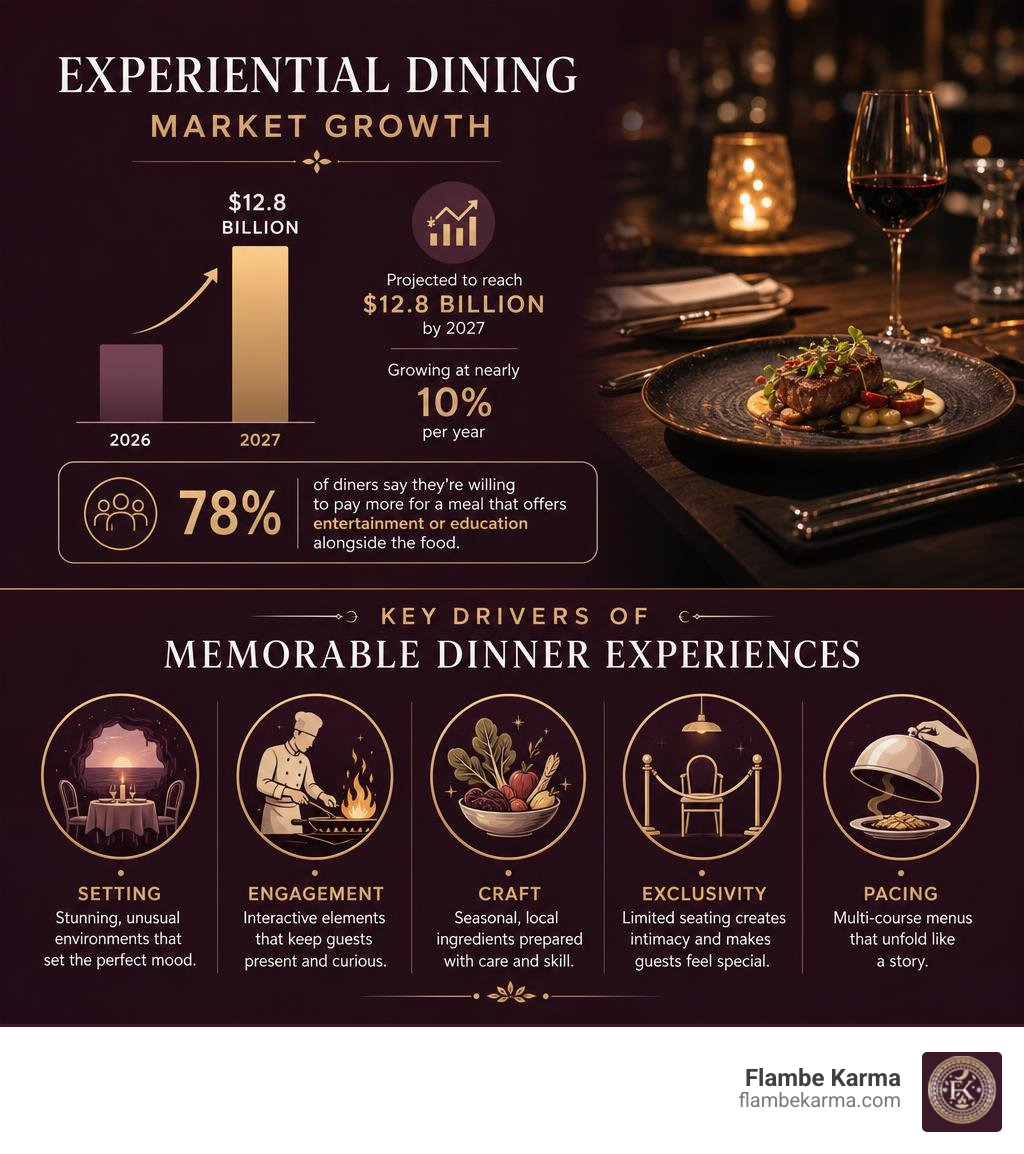
- Setting — An unusual or beautiful environment (think sea caves, candlelit castles, or open-air island rocks) instantly elevates the mood
- Engagement — Interactive elements like live cooking, wine storytelling, or blindfold courses keep guests present and curious
- Craft — Seasonal, locally sourced ingredients prepared with skill signal that someone genuinely cares about what lands on your plate
- Exclusivity — Limited seating creates intimacy and makes guests feel like insiders, not just customers
- Pacing — Multi-course tasting menus unfold like a story, giving each bite its own moment
The demand for this kind of dining is growing fast. The global experiential dining market is projected to reach $12.8 billion by 2027, growing at nearly 10% per year. And it’s not hard to see why — 78% of diners say they’re willing to pay more for a meal that offers entertainment or education alongside the food.
If you’ve ever left a restaurant feeling underwhelmed despite spending serious money, you already know the difference. The right dinner doesn’t just feed you. It moves you.
Easy special dinner experience glossary:
What Defines a Truly Special Dinner Experience?
What makes a dinner truly memorable? It starts when we step away from the transactional nature of “ordering food to get full” and enter the realm of emotional connection. A great meal engages all five senses, turning the table into a stage where food meets theater.
When you sit down for a sensory-rich meal, research shows that the perceived value of your food can increase by up to 40%. This is because the atmosphere prepares your brain to taste more deeply. When a chef presents a dish shrouded in aromatic smoke or finished with a lick of open fire at your table, your anticipation skyrockets.
However, theater alone isn’t enough. The most successful experiential dinners strike a delicate balance between entertainment and culinary execution. If the food isn’t delicious, the performance falls flat. The best experiences use theatrical elements to highlight—rather than hide—the quality of the ingredients.
By prioritizing storytelling and human interaction, restaurants craft a memorable restaurant experience that leaves a lasting impression. When a server or chef explains the origin of a specific spice, or why a wine was selected to match a dish, we are no longer just consumers; we are part of the story.
6 Immersive Formats Redefining Modern Dining
Culinary innovators around the world are pushing boundaries, using unique settings and interactive formats to redefine what a night out looks like. From high-tech sensory journeys to historic hideaways, these six formats represent the cutting edge of dining in 2026. They show just how creative crazy fun restaurants where every meal is an experience can get.
1. Sensory Deprivation and Blindfold Courses
By temporarily removing one of our primary senses, we unlock a completely different way of tasting. Blindfold courses have taken the culinary world by storm because they force us to rely entirely on texture, aroma, temperature, and taste.
When you cannot see what is on your fork, your mind stops making assumptions based on visual presentation. A simple bite of roasted pear or a delicate splash of herb-infused oil becomes a revelation. These surprise menus encourage diners to slow down, talk to their companions about what they are experiencing, and truly focus on the plate. It is a dining experience that engages all the senses by challenging them to work harder.
2. Extreme Environments: From Sea Caves to Volcano Grills
For those who love adventure, dining has moved into some of the most extreme landscapes on Earth. Imagine eating a meal cooked entirely over the geothermal heat of an active volcano, where the earth itself serves as the stove. Or picture sitting at a single, exclusive table perched directly on a rock in the sea, listening to the waves crash below while looking out at historic castle ruins under the stars.
These dramatic backdrops—whether it is a meal enjoyed on a suspended platform 150 feet in the air or a romantic night at a dinner on the rock—make the atmosphere as unforgettable as the food. They represent the absolute peak of the world’s most unique dining experiences for foodies, proving that where you eat can be just as exciting as what you eat.
3. Multi-Sensory and High-Tech Theatrical Journeys
On the other end of the spectrum is the high-tech, multi-sensory journey. These ultra-exclusive experiences use projection mapping, curated soundscapes, and temperature-controlled rooms to guide guests through a series of emotional states.
At cutting-edge venues like SJ2.0 in Bali, dinner is treated as theater. Guests surrender their phones in locked pouches to fully immerse themselves in a 40-course journey of “emotions.” Diners might walk barefoot through water, enjoy courses under a dome of shifting animations, or step into a freezing -10°C room wearing parkas just to eat dessert. This level of digital detox and total sensory control explains why these cool experience restaurants are taking over your feed—they offer an escape from reality itself.
4. Historic Mansions and Private Castles
There is something deeply romantic about stepping back in time. Dining in a historic mansion or a private castle offers a sense of exclusive access that modern buildings simply cannot replicate.
A prime example of this is the exclusive fine dining events held at the historic Moët & Chandon Trianon, where private mansion doors are opened to limited groups of guests. Diners share a single, grand table for a multi-course seasonal feast paired with rare grand vintage champagnes. The combination of historical architecture, private cellar tours, and refined etiquette makes these evenings feel like a royal invitation rather than a standard restaurant booking.
5. Interactive Chef’s Tasting Tables and Cooking Demos
If you love to see the magic happen up close, the interactive chef’s table is the ultimate format. Rather than sitting tucked away in a quiet corner, guests are positioned right next to the action, often watching the culinary team prep, cook, and plate each course live.
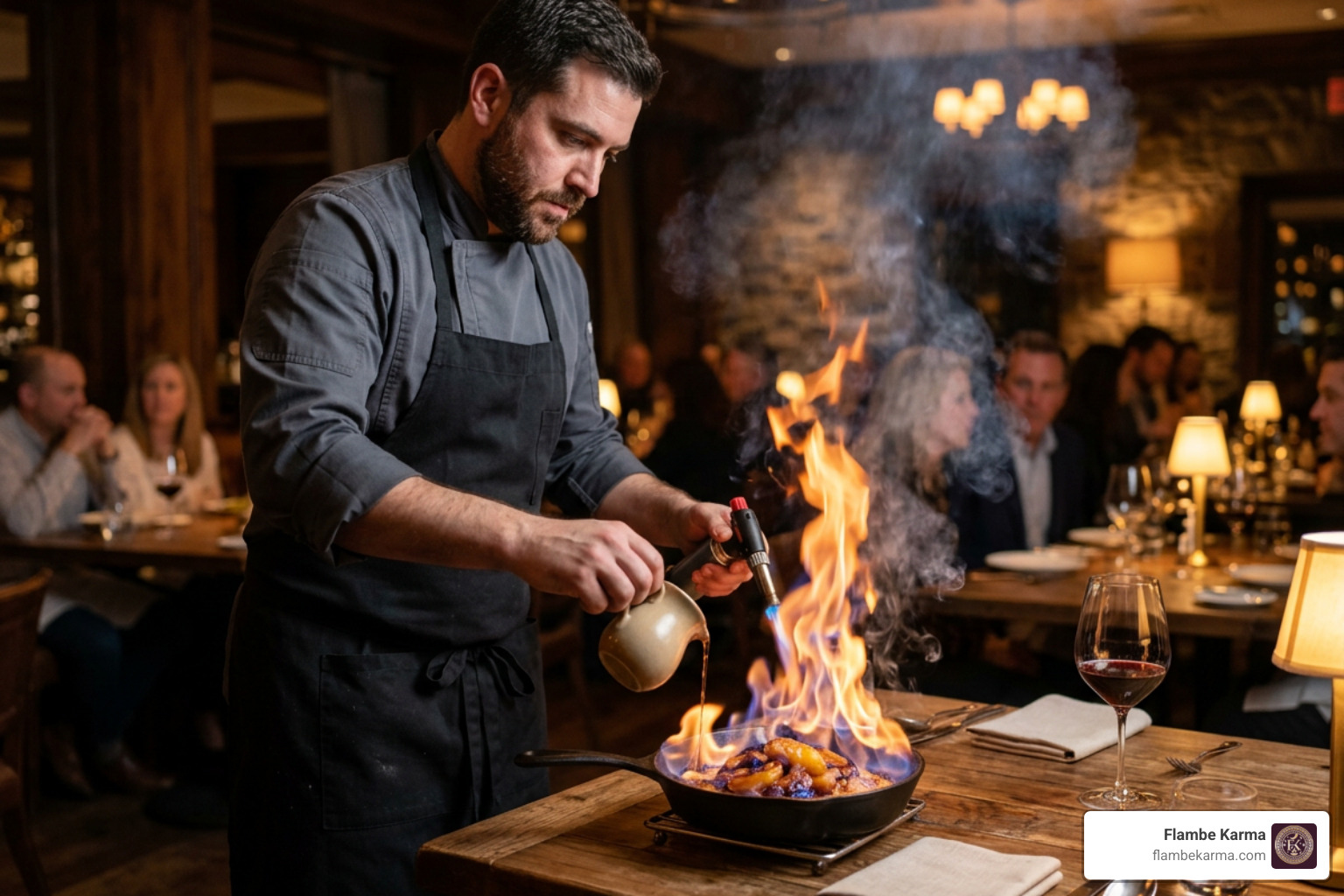
These experiences frequently feature dedicated smoke and fire courses, where chefs use specialized techniques to infuse deep, woody flavors or flambé dishes right before your eyes. Many of these dinners double as informal cooking demos, where the chef explains the science behind the dish, shares tips on sourcing, and answers questions. It is a format where art truly meets appetite, resulting in unforgettable fine dining adventures.
6. Island Escapes and Sea-Submerged Dining
Sometimes, a special dinner requires a physical journey. Island escape dinners transport guests away from their daily routines via boat to remote, peaceful locations.
At unique events like the Viirelaid Chef Special, the dining room is the sea itself. Guests can enjoy an artistic 5-course menu with their feet literally submerged in the cool ocean water next to a historic lighthouse. If the weather turns, the experience shifts inside a historic lighthouse keeper’s house, maintaining its wild, fairytale charm. It is an immersive format that blends gourmet food with the raw beauty of wind, waves, and starlight.
The Elements That Elevate a Meal Into an Event
To transform a simple dinner into a true event, a restaurant must master the details that happen off the plate just as much as those on it. Let’s look at how storytelling, beverage curation, and ingredient sourcing come together to elevate our dining experiences.
The Role of Storytelling and Curated Wine Pairings
A great sommelier does more than just pour wine; they tell stories. When we understand the history of a vineyard, the challenges of a specific harvest, or why a biodynamic wine pairs perfectly with a wood-fired dish, the meal gains a new layer of meaning.
Having winemakers or passionate beverage experts present at a dinner creates a communal, warm atmosphere. Shared long tables encourage strangers to connect over shared bottles, turning a room of quiet tables into a lively, friendly gathering. Through these shared moments, we discover the art of memorable dining, where wine acts as the ultimate bridge between food and friendship.
Hyper-Local Sourcing and Farm-to-Table Menus
The best chefs know that great food starts in the soil. Many top-tier experiential restaurants now work directly with master gardeners, local foragers, and family-owned farms to source their ingredients.
When a menu changes daily based on what was harvested that morning, the meal becomes a snapshot of a specific time and place. Tasting native flavors, wild-foraged mushrooms, or heirloom vegetables grown just down the road grounds the dinner in its local environment. This hyper-local approach ensures that every dish is fresh, vibrant, and packed with seasonal character.
Planning Your Next Culinary Adventure
Securing a spot at an experiential dinner requires a bit of planning. Because these events are highly sought after and often feature limited seating, knowing how to navigate the booking process is key to pulling off a flawless evening.
How to Book and Prepare for a Special Dinner Experience
Most premium dining experiences operate on strict booking schedules. Some open their reservations exactly 60 days in advance, while others run as limited-run pop-ups that sell out in minutes.
To help you plan, we have put together a quick guide on what to expect when booking these high-end events:
| Experience Type | Typical Booking Window | Price Range (Per Person) | Common Dress Code |
|---|---|---|---|
| High-Tech/Multi-Sensory | 30 to 60 days in advance | $300 – $800+ | Smart Casual / Elegant |
| Private Castle / Historic Mansion | 60+ days in advance | $250 – $650 | Formal / Semi-Formal |
| Interactive Chef’s Table | 14 to 30 days in advance | $150 – $350 | Casual Chic |
| Extreme/Outdoor Environments | Seasonal (book months ahead) | $150 – $400 | Smart Casual (Weather-appropriate) |
Before you book, always review the restaurant’s cancellation policy. Because ingredients are sourced specifically for the number of confirmed guests, many experiential dinners require non-refundable prepayments or charge significant fees for last-minute cancellations. Additionally, consider your transportation in advance—especially for remote island or cave dinners where boat shuttles or specialized transfers are part of the journey.
To explore a variety of formats, you can browse through the complete list of unique dining experiences.
What to Expect at a High-End Special Dinner Experience
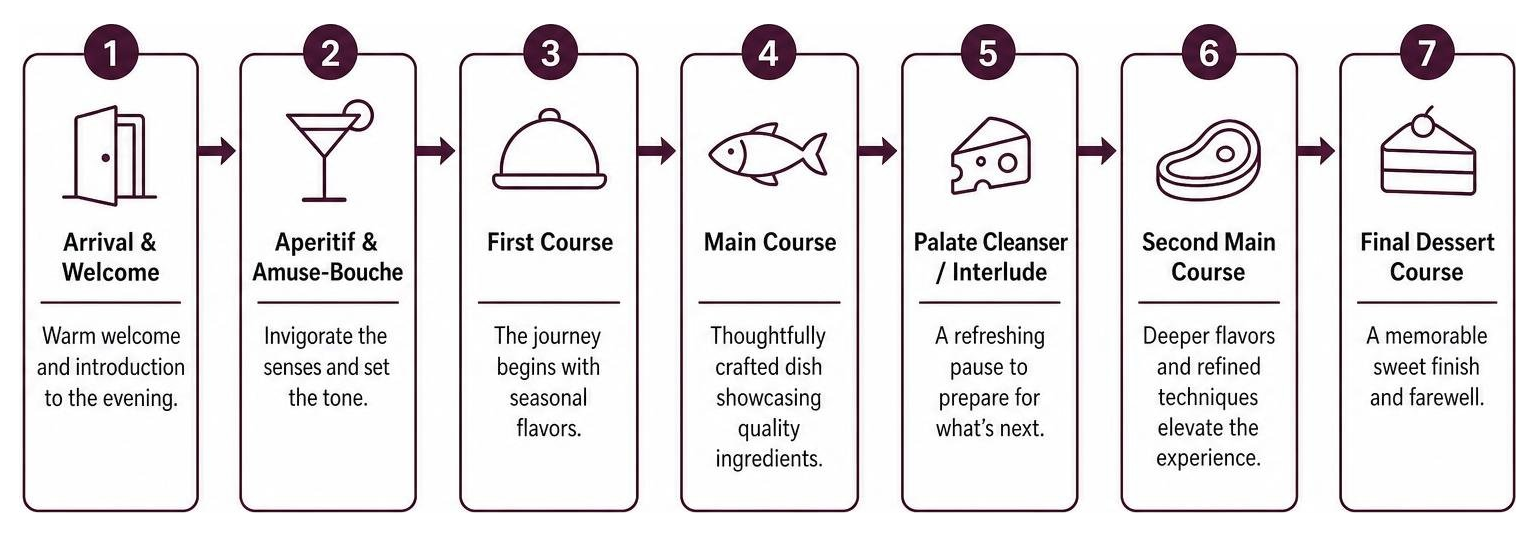
When you arrive at an experiential dinner, prepare for a leisurely evening. These meals are designed to be savored, often lasting anywhere from two to four hours.
Here is what a typical journey looks like from start to finish:
Because of the structured nature of tasting menus, it is crucial to communicate any food allergies or dietary restrictions (such as vegetarian, vegan, or halal preferences) at the time of booking. This gives the culinary team ample time to customize your courses without disrupting the flow of the kitchen.
Frequently Asked Questions about Experiential Dining
What is the difference between fine dining and an experiential dinner?
While traditional fine dining focuses primarily on flawless service, white tablecloths, and highly refined classic dishes, experiential dining prioritizes interactive theater, sensory engagement, and unique settings. Experiential dinners often include storytelling, hands-on elements, or unusual environments that make the guest an active participant in the meal.
How far in advance should I book a unique tasting menu?
For highly exclusive or seasonal experiences, we recommend booking 30 to 60 days in advance. Many top-tier venues release their tables on a rolling basis (such as the first of every month), so setting a reminder can help you secure highly coveted weekend slots.
Do immersive restaurants accommodate food allergies and dietary restrictions?
Yes, the vast majority of experiential restaurants gladly accommodate allergies, vegetarian, vegan, and halal diets. However, because these multi-course menus require intense preparation, you must notify the restaurant of your requirements during the booking process rather than upon arrival.
Experience the Magic Locally at Flambe Karma
You don’t have to travel across the globe to enjoy a spectacular, sensory-rich meal. At Flambe Karma, we bring the theater, artistry, and warmth of experiential dining right to your neighborhood.
Operating in both Buffalo Grove and Glen Ellyn, we specialize in vibrant Indian and fusion cuisine served in an artistic, welcoming ambiance. Our signature Flambe Skewers bring the excitement of open fire right to your table, combining dramatic presentation with perfectly spiced, tender bites. Whether you are celebrating a milestone anniversary, planning a unique date night, or simply looking to escape the ordinary, our team is dedicated to making your evening unforgettable.
If you are looking to explore local options, you can check out restaurants in Buffalo Grove on Groupon or browse places worth the drive in Glen Ellyn on OpenTable. But when you are ready for a truly immersive culinary adventure filled with flavor, fire, and fantastic service, we invite you to join us.
Book your next unforgettable meal at Flambe Karma and let us turn your next dinner into an experience to remember!