
What Makes Hyderabadi Biryani the World’s Most Celebrated Rice Dish?
Hyderabadi biryani is a layered rice and meat dish from the city of Hyderabad, India, slow-cooked in a sealed pot using a technique called dum. It blends Mughal refinement with bold Deccani spices — and it’s widely considered the most beloved biryani style in the world.
Quick answer for first-time explorers:
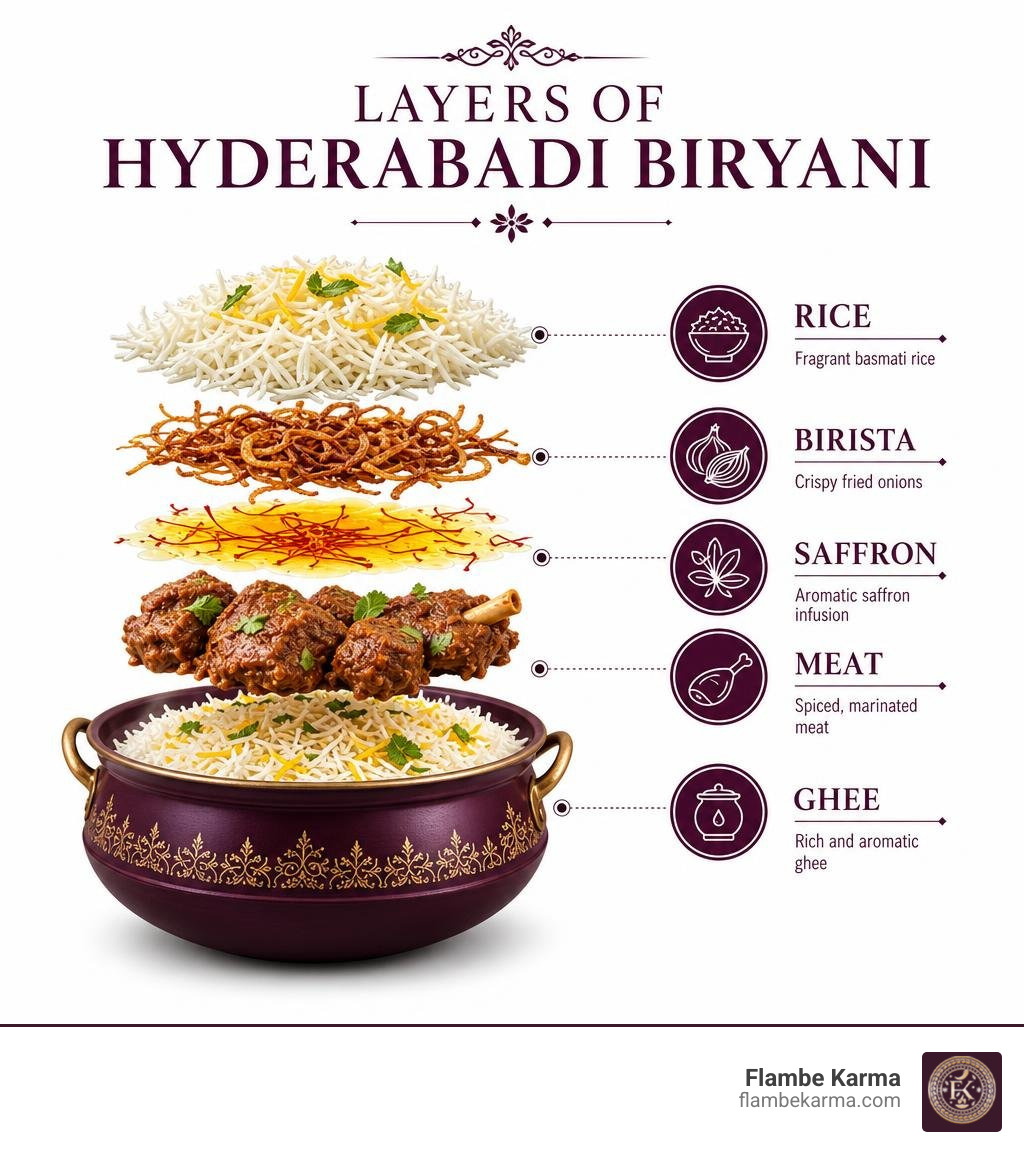
- What it is: Fragrant basmati rice layered with spiced marinated meat, saffron, fried onions, and ghee
- Two main types: Kachchi (raw marinated meat cooked under parboiled rice) and Pakki (pre-cooked meat layered with rice)
- Key technique: Dum cooking — a sealed pot traps steam to cook everything together slowly
- Signature spices: Saffron, cardamom, cloves, cinnamon, and fresh mint
- Classic sides: Mirchi ka salan, dahi chutney (raita), and baghaar-e-baingan
There’s a reason lifting the sealed lid of a Hyderabadi biryani makes the whole room go quiet. That cloud of saffron-laced steam isn’t just theatrical — it’s the signal that something truly special is inside.
This dish was born in the royal kitchens of the Nizams of Hyderabad, where Mughal culinary tradition met the heat and intensity of South Indian flavors. The result is a dish that’s neither purely northern nor southern — it’s something entirely its own.
In this complete guide, you’ll learn everything: its royal origins, the difference between the two authentic cooking methods, the essential ingredients, and how to avoid the mistakes that ruin a great biryani.
The Royal History and Origin of Hyderabadi Biryani
To truly understand hyderabadi biryani, we must travel back in time to the Deccan court of the 17th and 18th centuries. The story begins with the Mughal conquest of the southern regions of India. When the Mughal Empire expanded southward, it brought along its highly refined, Persian-influenced culinary traditions. These northern court kitchens favored mild, aromatic rice dishes, dried fruits, and delicate braises.
However, when these imperial recipes arrived in the Deccan plateau (modern-day Hyderabad and surrounding areas), they encountered a vibrant local food culture. The local Deccani and Telugu cuisines were famous for their fiery green chilies, souring agents, fresh herbs, and robust spice blends.
Under the patronage of the Nizams—the historic rulers of Hyderabad—royal chefs began experimenting. They took the basic concept of the Mughal pilaf and turned it on its head. Instead of cooking the meat and rice completely separately and mixing them at the end, they began slow-steaming them together in sealed clay pots. The delicate fragrance of northern spices fused with the fiery, deeply seasoned marinade of the south. This culinary marriage is what established the historical origins of Hyderabadi biryani as a unique, world-class masterpiece.
Over the centuries, this dish evolved from an exclusive royal feast served in the Nizam’s court into the definitive comfort food of the masses. Today, it stands proud among the most iconic signature Indian dishes, representing a perfect balance of history, culture, and culinary craftsmanship.
Kachchi vs Pakki: The Two Authentic Preparation Methods
If you walk into any traditional kitchen in Hyderabad, you will quickly learn that there is no single way to prepare this legendary dish. Instead, the culinary world divides the preparation of hyderabadi biryani into two distinct, highly debated methods: Kachchi (raw) and Pakki (cooked).
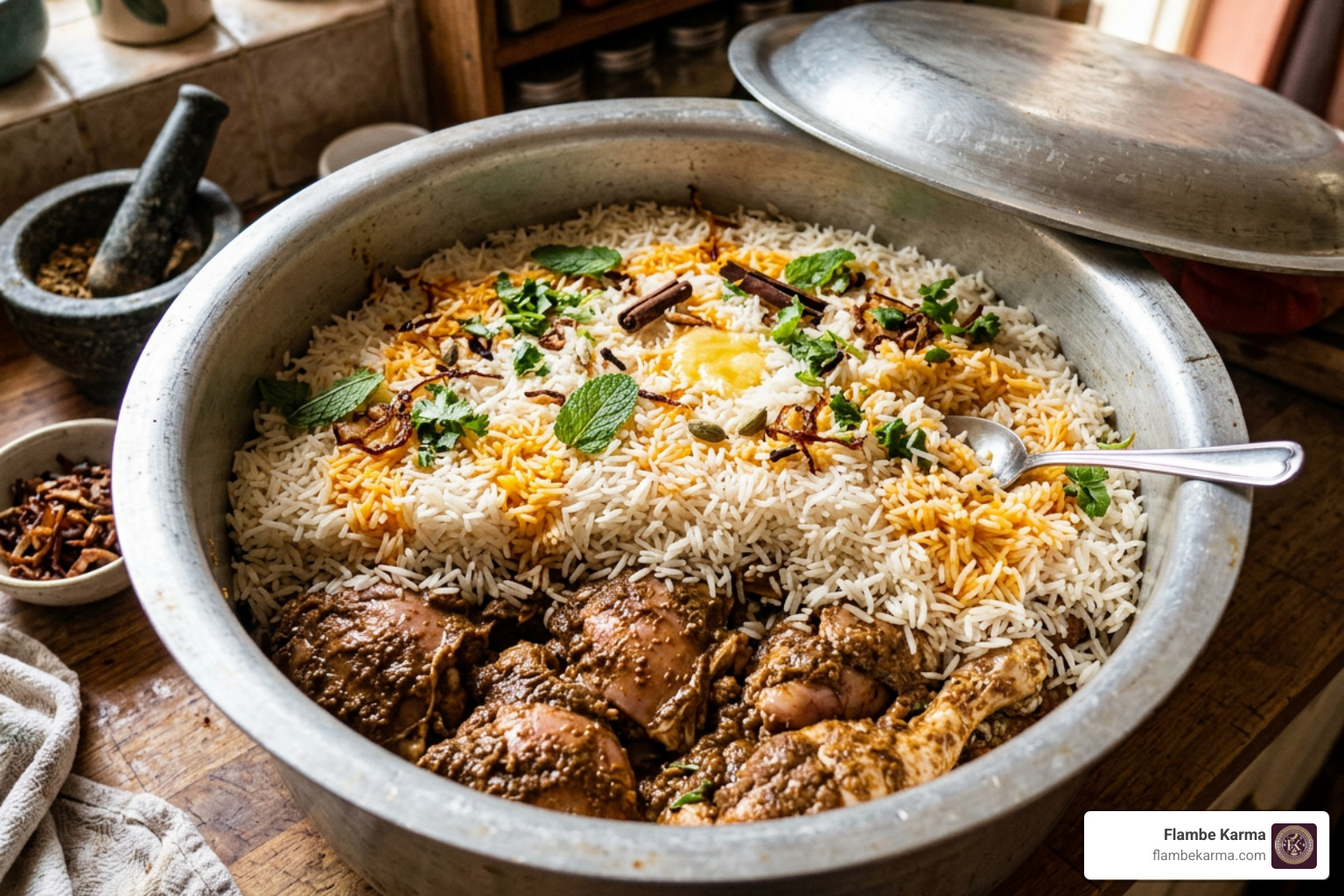
While both methods yield a stunningly aromatic meal, they require entirely different cooking skills, timing, and structural assembly.
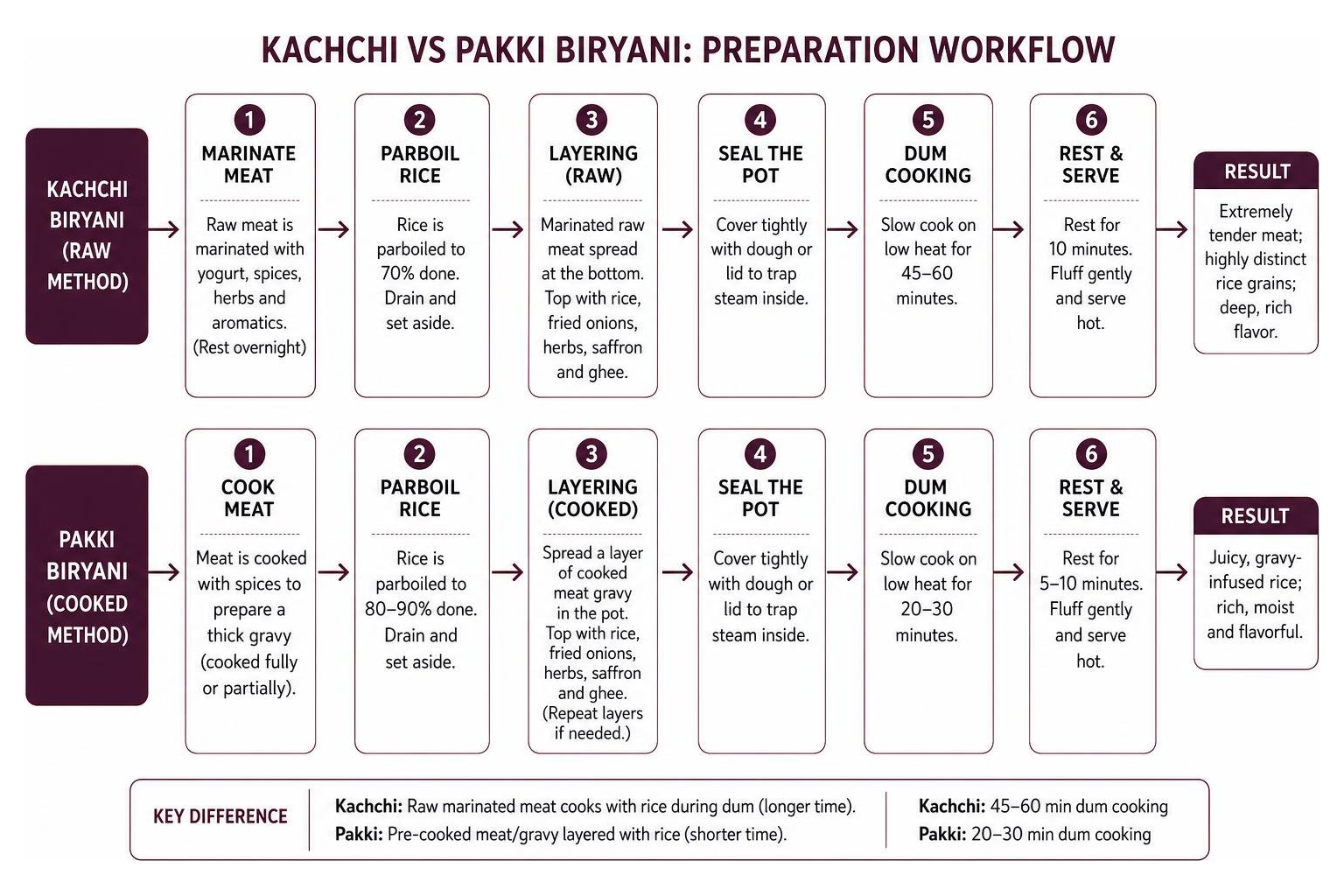
| Feature | Kachchi Biryani | Pakki Biryani |
|---|---|---|
| Meat Preparation | Raw meat, marinated overnight | Fully or partially pre-cooked meat (gravy) |
| Rice Preparation | Parboiled to 70% done | Parboiled to 80-90% done |
| Layering Style | Raw meat placed at the absolute bottom | Cooked meat gravy layered with rice |
| Dum Cooking Time | Longer (45 to 60 minutes) | Shorter (20 to 30 minutes) |
| Difficulty Level | Advanced (requires precise heat control) | Intermediate (more forgiving for home cooks) |
| Texture Profile | Extremely tender meat; highly distinct rice grains | Juicy, gravy-infused rice; rich and moist |
Let’s look at the science and step-by-step workflow of both techniques to understand why they taste so different.
The Art of Kachchi Hyderabadi Biryani
The Kachchi (raw) method is widely considered the pinnacle of biryani-making. It is the ultimate test of a chef’s patience and intuition because the meat and rice must finish cooking at the exact same second, inside a completely sealed dark pot.
In this method, raw bone-in chicken or mutton is marinated overnight in a thick mixture of yogurt (dahi), fresh ginger-garlic paste, green chilies, lemon juice, and ground spices. The acid in the yogurt and lemon juice acts as a natural tenderizer, breaking down the tough muscle fibers of the meat.
To prepare this at home, chefs rely on the traditional Kachi Yakhni method, which lays the raw, cold marinated meat at the very bottom of a heavy pot. Highly fragrant, partially cooked basmati rice (parboiled to exactly 70% doneness) is then layered directly on top of the raw meat.
When the pot is sealed and placed over a low flame, a closed-system steam oven is created. The moisture from the raw meat and yogurt marinade evaporates, rises through the layers of rice, condenses on the sealed lid, and falls back down to baste the dish. This continuous cycle ensures that the meat becomes incredibly succulent while the rice absorbs the rich, spiced juices from the bottom up. For a detailed breakdown of this delicate process, you can follow an authentic kachi recipe guide to master the heat control at home.
The Traditional Pakki Hyderabadi Biryani
If the Kachchi method sounds a bit too intimidating for your next dinner party, the Pakki (cooked) method is your saving grace. It is a highly respected, deeply flavorful alternative that offers much more control over the final product.
In a Pakki preparation, the meat is not raw when it enters the pot. Instead, the chicken or mutton is cooked beforehand with onions, tomatoes, yogurt, and spices to create a rich, semi-dry gravy (often called a korma). Separately, the basmati rice is parboiled until it is almost fully cooked (around 85-90% done).
The assembly process is a beautiful dance of layering. The cooked meat gravy is placed at the bottom, followed by layers of hot rice, fried onions, fresh herbs, and saffron milk. Because both components are already mostly cooked, the subsequent dum stage is much faster.
The goal of the dum here is not to cook the raw meat, but rather to marry the complex flavors of the gravy with the fluffy rice. This technique produces a biryani with distinct, colorful layers and a slightly moister texture. For home cooks looking to try this reliable yet authentic style, we recommend checking out this detailed step-by-step chicken biryani guide to get your rice-to-meat ratios perfectly aligned.
Key Ingredients, Dum Cooking, and Classic Accompaniments
An authentic hyderabadi biryani is far more than just a chicken curry with some yellow rice tossed on top. It is a highly technical dish where every single ingredient plays a structural role.

If you want to recreate those legendary royal flavors, there are several non-negotiable components you must gather:
- Aged Basmati Rice: You must use premium, long-grain basmati rice aged for at least one to two years. Aged rice has a lower moisture content, which prevents the grains from sticking together or turning mushy during the long steam. The starch must be thoroughly washed off until the water runs completely clear.
- Pure Ghee: Ghee is the lifeblood of a great biryani. It acts as a primary flavor carrier, distributing the fat-soluble spice compounds evenly throughout the pot. It also creates a crucial moisture barrier at the top of the rice layers, keeping the grains moist without letting them clump. You can read more about how this works in this comprehensive ghee biryani guide.
- Saffron (Kesar): Never use artificial yellow food coloring. Authentic biryani relies on pure saffron threads bloomed in warm milk. This is drizzled over the top layer of rice in patches, creating a beautiful contrast of white, pale yellow, and deep orange grains.
- Fried Onions (Birista): Thinly sliced red onions are deep-fried in hot oil or ghee until they are perfectly crisp and golden brown. These are not just a pretty garnish; they add a rich, caramelized sweetness that balances the heat of the green chilies.
- The Dum Setup (Atta & Tawa): To trap the steam completely, the lid of the heavy-bottomed pot (handi) is sealed using a rolled dough made of whole wheat flour (atta). To prevent the bottom layer of meat from scorching on a modern stovetop, the pot is placed on a heavy flat griddle (tawa), which acts as a heat diffuser.
Traditional Accompaniments
A royal dish deserves equally royal side dishes. In Hyderabad, a plate of biryani is never served alone. It is traditionally accompanied by three classic sides that cut through the richness of the ghee and spices:
- Mirchi ka Salan: A rich, tangy, and slightly spicy gravy made from roasted peanuts, sesame seeds, tamarind, coconut, and large, mild green chilies. The nutty creaminess of this sauce is the perfect companion to the dry, fragrant rice.
- Dahi Chutney (Raita): A cooling yogurt dip whisked with finely chopped onions, green chilies, fresh coriander, mint, and a pinch of salt. It provides an instant cooling effect against the bold spices of the biryani.
- Baghaar-e-Baingan: Small, tender eggplants cooked in a rich, nutty, and tangy gravy similar to the salan.
To round out your feast, pairing these rich mains with some of the best Indian appetizers—like crispy samosas or spicy kebabs—creates a truly memorable dining experience.
Frequently Asked Questions About Hyderabadi Biryani
Preparing a traditional biryani is a culinary journey that often comes with a few learning curves. Here are the most common questions home cooks ask, along with expert tips to help you troubleshoot your next batch.
Why does my biryani rice turn mushy?
This is the most common heartbreak in biryani-making. Mushy rice usually happens because of three main mistakes:
- Over-parboiling: The rice must still have a firm, white core when you drain it. If it is soft enough to eat comfortably before it goes into the pot, it will inevitably overcook and clump during the dum stage. Aim for 70% doneness (the grain should bend slightly but break when pressed firmly).
- Inadequate washing: You must wash the raw basmati rice multiple times to remove excess surface starch, which causes stickiness.
- Using new rice: Always check the packaging to ensure you are using aged basmati rice.
What is the ideal rice-to-meat ratio for biryani?
For a perfectly balanced plate where every forkful has a harmonious mix of rice and meat, use a 1:1 ratio by weight. For example, if you are using one pound of bone-in chicken or mutton, you should use exactly one pound of raw basmati rice. This ensures that there is enough moisture in the meat marinade to steam the rice above it without drying out the pot or leaving you with excess dry rice.
Can I make authentic biryani without ghee?
Technically, you can use neutral cooking oils, but you will sacrifice a massive amount of flavor and aroma. Ghee has a high smoke point, which allows for deeper caramelization of the onions, and its rich, nutty flavor cannot be replicated by vegetable oils. If you must avoid dairy, coconut oil is the closest plant-based alternative, though it will alter the traditional flavor profile slightly.
Conclusion
At its heart, hyderabadi biryani is not just a recipe—it is a celebration of history, patience, and culinary art. From the slow, pressurized magic of the dum process to the rich aromas of saffron and caramelized onions, every single plate tells a story of royal kitchens and timeless traditions.
If you want to experience this masterpiece without spending hours standing over a hot stove, we invite you to join us at Flambe Karma. Our kitchens in Buffalo Grove and Glen Ellyn, Illinois, are dedicated to bringing the authentic, slow-cooked magic of Indian cuisine to your table.
Whether you are looking to enjoy a cozy family dinner, order a quick feast using our Flambe Karma Menu, or treat your friends to a world-class meal with our premium Indian catering services, we have you covered. Come visit us and discover the finest Hyderabadi biryani in Buffalo Grove and Glen Ellyn today!