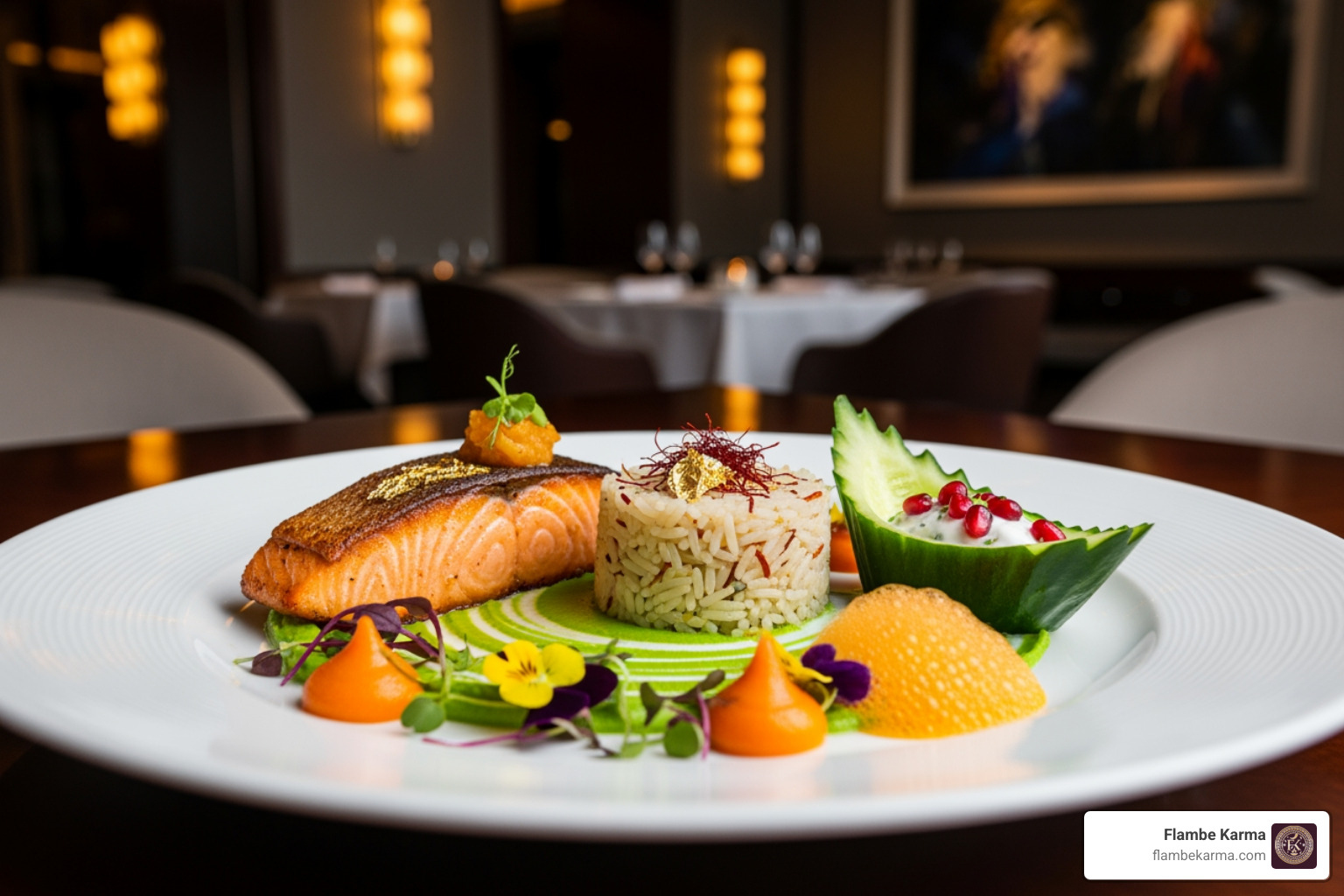
Why Gourmet Indian Cuisine is Changing Modern Dining
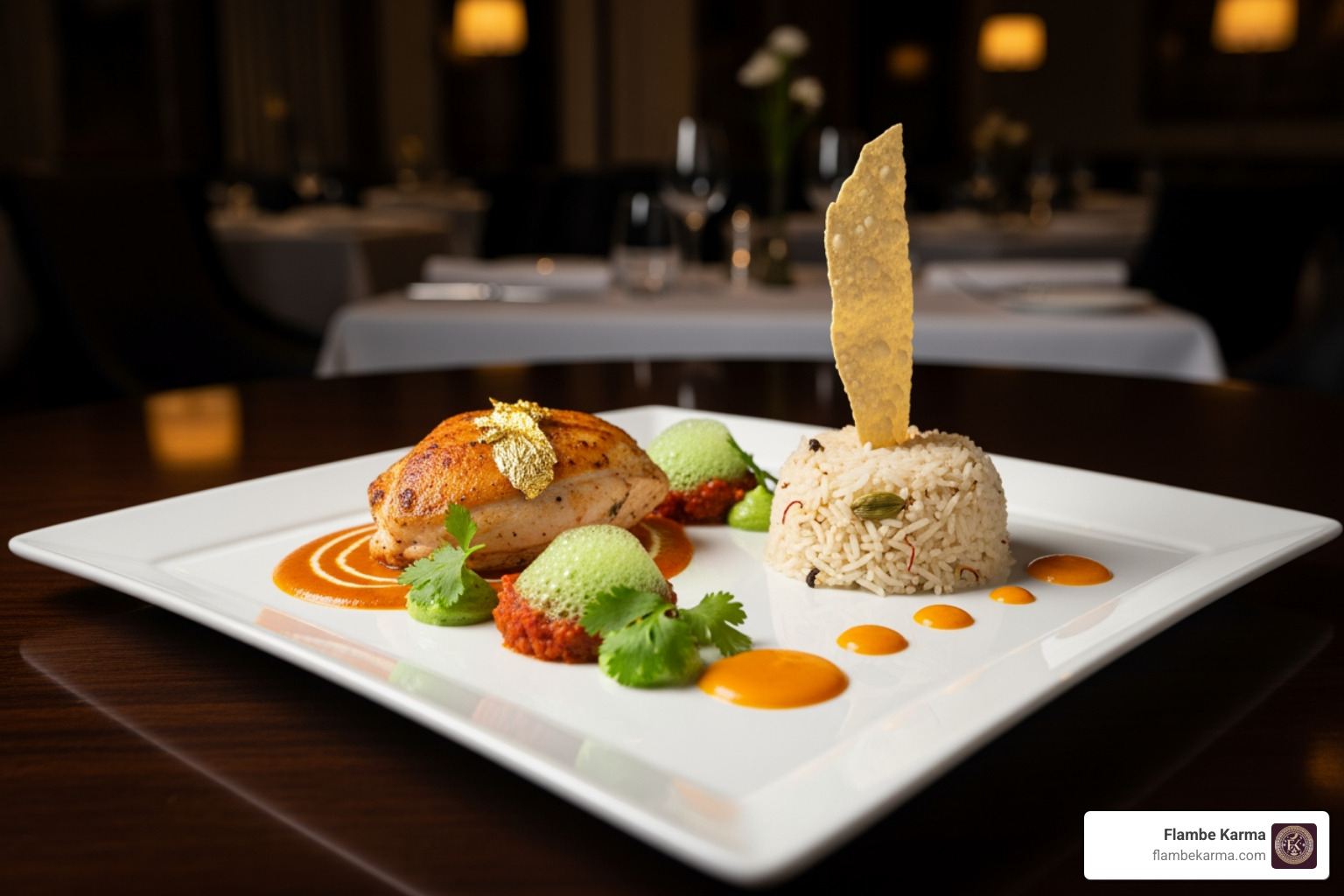
Gourmet Indian cuisine has evolved far beyond the neighborhood curry house or all-you-can-eat buffet. Today, it represents a sophisticated culinary movement where traditional recipes meet modern techniques, premium ingredients, and artistic presentation—creating memorable dining experiences that rival any fine dining tradition.
Key Characteristics of Gourmet Indian Cuisine:
- Premium Ingredients: Saffron, aged spices, sustainably sourced proteins, and exotic vegetables
- Refined Techniques: Sous-vide cooking, molecular gastronomy, precise temperature control, and flambé presentations
- Artistic Plating: Thoughtful use of negative space, edible flowers, and custom crockery
- Balanced Flavors: Complex spice profiles that are nuanced rather than overpoweringly hot
- Upscale Experience: Curated ambiance, trained service staff, and beverage pairings
- Innovation with Authenticity: Respecting tradition while embracing creativity
The global Indian food market was valued at $13.4 billion in 2022 and is projected to reach $24.5 billion by 2030. This growth reflects a fundamental shift in perception—Indian cuisine is no longer just comfort food. It’s earning Michelin stars, winning design awards, and attracting diners who seek culinary artistry.
What makes gourmet Indian cuisine different from home-style cooking? It’s about elevation. Where traditional preparations might simmer a dal for hours in a family kitchen, a gourmet restaurant might use sous-vide techniques to achieve perfect texture, then finish with a theatrical flambé. A humble samosa becomes deconstructed, with delicate pastry shards, spiced potato foam, and microgreens arranged like a painting on the plate.
This change isn’t about abandoning tradition—it’s about honoring it through a modern lens. The same regional recipes passed down through generations become canvases for innovation, where forgotten provincial dishes from Chettinad or Goa get the spotlight they deserve, prepared with meticulous attention to detail and presented as edible art.
What Defines Gourmet Indian Cuisine?
At its heart, gourmet Indian cuisine lifts India’s rich culinary heritage into an art form, changing familiar flavors into an experience that engages all senses. It is defined by several key characteristics.
First is a commitment to premium ingredients. While traditional cooking uses humble components, the gourmet approach seeks the finest: rare basmati rice, hand-selected regional spices, and sustainably raised meats, ensuring a superior foundation.
Second, refined techniques are paramount. Chefs use modern methods like sous-vide for tender proteins, molecular gastronomy for surprising foams and gels, and controlled smoking for subtle aromas. These techniques offer greater control over texture and flavor.
Third, artistic presentation creates a visual masterpiece. Gourmet dishes are carefully plated using negative space, vibrant edible flowers, and custom crockery, making the “first bite with the eyes” memorable.
Finally, balanced flavors are a hallmark. While traditional food is bold, gourmet cuisine refines this complexity. Flavors are nuanced, allowing individual spices to shine in a sophisticated interplay of sweet, sour, salty, bitter, and umami notes.
This evolution in perception is significant. Once seen as casual comfort food, Indian cuisine is now recognized for its fine dining potential, driven by a global demand for authentic yet innovative experiences. Media recognition and awards further solidify its place on the global culinary stage.
From Home-Style to High-End
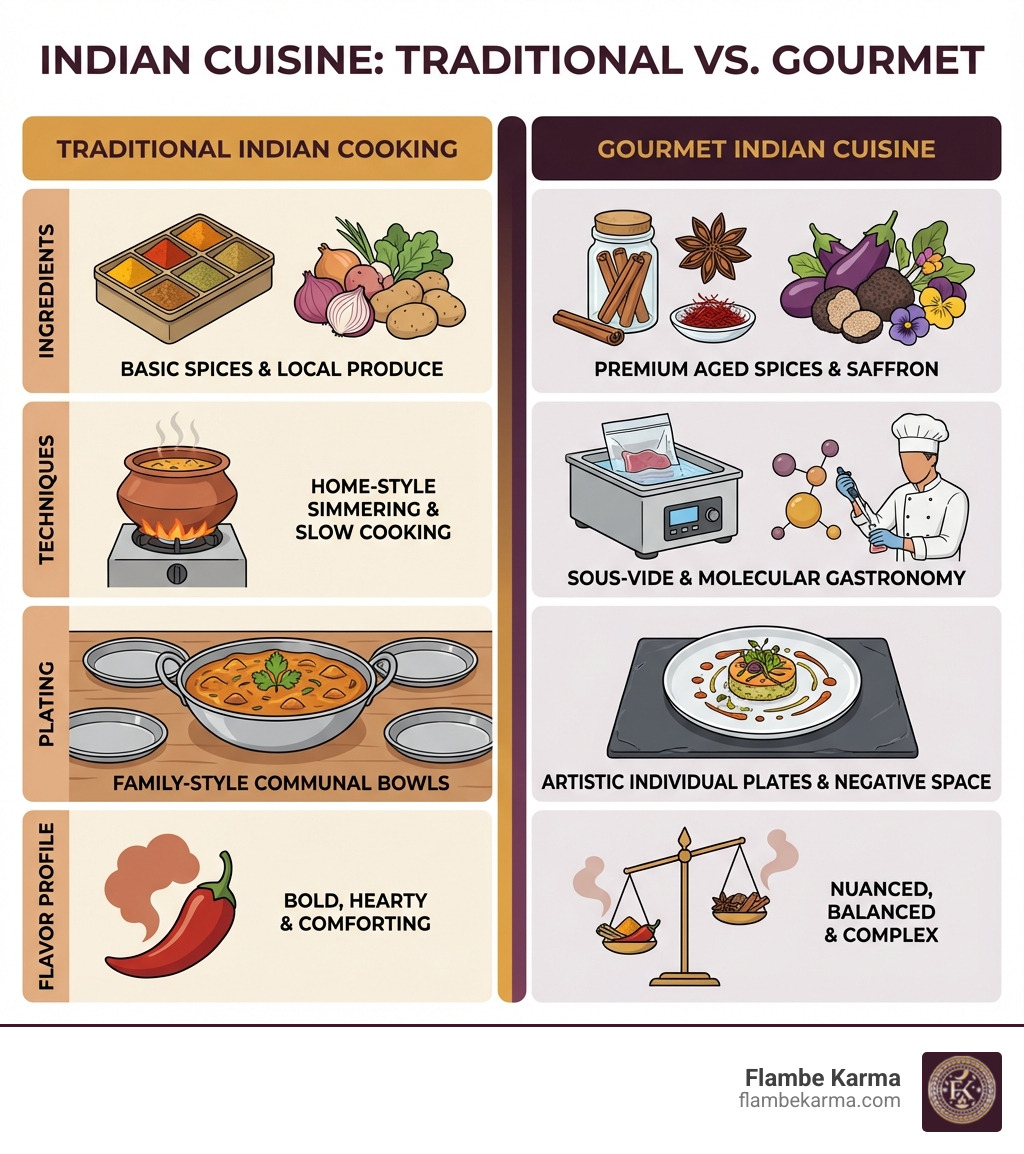
The distinction between home-style and gourmet Indian cuisine is intent and execution. Traditional cooking emphasizes hearty portions and rustic, comforting flavors. Gourmet cuisine refines these concepts, not replaces them. This often involves:
- Deconstruction: Reassembling a classic dish’s components in an innovative way.
- Refined Sauces: Lighter, more neat sauces with a silky texture instead of thick, rustic gravies.
- Portion Control: A shift from abundance to artistic precision with smaller, carefully arranged portions.
This change represents an artistic interpretation of classic dishes, offering a new perspective on familiar tastes.
| Metric | Traditional Indian Cooking | Gourmet Indian Cuisine |
|---|---|---|
| Ingredients | Readily available, cost-effective | Premium, often rare, ethically sourced |
| Technique | Time-honored, intuitive, family-based | Precise, modern, often scientific |
| Plating | Family-style, generous portions | Artistic, individual, minimalist |
| Flavor Profile | Bold, robust, comforting | Nuanced, balanced, multi-layered |
The Evolving Global Palate
The global palate has moved beyond the stereotypical “curry house,” with a rising demand for authentic and gourmet Indian food. This surge has led to international recognition for Indian chefs. The story of Chicken Tikka Masala illustrates this fusion. While its origin is debated, it’s a famous blend of British and Indian cuisine. In 2001, British Foreign Secretary Robin Cook even dubbed it the UK’s national dish, calling it a “perfect illustration” of how Britain adapts external influences. This dish shows how Indian flavors can become global favorites.
We believe that our culinary philosophy at Flambe Karma is rooted in this evolution. We aim to honor the rich legacy of Indian cooking while introducing innovative techniques and presentations that surprise and delight our guests. Read about our culinary philosophy to understand how we blend tradition with contemporary flair.
The Art of Elevation: Techniques, Presentation, and Innovation
The heart of gourmet Indian cuisine lies in the art of elevation. This involves a delicate dance between honoring tradition and embracing modern culinary techniques, all while creating a visually stunning and unforgettable dining experience.
How Chefs Lift Classic Dishes
Chefs elevating classic Indian dishes often employ a range of sophisticated techniques to refine textures, concentrate flavors, and add an element of surprise.
- Deconstruction: As mentioned earlier, this involves breaking down a dish into its core components and presenting them in a novel way. A traditional samosa, for instance, might be reimagined as a delicate, crispy shell alongside a spiced potato mousse and a tamarind gel.
- Foams & Gels: From molecular gastronomy, chefs use foams to add lightness and intensify flavors, or gels to introduce new textures and visual interest. Imagine a coriander foam accompanying a tandoori scallop, or a mango gel artfully placed on a dessert.
- Sous-vide cooking: This precise method ensures meats and vegetables are cooked to perfection, retaining moisture and tenderness. A lamb shank for Rogan Josh might be cooked sous-vide for hours, resulting in unparalleled succulence before being finished in a rich, aromatic gravy.
- Smoking techniques: Beyond the tandoor, chefs might use cold smoking or smoking guns to infuse subtle, complex smoky notes into ingredients, from paneer to spices, adding depth to a dish.
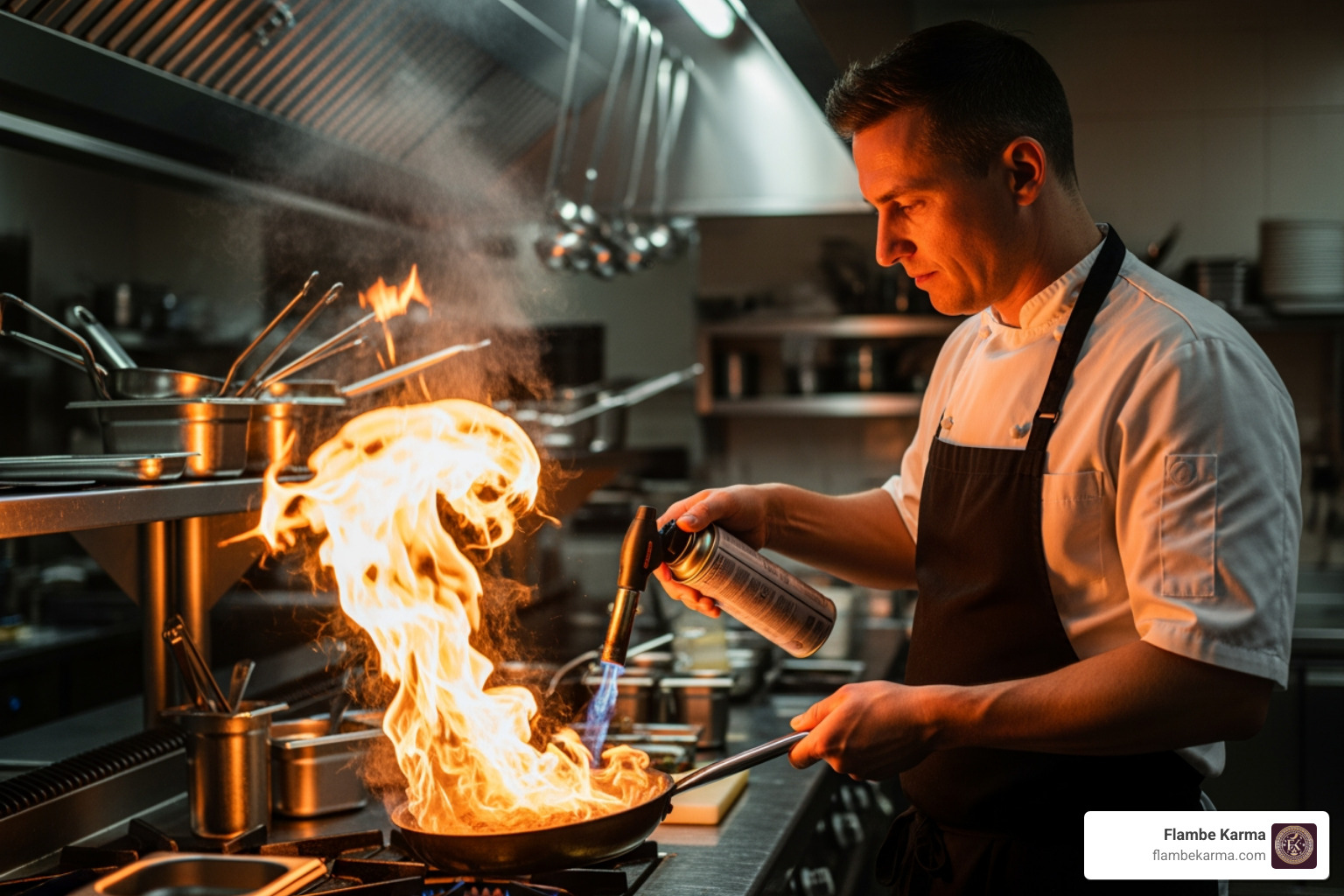
- Flambé: This dramatic technique, where alcohol is ignited to create a burst of flame, not only adds a theatrical element but also imparts a unique caramelization and depth of flavor. Our own Flambe Skewers at Flambe Karma are a testament to how this technique can bring flair and excitement to Indian cuisine.
These techniques don’t just change the appearance; they fundamentally transform the sensory experience, offering new dimensions of taste and texture. At Flambe Karma, we pride ourselves on Signature Dishes That Bring Flair to Indian Cuisine, showcasing how these methods can redefine classic Indian flavors.
The Importance of Plating and Presentation
In gourmet Indian cuisine, presentation is not an afterthought; it’s an integral part of the dining experience. The visual appeal sets expectations, tells a story, and improves the enjoyment of the food before the first bite even touches the palate.
- Visual Appeal: Chefs carefully arrange ingredients, paying attention to color contrasts, shapes, and textures. A vibrant green spinach puree might be juxtaposed with the creamy white of paneer, or a delicate red chili thread might provide a pop of color.
- Color Theory: Indian cuisine is naturally rich in color, thanks to its diverse ingredients and spices. Gourmet chefs use this to their advantage, creating plates that are aesthetically pleasing and stimulating.
- Negative Space: Unlike traditional, bountiful servings, gourmet plating often uses negative space on the plate, allowing each component to stand out and be appreciated individually.
- Edible Flowers & Microgreens: These delicate garnishes add a touch of elegance, freshness, and often a subtle flavor, elevating the dish’s aesthetic.
- Custom Crockery: Many fine dining Indian restaurants invest in bespoke plates and bowls that complement their cuisine, adding to the unique visual identity of their dishes.
- Storytelling Through Food: A well-plated dish can tell a story about its origin, its ingredients, or the chef’s inspiration, adding another layer of appreciation for the diner.
The philosophy is simple: we eat with our eyes first. A beautifully presented dish lifts the entire dining experience, making it more memorable and engaging.
Key Ingredients in Gourmet Indian Cuisine
The foundation of any exceptional dish lies in its ingredients, and gourmet Indian cuisine is no exception. We carefully source and select components that promise superior flavor, aroma, and texture.
- Sourcing: For gourmet dishes, the origin and quality of ingredients are paramount. This means seeking out specific regional varieties of spices, fresh local produce from trusted farms, and high-quality, ethically sourced proteins.
- Premium Spices: While common spices are essential, gourmet cooking often highlights rare or exceptionally fragrant varieties.
- Saffron: The world’s most expensive spice, used for its delicate aroma, vibrant color, and subtle floral notes in dishes like biryani or desserts.
- Cardamom: Both green and black varieties are used, with green offering sweet, aromatic notes and black providing a deeper, smokier flavor.
- Kalpasi (Black Stone Flower): A unique lichen found in the Chettinad region, offering an earthy, woody aroma that’s hard to replicate.
- Aged Spices: Some spices, like certain chilies or cumin, develop deeper, more complex flavors when aged correctly.
- High-Quality Proteins: Free-range chicken, grass-fed lamb, prime cuts of beef, and fresh, sustainably caught seafood are preferred.
- Exotic Vegetables: Beyond the staples, gourmet kitchens might incorporate less common, seasonal, or heirloom vegetables to add unique flavors and textures.
- Clarified Butter (Ghee): A staple in Indian cooking, gourmet ghee is often artisanal, made from specific cow breeds, and aged to perfection, offering a nutty, rich flavor.
Our commitment to these fine ingredients is reflected in every dish we create. We invite you to Explore our menu’s ingredients to see the care we put into every selection.
A Tour of Gourmet Dishes and Regional Influences
India’s culinary landscape is incredibly diverse, with each region boasting its own unique flavors, ingredients, and cooking techniques. Gourmet Indian cuisine celebrates this diversity, bringing unsung culinary gems to the forefront and reimagining classic dishes with a refined touch. It’s a journey across India’s vibrant flavors, from the rich gravies of the North to the tangy seafood of the coasts.
Examples of Gourmet Indian Dishes
When we talk about gourmet Indian dishes, we’re discussing culinary creations that lift both the ingredients and the dining experience. Here are a few examples of how classic dishes are reimagined:
- Deconstructed Samosa: Instead of the familiar fried pastry, imagine a crisp, delicate phyllo shell, alongside a quenelle of spiced potato and pea filling, a drizzle of tamarind reduction, and a refreshing mint-yogurt sphere. It’s the essence of the samosa, re-envisioned.
- Lamb Shank Rogan Josh: This Kashmiri classic, traditionally a hearty stew, can be liftd with a slow-cooked, sous-vide lamb shank that is fork-tender, served with a refined, aromatic gravy that highlights the Kashmiri chilies and fragrant spices, garnished with delicate saffron threads.
- Pan-Seared Scallop Moilee: A Keralan coconut-based curry, often made with fish, can be transformed using perfectly seared, plump scallops, presented in a light, fragrant moilee sauce infused with curry leaves, ginger, and green chilies, perhaps with a delicate coconut foam.
- Quail Korma: Moving beyond chicken or lamb, a rich Korma can feature tender quail, simmered in a velvety sauce of yogurt, nuts, and delicate spices, offering a luxurious and unique poultry experience.
- Truffle Naan: The humble naan bread gets a gourmet upgrade with the infusion of truffle oil or shavings, adding an earthy, sophisticated aroma that complements rich curries beautifully.
- Slow-cooked Dal Makhani: While a staple, a gourmet version might involve black lentils simmered for an extended period, perhaps overnight, with premium ghee, cream, and a precise tempering (tadka) of spices, resulting in an incredibly smooth, deeply flavored, and luxurious dal.
- Layered Biryani with Premium Meats: A classic biryani can be liftd by using rare, aged basmati rice, perfectly cooked premium cuts of meat (like succulent lamb or delicate seafood), and a precise layering technique that ensures each grain of rice and piece of meat is infused with complex, aromatic spices.
These dishes showcase how innovative techniques and premium ingredients can redefine the Indian dining experience.
The Role of Regional Variations
Regional variations are the soul of Indian cuisine, and gourmet Indian cuisine celebrates this rich diversity. Instead of a generic “Indian food,” fine dining establishments dig into the specific culinary traditions of different states and communities, bringing their unique flavors and stories to the table.
- North Indian (Mughlai, Punjabi): Known for rich, creamy gravies, tandoori preparations, and liberal use of dairy and nuts. Mughlai cuisine, originating from the Mughal Empire, is inherently royal and rich, with dishes like Shahi Paneer (royal paneer) known for its creamy, cashew-based gravy. Punjabi cuisine, hearty and robust, gives us dishes like Dal Makhani and Murgh Makhani (Butter Chicken), which are liftd with slow cooking and premium ingredients.
- South Indian (Chettinad, Keralan): Characterized by the use of coconut, curry leaves, and a balance of spicy, sour, and tangy flavors. Chettinad cuisine, from Tamil Nadu, is famous for its aromatic and often spicy dishes like Chicken Chettinad, which uses unique spices like kalpasi (black stone flower). Keralan cuisine offers delicate seafood curries like Moilee, with its subtle coconut and spice base.
- Coastal (Goan, Bengali): Reflects the bounty of the sea and influences from historical trade routes. Goan cuisine, with its Portuguese influences, offers dishes like Vindaloo, which, in its authentic form, balances sweet, sour, and spicy notes. Bengali cuisine is known for its delicate fish preparations and a subtle use of mustard oil.
Gourmet chefs often explore “forgotten provincial dishes” from these regions, bringing them to light with modern interpretations. This deep dive into regionality allows for an exploration of truly unique and authentic flavors that might otherwise be overlooked. For more insights into the fascinating world of regional Indian cooking, Read our blog for more culinary insights.
Crafting the Complete Fine Dining Experience
Gourmet Indian cuisine isn’t just about the food on the plate; it’s about the entire dining experience. From the moment you step through the door, every detail is carefully crafted to transport you into a world of elegance and sophistication.
Ambiance and Upscale Service
An upscale dining experience is essential for gourmet Indian food. It sets a scene where the food can truly shine, and guests feel pampered and immersed.
- Interior Design: Modern Indian restaurants often blend contemporary elegance with subtle nods to Indian heritage, using luxurious textures, sophisticated lighting, and curated art. At Flambe Karma, our artistic ambiance complements our innovative cuisine, creating a stunning and welcoming space.
- Mood Lighting: Thoughtfully designed lighting sets the tone, creating an intimate and refined atmosphere that improves the visual appeal of the space and the dishes.
- Curated Music: The soundtrack to your meal is carefully selected to improve the dining experience without being intrusive, often featuring contemporary Indian fusion or instrumental pieces.
- Staff Training: Exceptional service is paramount. A knowledgeable team guides guests through the menu, explains complex dishes, and offers perfect beverage pairings. Staff are often trained by seasoned professionals to ensure service excellence.
- Hospitality Standards: Beyond efficiency, gourmet dining emphasizes genuine warmth and attentiveness, creating a seamless, memorable experience for every guest.
We understand that a dining experience should engage all the senses, not just taste. This philosophy guides everything we do. A Dining Experience That Engages All The Senses is what we strive to deliver.
Beverage Pairings: Beyond the Lassi
While a refreshing lassi is a delightful accompaniment, gourmet Indian cuisine calls for a more sophisticated approach to beverage pairings to improve the complex flavors of the dishes.
- Wine Pairing Principles: Pairing wine with Indian food can be a delightful challenge. Lighter, aromatic whites like Riesling or Gewürztraminer often beautifully complement spicy dishes. For richer curries, a light-bodied red like a Pinot Noir can work wonders.
- Acidity vs. Spice: Acidity in wine helps cut through the richness of Indian gravies and can provide a refreshing contrast to spicy notes. Avoid high-tannin wines, which can clash with chili heat.
- Cocktails with Indian Spices: Mixologists craft unique cocktails with Indian spices, like cardamom-infused gin or turmeric whiskey sours. These bespoke cocktails are designed to complement the menu’s flavor profiles.
- Craft Beer Collaborations: The craft beer scene has also acceptd Indian flavors, with breweries creating beers infused with spices like coriander or mango, offering a unique pairing option.
- Non-alcoholic Pairings: For those opting out of alcohol, creative non-alcoholic beverages are just as important. Think artisanal sodas, spiced lemonades, or sophisticated house-made mocktails.
The Future of Gourmet Indian Cuisine
The journey of gourmet Indian cuisine is constantly evolving, driven by innovation, sustainability, and a deeper exploration of India’s vast culinary heritage.
- Hyper-regional Focus: Chefs are delving into the specific culinary traditions of smaller communities, unearthing unique and authentic flavors.
- Sustainability: A growing emphasis on locally sourced, seasonal, and organic ingredients reflects a global shift towards conscious dining.
- Plant-based Innovation: With its rich vegetarian tradition, Indian cuisine is perfectly positioned for plant-based innovation, using exotic vegetables and plant-based proteins in creative ways.
- Chef-driven Tasting Menus: Curated tasting menus allow chefs to showcase their creativity and take diners on a guided culinary journey.
The target audience for gourmet Indian restaurants includes discerning foodies and professionals seeking an upscale experience. Price points reflect the quality of ingredients, preparation, presentation, and service, often ranging from moderate to high-end fine dining.
We are excited to be a part of this evolving landscape, bringing the best of modern Indian cuisine to our guests in Buffalo Grove and Glen Ellyn.
Frequently Asked Questions about Gourmet Indian Cuisine
Is gourmet Indian food less spicy?
Not necessarily. Gourmet Indian food is more “nuanced” than “less spicy.” It focuses on balancing flavors (sweet, sour, salty, bitter, and umami) so individual spices can shine. Heat is integrated thoughtfully to complement other flavors, aiming for a harmonious experience rather than just a burn.
What is the difference between gourmet Indian food and regular Indian food?
The main differences lie in intent, execution, and presentation.
- Ingredients: Gourmet cuisine uses premium, carefully sourced ingredients, while regular cooking uses more common ones.
- Techniques: Gourmet chefs use modern techniques (like sous-vide) for precision, while regular cooking relies on traditional methods.
- Presentation: Gourmet dishes are artfully plated as individual portions. Regular food is often served family-style.
- Flavor Profile: Gourmet flavors are nuanced and balanced. Regular Indian food is often bolder and more rustic.
- Experience: Gourmet dining is an upscale, multi-sensory experience with curated ambiance and professional service.
What should I order at a gourmet Indian restaurant for the first time?
For a first-time experience, we recommend trying a variety of dishes to see the restaurant’s innovative approach.
- Start with a Deconstructed Appetizer: Try a deconstructed samosa or refined chaat for a playful take on classics.
- Explore Regional Specialties: Choose a dish from a specific region like a Keralan Moilee or Kashmiri Rogan Josh to experience unique flavors.
- Consider a Refined Classic: A slow-cooked Dal Makhani or a premium Biryani are excellent choices.
- Don’t Forget the Bread: Try a truffle naan or a unique stuffed paratha to lift your meal.
- Ask for Recommendations: Your server can guide you to the chef’s signature dishes and unique offerings.
- Consider a Tasting Menu: If available, a tasting menu is an excellent way to sample a range of the chef’s best work.
Conclusion
The journey from humble street food to neat fine dining illustrates the incredible versatility and depth of gourmet Indian cuisine. It’s a culinary revolution that respects age-old traditions while boldly embracing innovation, precision, and artistry. We’ve seen how premium ingredients, refined techniques, and meticulous presentation transform familiar flavors into extraordinary experiences.
This isn’t just about food; it’s about a multi-sensory journey that engages the palate, the eye, and the imagination. From the nuanced balance of spices to the exquisite plating, every element is designed to create a memorable and sophisticated dining adventure. The evolution of Indian food to accept gourmet dining reflects a global appreciation for its rich history and vibrant future.
At Flambe Karma, we are proud to contribute to this exciting culinary movement, offering our guests in Buffalo Grove and Glen Ellyn a modern Indian dining experience that engages all the senses. We invite you to step into our world, where tradition meets innovation, and every dish tells a story. Discover the full experience and book your table today.